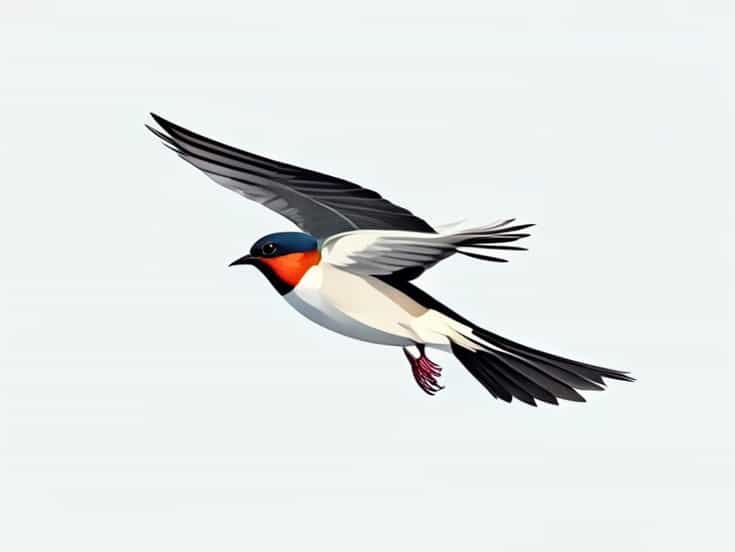
The question of the airspeed velocity of an unladen swallow has fascinated both scientists and enthusiasts of bird flight for decades. While it is often cited humorously in popular culture, particularly in movies and internet discussions, it actually touches on real principles of ornithology, aerodynamics, and biology. Understanding the speed at which a swallow can fly without carrying any extra load involves studying the bird’s physiology, wing shape, and natural behavior in flight. Swallows are small, agile birds known for their incredible maneuverability and long-distance migrations, making them an excellent subject for studying flight mechanics and airspeed capabilities.
Introduction to Swallows
Swallows are passerine birds belonging to the family Hirundinidae. They are recognized for their sleek bodies, long, pointed wings, and forked tails, which make them extremely efficient fliers. Swallows feed on flying insects, which requires quick and precise aerial movements. They are highly migratory, with some species traveling thousands of kilometers during seasonal migrations. Understanding the flight speed of a swallow provides insight into its hunting strategies, migration efficiency, and overall adaptability to environmental conditions.
Types of Swallows
There are several species of swallows, and their airspeed can vary depending on their size and wing morphology. Common species include
- European Swallow (Hirundo rustica)
- African Swallow (Cecropis abyssinica)
- Barn Swallow (Hirundo rustica)
- Tree Swallow (Tachycineta bicolor)
For the purposes of discussing airspeed velocity, the European swallow is often referenced due to historical studies and popular attention. The distinction between African and European swallows is also a nod to differences in their physiology and flight patterns, which can influence speed measurements.
Defining Airspeed Velocity
The airspeed velocity of a bird refers to the speed at which it moves through the air relative to the surrounding atmosphere. It is different from ground speed, which is the speed relative to the Earth, as ground speed can be affected by wind conditions. Airspeed velocity is influenced by factors such as wing loading, muscle power, and aerodynamics. For swallows, their lightweight bodies and specialized wings make them capable of rapid and sustained flight, allowing them to catch insects midair and evade predators.
Factors Affecting Swallow Flight Speed
Several biological and environmental factors determine how fast an unladen swallow can fly
- Wing ShapeSwallows have long, pointed wings that reduce drag and allow for fast, efficient flight.
- Body MassLighter birds generally achieve higher speeds with less energy expenditure.
- Muscle PowerThe strength and endurance of flight muscles affect sustained speed and maneuverability.
- Air Density and WeatherTemperature, humidity, and wind conditions can either aid or hinder flight speed.
- Behavioral ContextSwallows may fly faster during migration or when hunting insects compared to casual cruising.
Scientific Studies on Swallow Airspeed
Researchers have measured swallow flight speeds using various methods, including radar tracking, high-speed cameras, and field observations. The consensus from scientific studies is that the typical cruising speed of an unladen European swallow is roughly 11 meters per second, which translates to about 24 miles per hour. However, during short bursts of flight or hunting, swallows can accelerate to speeds of 17 meters per second or higher, allowing them to catch agile insects with precision.
European vs African Swallows
It is important to note that African swallows may have slightly different flight speeds due to differences in size and wing structure. African swallows tend to have broader wings and may achieve slightly lower cruising speeds but can still exhibit impressive agility. Comparisons between species highlight the influence of evolution and ecological niches on flight performance. While European swallows migrate long distances in temperate zones, African swallows navigate tropical environments, which can influence their typical airspeed and flight behaviors.
Popular Culture and the Swallow Speed Question
The airspeed velocity of an unladen swallow became a well-known question after being featured in a popular comedy movie. In the film, the question is posed humorously as a seemingly absurd query, highlighting the difficulty of calculating precise speeds for small, agile birds. While intended as a joke, the question sparked curiosity and discussion among both casual viewers and serious bird enthusiasts, leading to more public interest in ornithology and the mechanics of flight.
Why the Question Matters
Despite its humorous origins, the question has practical implications in understanding flight dynamics. Studying the airspeed velocity of swallows helps scientists and engineers learn about aerodynamics, energy efficiency in animal flight, and migratory behaviors. Additionally, the question underscores the importance of specifying conditions, such as whether the bird is unladen or carrying food, and which species is being referenced. Such details are critical for accurately measuring and modeling animal flight speeds.
Methods for Measuring Swallow Speed
Several techniques are used to determine the flight speed of swallows
- Radar TrackingResearchers use radar devices to track the movement of swallows over distances and calculate their speed in real time.
- High-Speed VideoCameras capture rapid wing beats and displacement, allowing precise speed calculation.
- Tagging and GPSMiniature GPS devices can be attached to larger swallows to record flight paths and velocities during migration.
- Field ObservationExperienced ornithologists use binoculars and timing methods to estimate speed based on distance covered over time.
Each method provides insights into the swallow’s typical flight behaviors and maximum capabilities. Combining data from multiple techniques ensures greater accuracy and accounts for environmental variations.
Applications of Swallow Flight Studies
Understanding the airspeed of swallows is not only a curiosity but has practical applications. Engineers use knowledge of bird flight to design efficient drones, small aircraft, and aerodynamic structures. Conservationists use flight speed data to study migration patterns, habitat preferences, and responses to climate change. Observing swallows’ flight speeds also helps ecologists understand predator-prey interactions, as speed influences hunting success and survival rates in the wild.
The airspeed velocity of an unladen swallow is a topic that bridges science, humor, and popular culture. While often discussed as a joke, it represents real principles of bird flight, aerodynamics, and ecology. European swallows typically fly at speeds around 11 meters per second, or 24 miles per hour, but can accelerate higher during hunting or evasive maneuvers. African swallows have slightly different flight characteristics due to their morphology and habitat. Studying these speeds offers insights into flight mechanics, migration, and energy efficiency, and has inspired both scientific inquiry and public fascination. By exploring the question seriously, we gain a better appreciation for the complexities of animal flight and the remarkable abilities of these small, agile birds.