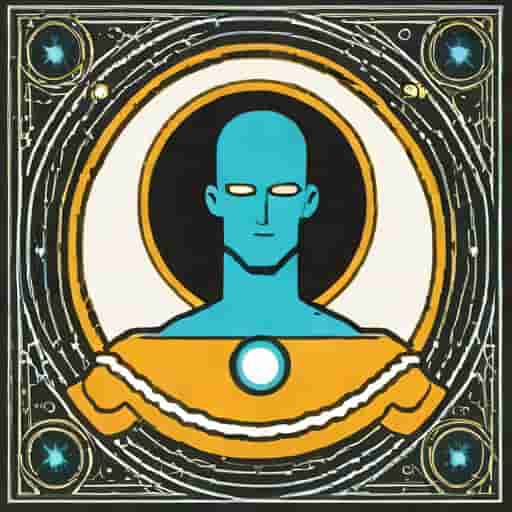
Dr. Manhattan is one of the most iconic and complex characters in the Watchmen universe, known for his nearly god-like abilities and detached perspective on human affairs. Created by Alan Moore and Dave Gibbons, Dr. Manhattan, formerly Dr. Jon Osterman, underwent a scientific accident that transformed him into a being of pure energy with extraordinary control over matter and time. His powers and perspective often spark debates among fans and scholars alike about the nature and limits of his abilities. One recurring question is whether Dr. Manhattan can truly be considered omnipotent, possessing unlimited power over all aspects of reality. Exploring this question involves examining his abilities, limitations, and philosophical implications within the narrative.
Origins and Transformation
Dr. Manhattan’s transformation began as a tragic accident in 1959 when Jon Osterman, a nuclear physicist, was accidentally locked inside an intrinsic field experiment chamber. The experiment disassembled his molecular structure, and over the course of several months, he gradually reassembled himself into a superhuman entity. Unlike other superheroes, his powers are rooted not in external devices or training, but in his mastery over fundamental forces of nature. This origin story establishes both his scientific foundation and his detachment from typical human vulnerabilities.
Core Abilities of Dr. Manhattan
Dr. Manhattan possesses a wide array of abilities that make him appear god-like to those around him. Some of his key powers include
- Matter ManipulationHe can rearrange, create, or destroy matter at the atomic level, allowing him to reconstruct objects or even people.
- Time PerceptionHe experiences past, present, and future simultaneously, giving him a deterministic view of reality and human events.
- Energy ProjectionHe can generate destructive energy blasts capable of obliterating large areas.
- TeleportationHe can instantaneously transport himself and others across vast distances, including off-planet locations.
- Immortality and InvulnerabilityDr. Manhattan does not age, cannot be killed by conventional means, and has no biological limitations.
These abilities, taken together, give Dr. Manhattan extraordinary influence over his environment and the perception that he might be omnipotent.
The Concept of Omnipotence
Omnipotence is typically defined as the ability to perform any action or accomplish any goal without limitation. Philosophically, an omnipotent being would have unlimited power and the capacity to act beyond any physical, logical, or conceptual constraints. Assessing Dr. Manhattan’s omnipotence requires comparing his demonstrated abilities to this standard. While he exhibits god-like control over matter and energy, the story explores whether there are constraints to his power or understanding of human behavior that prevent him from being truly omnipotent.
Limitations in the Narrative
Despite his extraordinary abilities, Dr. Manhattan does face certain limitations
- Emotional DetachmentHis perception of time and determinism often leads to a disconnection from human emotion, impacting his decision-making.
- Inability to Change the PastEven though he perceives time non-linearly, he does not appear able to alter past events, suggesting limits in his temporal control.
- Moral and Ethical RestraintsHis personal choices demonstrate that he does not exercise power arbitrarily; he respects certain ethical boundaries, which restrict his actions.
- Dependence on ContextIn some situations, external factors, such as other superhuman beings or global politics, influence his decisions, indicating that he does not act entirely independently.
These limitations highlight that while Dr. Manhattan’s abilities are extraordinary, they do not constitute unlimited power in the philosophical sense of true omnipotence.
Philosophical and Deterministic Considerations
One of the most intriguing aspects of Dr. Manhattan is his perception of time as simultaneous rather than sequential. This deterministic worldview shapes his approach to life, making him appear almost infallible. However, determinism does not equate to omnipotence. Being aware of events does not grant the ability to change them at will. For instance, he witnesses human suffering and global conflicts but often chooses non-intervention, not because of a lack of power, but due to his philosophical stance. This distinction is critical when evaluating the nature of his powers.
The Paradox of God-Like Power
Dr. Manhattan’s powers invite comparison to classical theological concepts of omnipotence. He can create and destroy matter, perceive time, and influence events on a planetary scale. Yet, the narrative emphasizes that he cannot fully comprehend or intervene in human psychology and societal structures in ways that might be expected of an omnipotent being. His inability to completely control outcomes tied to human free will demonstrates a limitation, aligning him more closely with a superhuman entity rather than a truly omnipotent deity.
Comparisons to Other Omnipotent Characters
In comics and literature, omnipotent beings are rare but serve as useful benchmarks. Characters like The Presence in DC Comics or The One Above All in Marvel Comics exhibit powers without limits. Compared to these characters, Dr. Manhattan has extraordinary abilities but remains subject to narrative and philosophical constraints. He cannot alter metaphysical laws, change the past, or enforce absolute moral outcomes. His powers, while vast, are defined within the rules of his universe, distinguishing him from a truly omnipotent entity.
Symbolism and Narrative Role
Dr. Manhattan functions as more than just a powerful being; he represents the consequences of absolute knowledge and detachment. His limitations highlight the tension between god-like abilities and human morality. This narrative choice suggests that omnipotence in the literal sense is less important than the philosophical questions raised by his perspective on power, time, and responsibility. By exploring his choices and limits, the story challenges readers to consider what it truly means to possess unlimited power.
Dr. Manhattan is an extraordinary character whose abilities place him far beyond human limitations, making him one of the most powerful beings in the Watchmen universe. His control over matter, energy, and perception of time is unparalleled among most comic book characters. However, while he demonstrates god-like abilities, he is not truly omnipotent in the philosophical sense. His moral, ethical, and temporal constraints, along with his limited understanding of human psychology, prevent him from exercising unlimited power over all aspects of reality. The question of his omnipotence is ultimately a philosophical one, inviting readers to explore the nature of power, choice, and responsibility. Dr. Manhattan may be nearly omnipotent in action, but he is also defined by his limitations, making him both a powerful and thought-provoking figure in modern storytelling.