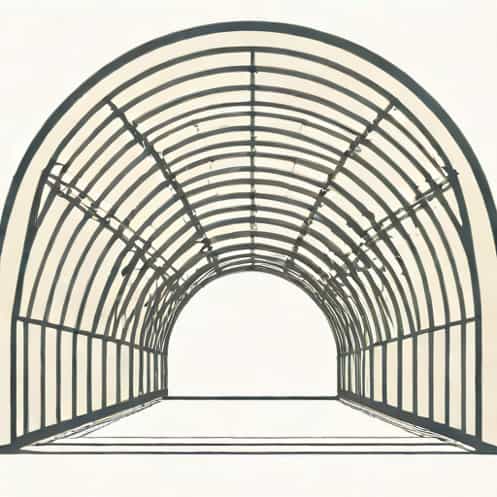
The word Quonset often confuses English speakers because it is not a common term in everyday conversation. Many people encounter it in historical contexts, military discussions, or architectural references, particularly when discussing the semi-cylindrical prefabricated buildings used during World War II. Understanding how to pronounce Quonset correctly is important for clear communication, whether in casual conversation, academic discussions, or professional settings. This topic explores the origins, correct pronunciation, variations, and tips to help anyone confidently say the word Quonset.
Origins of the Word Quonset
The term Quonset comes from Quonset Point, a location in Rhode Island, United States, where the first prefabricated military structures were manufactured during World War II. These structures were designed to be lightweight, durable, and easy to assemble, and they became widely used by the U.S. military both domestically and overseas. Because of its historical significance, the term Quonset has entered English vocabulary to describe the building style itself, rather than just the location.
Historical Context
During World War II, the U.S. Navy needed quickly deployable structures for barracks, storage, and workspaces. The first Quonset huts were produced at Quonset Point, and their efficiency and practicality led to rapid adoption across military bases worldwide. After the war, these structures became popular for civilian use, including storage facilities, garages, and even homes. Knowing the correct pronunciation ensures that references to these buildings are both respectful and accurate, reflecting their historical roots.
Correct Pronunciation of Quonset
The word Quonset is typically pronounced as /ˈkwɑːn.sɛt/ in phonetic notation. This pronunciation breaks down into two syllables
- Quonpronounced like kwon, rhyming with con.
- setpronounced like the word set.
Put together, it sounds like KWON-set. Stress falls on the first syllable, making it clear and distinct when spoken. Correct pronunciation is crucial, especially in formal or educational contexts, to avoid misunderstandings or misidentification of the term.
Common Mispronunciations
Many people mispronounce Quonset due to unfamiliarity with the word or assumptions based on its spelling. Some frequent errors include
- Pronouncing it as kwon-SETT with an overemphasized second syllable.
- Pronouncing it as kwon-ZET which introduces a z sound incorrectly.
- Breaking it into three syllables as quo-nuh-set, which is inaccurate.
Being aware of these common mistakes can help learners focus on the correct pronunciation and improve clarity when discussing Quonset huts or related topics.
Tips for Pronouncing Quonset Correctly
For people unfamiliar with the word, learning to pronounce Quonset can take a bit of practice. Here are some strategies to help
- Break it into syllablesFocus on saying KWON and set separately before combining them smoothly.
- Listen to audio referencesOnline dictionaries or pronunciation videos can provide examples to mimic.
- Repeat in contextUse the word in sentences, such as The military base was filled with Quonset huts, to reinforce proper pronunciation.
- Practice stress placementEmphasize the first syllable while keeping the second syllable short and clear.
Regional Variations
In general American English, Quonset is pronounced as described, but some regional accents may slightly alter vowel sounds. For example, speakers in the Southern United States may elongate the first syllable slightly, while those in the Northeast may use a more clipped pronunciation. However, the differences are minor, and the standard pronunciation of KWON-set is widely accepted and understood.
Using Quonset in Conversation
Once you understand the pronunciation, it is helpful to know how to use the word in conversation. Quonset huts are most commonly referenced in historical discussions, architecture, or military contexts. For instance, someone might say
- During World War II, soldiers lived in Quonset huts on military bases.
- The farm repurposed old Quonset structures for storage of equipment.
- Architects often admire the efficiency and design of Quonset buildings.
Correct pronunciation in these examples ensures the listener understands the reference and maintains the historical or architectural accuracy of the discussion.
Spelling and Pronunciation Connection
The spelling Quonset can mislead speakers who are unfamiliar with the term. Emphasizing the kw sound at the beginning and the set at the end provides a clear and correct pronunciation. Remembering the historical connection to Quonset Point, Rhode Island, can serve as a mnemonic device, reinforcing the correct way to say the word.
Why Pronunciation Matters
Using the correct pronunciation of Quonset is important for clarity, especially in academic, professional, or historical discussions. Mispronunciation can lead to confusion, particularly when discussing architecture or military history. By mastering KWON-set, you demonstrate respect for the word’s origin and the context in which it is used.
Educational and Professional Importance
- Teachers, historians, and tour guides often encounter Quonset when describing historical sites.
- Architects and engineers may reference Quonset-style buildings in design discussions.
- Military historians and enthusiasts must accurately use the term when analyzing World War II structures.
Quonset is a term with historical, architectural, and military significance. Pronounced KWON-set, it originates from Quonset Point, Rhode Island, where the first prefabricated military structures were manufactured during World War II. Correct pronunciation requires emphasis on the first syllable and clear articulation of the second. By learning to pronounce Quonset correctly, individuals can communicate effectively in historical, professional, and casual contexts, while also honoring the legacy of these innovative structures. Practicing the pronunciation through repetition, audio examples, and contextual usage ensures confidence and accuracy when using this distinctive and historically important term.