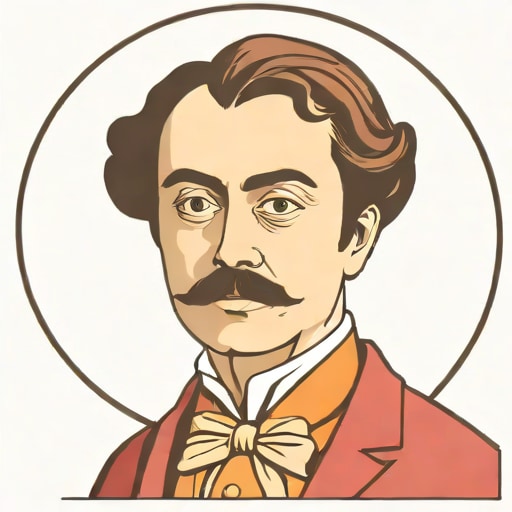
Gustave Flaubert’s Madame Bovary is widely regarded as one of the greatest novels in Western literature, capturing the complexities of human desire, social expectation, and personal disillusionment. Published in 1857, the novel sparked both controversy and acclaim for its candid exploration of adultery, social ambition, and the struggles of women in a rigidly structured society. Flaubert’s meticulous attention to detail, precise prose, and psychological depth have made Madame Bovary a timeless masterpiece that continues to resonate with readers and scholars alike. The story delves into the life of Emma Bovary, a woman trapped between her romantic fantasies and the stark realities of provincial life, making it an enduring study of human aspiration and dissatisfaction.
Gustave Flaubert and His Literary Vision
Gustave Flaubert was born in 1821 in Rouen, France, and became one of the leading figures of 19th-century French literature. Known for his dedication to le mot juste, or the perfect word, Flaubert was a perfectionist in his writing, often laboring over sentences for weeks to achieve precise clarity and rhythm. His literary vision emphasized realism, a movement that sought to depict everyday life with fidelity and detail, moving away from romanticized portrayals of human experience. Madame Bovary exemplifies this approach, presenting characters and settings with authenticity while exploring universal themes of longing, disappointment, and social constraint.
Historical Context
The mid-19th century in France was a period of social change and tension. The rigid social hierarchy, expectations surrounding marriage, and limited opportunities for women shaped much of the society depicted in Madame Bovary. Flaubert’s novel reflects these conditions, showing how societal norms constrain individual desires. Emma Bovary’s dissatisfaction and her pursuit of passion and luxury can be seen as a critique of the restrictive environment of provincial life, highlighting the clash between personal ambition and social reality.
The Story of Madame Bovary
Madame Bovary tells the story of Emma Bovary, a young woman who marries Charles Bovary, a simple and devoted country doctor. Initially hopeful that marriage will bring excitement and fulfillment, Emma quickly becomes disillusioned by the monotony of rural life. Her longing for romance, luxury, and emotional intensity drives her into a series of affairs and reckless financial decisions. Flaubert portrays Emma with empathy and psychological depth, showing both her desires and the consequences of her choices. The novel is a meditation on the dangers of idealism and the human tendency to seek fulfillment outside the boundaries of reality.
Character Analysis
Emma Bovary is a complex character whose inner life and dissatisfaction drive the narrative. She embodies the tension between dreams and reality, longing for the grandeur and passion she has read about in novels. Charles Bovary, her husband, is kind and well-meaning but unimaginative and oblivious to Emma’s emotional needs. Other characters, such as Rodolphe Boulanger and Léon Dupuis, serve as catalysts for Emma’s escapism, each reflecting different facets of temptation and desire. Flaubert’s portrayal of these characters emphasizes their humanity, flaws, and the social pressures that shape their actions.
Realism and Style
Flaubert’s writing style in Madame Bovary is a hallmark of literary realism. He carefully constructs each sentence, paying close attention to rhythm, imagery, and nuance. His detailed descriptions of provincial life, domestic settings, and social interactions provide a vivid backdrop for the psychological drama of the characters. Flaubert avoids moralizing, instead presenting events with clarity and allowing readers to draw their own conclusions. This objective narrative style was revolutionary at the time and influenced generations of writers who sought to depict life with honesty and precision.
Thematic Exploration
The themes of Madame Bovary are universal and enduring. Some of the central themes include
- Desire and DisillusionmentEmma’s longing for romance and luxury contrasts sharply with the banality of her reality, illustrating the human struggle to reconcile dreams with life.
- Social ConstraintThe rigid social structure of provincial France limits opportunities for personal fulfillment, particularly for women.
- MaterialismEmma’s pursuit of wealth and status demonstrates the seductive power of material objects and the dangers of excess.
- Morality and ConsequencesThe novel examines the ethical and personal consequences of Emma’s choices, highlighting the tension between individual desire and social norms.
Controversy and Reception
Upon its publication, Madame Bovary caused a scandal for its frank depiction of adultery and moral transgression. Flaubert was tried for obscenity but was ultimately acquitted, a verdict that affirmed the literary merit of his work. The controversy brought attention to the novel and helped establish Flaubert’s reputation as a pioneering realist writer. Over time, Madame Bovary has been recognized not only for its narrative power but also for its technical mastery and psychological insight.
Legacy and Influence
Madame Bovary has had a profound influence on literature worldwide. Its focus on character psychology, attention to detail, and realism inspired writers such as Henry James, James Joyce, and Virginia Woolf. The novel is frequently studied in academic settings for its narrative techniques, thematic richness, and social commentary. Flaubert’s work continues to be a touchstone for discussions on literary realism, narrative ethics, and the representation of female subjectivity in literature.
Gustave Flaubert’s Madame Bovary remains a timeless exploration of human desire, societal constraints, and the consequences of idealism. Through Emma Bovary’s story, readers gain insight into the complexity of personal longing and the harsh realities of life in 19th-century provincial France. Flaubert’s meticulous style, narrative realism, and psychological depth make the novel a masterpiece that continues to captivate and challenge readers. Its themes of longing, disillusionment, and social critique remain relevant today, ensuring that Madame Bovary endures as a landmark work of world literature.