Rocks are part of everyday life, even though many people rarely stop to think about where they come from or how they form. Buildings, roads, monuments, and even household items often contain materials that originated deep within the Earth or on ancient sea floors. One important group of rocks is sedimentary rock, which forms through the accumulation and compaction of sediments over long periods of time. Among these, calcareous sedimentary rock stands out because of its close connection to marine environments and biological processes. To better understand this type of rock, it is helpful to explore clear examples and how they are formed.
What Is Calcareous Sedimentary Rock?
Calcareous sedimentary rock is a type of sedimentary rock that contains a high percentage of calcium carbonate. This material usually comes from the shells, skeletons, and remains of marine organisms such as corals, mollusks, and microscopic plankton. Over millions of years, these remains settle on the sea floor, where they accumulate, compact, and eventually harden into rock.
The term calcareous refers to the presence of calcium carbonate, which gives these rocks specific chemical and physical characteristics. Many calcareous rocks are relatively soft compared to igneous rocks, and they often react with weak acids by producing small bubbles.
A Common Example Limestone
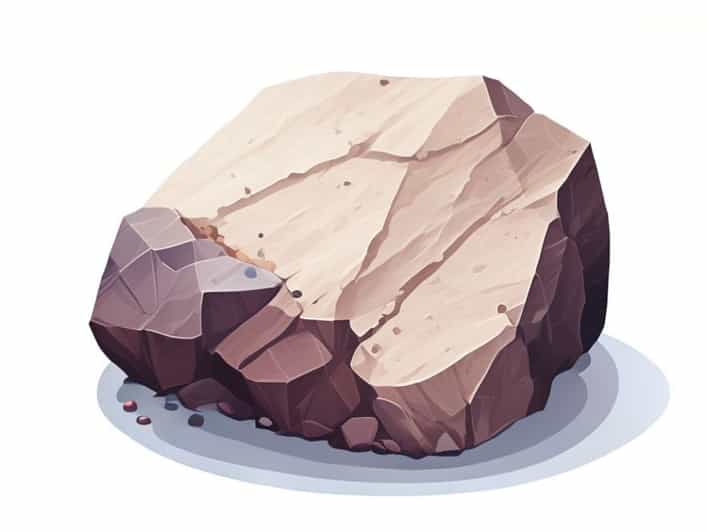
When asked to give an example of calcareous sedimentary rock, limestone is the most frequently mentioned answer. Limestone is widely distributed around the world and plays a major role in geology, construction, and industry. It forms primarily in shallow, warm marine environments where calcium-rich organisms thrive.
Limestone can appear in many colors, including white, gray, beige, and even bluish tones, depending on the impurities mixed with the calcium carbonate. Its texture can range from very fine-grained to coarse and fossil-rich.
How Limestone Forms
The formation of limestone is closely tied to biological activity. Marine organisms extract calcium carbonate from seawater to build their shells and skeletons. When these organisms die, their remains sink to the ocean floor. Over time, layers of shell fragments and skeletal material build up.
As more sediment accumulates, pressure increases, compacting the material below. Minerals act as natural cement, binding the ptopics together and forming solid limestone rock. This process can take millions of years.
Types of Limestone as Calcareous Rocks
Limestone itself comes in several varieties, each representing a slightly different formation process. These variations help geologists understand the environment in which the rock was formed.
Fossiliferous Limestone
Fossiliferous limestone contains visible fossils of marine organisms such as shells or coral fragments. These fossils are often easy to see with the naked eye, making this type of limestone especially interesting to students and collectors.
Chalk
Chalk is a soft, white form of limestone made mostly from microscopic shells of marine plankton. It forms in deep marine environments and is known for its fine texture. Chalk cliffs and formations are well-known examples of calcareous sedimentary rock landscapes.
Coquina
Coquina is a loosely cemented limestone made from broken shell fragments. The shells are usually visible and feel rough to the touch. This rock forms in high-energy marine environments where waves break shells into pieces.
Other Examples of Calcareous Sedimentary Rock
While limestone is the most common example, it is not the only calcareous sedimentary rock. Other rocks also contain significant amounts of calcium carbonate and form under different conditions.
Dolostone
Dolostone, sometimes called dolomite rock, is similar to limestone but contains magnesium in addition to calcium carbonate. It often forms when limestone undergoes chemical changes after deposition. Dolostone is typically harder than limestone and may have a slightly different texture.
Marl
Marl is a mixture of clay and calcium carbonate. It is softer than limestone and often forms in lakes or shallow marine environments. Marl has been used historically in agriculture to improve soil quality.
Physical Characteristics of Calcareous Rocks
Calcareous sedimentary rocks share several common physical properties that help identify them. These features are useful for students, hobbyists, and professionals working in geology or construction.
- High calcium carbonate content
- Reaction with weak acids, producing bubbles
- Often lighter in color
- May contain visible fossils or shell fragments
Where Calcareous Sedimentary Rocks Are Found
Calcareous sedimentary rocks are commonly found in areas that were once covered by shallow seas. Over geological time, changes in sea level and tectonic movement have exposed these rocks on land.
Large limestone deposits exist on every continent. Many famous landscapes, including cliffs, caves, and karst regions, are made of calcareous rock. These formations often feature sinkholes, underground rivers, and unique surface shapes caused by the slow dissolution of calcium carbonate.
Uses of Limestone and Other Calcareous Rocks
Calcareous sedimentary rocks have many practical uses in everyday life. Limestone, in particular, is one of the most widely used natural materials.
- Construction material for buildings and roads
- Raw material for cement and concrete
- Ingredient in steel production
- Soil conditioner in agriculture
Chalk is used in classrooms, sports fields, and artistic applications. Dolostone is used as a building stone and in industrial processes.
Calcareous Rocks and the Environment
Calcareous sedimentary rocks play an important role in Earth’s carbon cycle. Calcium carbonate stores carbon over long periods, helping regulate atmospheric carbon dioxide levels. When these rocks dissolve or are heated during industrial processes, carbon dioxide can be released back into the atmosphere.
Understanding how calcareous rocks form and behave helps scientists study past climates and predict future environmental changes.
Why Limestone Is the Best Example
Among all calcareous sedimentary rocks, limestone remains the clearest and most widely recognized example. Its abundance, variety, and importance make it an ideal representation of this rock type. Limestone clearly shows the connection between geological processes and biological activity.
By studying limestone and related rocks, people can gain insight into ancient marine environments, Earth’s history, and the materials that support modern society.
To give an example of calcareous sedimentary rock, limestone provides a clear and meaningful answer. Formed from calcium carbonate-rich sediments, often derived from marine life, limestone represents the close relationship between living organisms and geological processes. Along with related rocks such as chalk, coquina, and dolostone, limestone helps tell the story of Earth’s past and continues to play a vital role in human life today.