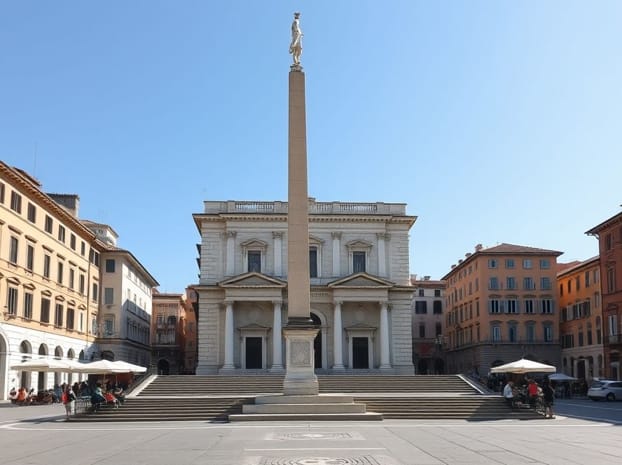
Giorgio de Chirico’s painting Piazza d’Italia” is a seminal work that epitomizes the metaphysical art movement, blending classical architecture with surreal, dreamlike elements. Created during the early 20th century, the painting captures the eerie stillness of an Italian piazza, where long shadows, empty spaces, and enigmatic figures provoke a sense of mystery and introspection. De Chirico’s unique vision transforms ordinary urban scenes into haunting, philosophical landscapes, inviting viewers to question reality, time, and human presence. “Piazza d’Italia” remains a key example of how art can evoke emotion and thought, offering an experience that is both visually striking and intellectually stimulating.
Historical Background
Giorgio de Chirico was an Italian painter born in 1888, whose work laid the foundation for the metaphysical art movement, influencing Surrealism and modern figurative painting. The early 20th century was a period of great social, political, and artistic change in Europe, and de Chirico’s work reflects both a fascination with classical antiquity and a desire to explore the subconscious mind. “Piazza d’Italia” was created in this context, synthesizing traditional architectural motifs with unsettling compositions and a dreamlike atmosphere. The painting exemplifies de Chirico’s interest in the tension between reality and imagination, presence and absence, permanence and transience.
The Metaphysical Approach
De Chirico’s metaphysical art is characterized by the use of classical architecture, statues, arcades, and empty cityscapes rendered with precise linear perspective. In “Piazza d’Italia,” these elements create a sense of stillness and contemplation. The piazza is often depicted with elongated shadows, unexpected perspectives, and solitary figures, evoking a feeling of alienation and philosophical inquiry. The juxtaposition of recognizable architectural features with surreal spatial distortions challenges viewers to consider the nature of reality and the passage of time. This metaphysical approach set de Chirico apart from other contemporary artists and positioned him as a key figure in early modernist painting.
Composition and Visual Elements
“Piazza d’Italia” features a carefully orchestrated composition that emphasizes perspective, geometry, and mood. The central piazza is framed by arcades, columns, and towers, guiding the viewer’s eye toward the vanishing point and creating depth. Shadows cast by these structures stretch across the empty space, enhancing the sense of quiet and solitude. De Chirico often included classical sculptures or mannequins, lending a sense of timelessness and mystery. The combination of sharp architectural lines and soft, diffuse light produces an uncanny effect, where the familiar becomes strangely alien, inviting contemplation and introspection.
Color and Atmosphere
Color plays a significant role in establishing the mood of “Piazza d’Italia.” De Chirico typically employed muted tones, warm earth colors, and subtle contrasts to evoke a sense of stillness and melancholy. The interplay of light and shadow contributes to the painting’s enigmatic quality, creating an atmosphere that is both serene and slightly unsettling. By manipulating color, perspective, and spatial relationships, de Chirico transforms a common Italian piazza into a symbolic and philosophical landscape, where the ordinary becomes extraordinary and everyday urban life takes on a metaphysical dimension.
Thematic Interpretation
The themes in “Piazza d’Italia” revolve around solitude, mystery, and the passage of time. The empty spaces and elongated shadows suggest a world frozen in time, inviting viewers to reflect on human existence, memory, and the unseen forces that shape life. The inclusion of classical architecture and statues emphasizes the continuity between past and present, while the surreal composition challenges conventional perceptions of space and reality. These themes resonate with broader existential and philosophical inquiries, making the painting not just a visual experience but an intellectual exploration of human perception and the metaphysical nature of the world.
Symbolism and Meaning
- Empty piazzas symbolize solitude and introspection.
- Classical architecture reflects cultural heritage and timelessness.
- Long shadows and perspective distortions evoke mystery and the unknown.
- Mannequin-like figures suggest anonymity and human absence.
- The interplay of light and shadow mirrors the duality of reality and imagination.
Influence on Modern Art
De Chirico’s “Piazza d’Italia” had a profound impact on the development of Surrealism and modern European art. Artists such as Salvador DalÃ, René Magritte, and Max Ernst drew inspiration from de Chirico’s use of perspective, stillness, and enigmatic imagery. By merging classical motifs with psychological depth and dreamlike atmospheres, de Chirico opened new avenues for exploring subconscious themes in visual art. “Piazza d’Italia” exemplifies how traditional elements can be reinterpreted through a modern lens, demonstrating the enduring relevance and influence of metaphysical painting in contemporary artistic discourse.
Legacy and Reception
Critics and art historians have consistently recognized “Piazza d’Italia” as a landmark in 20th-century art. The painting is celebrated for its technical mastery, innovative use of perspective, and ability to convey complex emotional and philosophical ideas. Exhibited in major galleries and museums, it continues to captivate audiences with its haunting beauty and intellectual depth. The legacy of de Chirico’s work, particularly this painting, is evident in its lasting influence on Surrealist and modernist movements, as well as its continued relevance in discussions of space, time, and human experience in art.
Techniques and Materials
De Chirico typically employed oil paints on canvas, utilizing precise linear perspective and meticulous brushwork to render architectural elements with clarity and depth. In “Piazza d’Italia,” the textures of stone, shadow, and light are carefully constructed, creating a tactile sense of the piazza’s surfaces. His technique blends meticulous realism with imaginative abstraction, allowing familiar elements to take on a mysterious, symbolic quality. The combination of technical skill and conceptual depth is a hallmark of de Chirico’s style, demonstrating his ability to merge craftsmanship with philosophical exploration.
Viewing Experience
Experiencing “Piazza d’Italia” is often described as both visually captivating and intellectually stimulating. The empty spaces, distorted perspectives, and enigmatic figures invite prolonged contemplation, encouraging viewers to question their perceptions of reality, time, and human presence. The painting’s quiet intensity creates an immersive atmosphere where one can reflect on existential themes while appreciating the beauty of classical forms. This unique blend of visual appeal and philosophical resonance underscores the enduring power of de Chirico’s work.
“Piazza d’Italia” by Giorgio de Chirico is a masterpiece that embodies the essence of metaphysical art, combining classical architecture, surreal composition, and philosophical depth. Through careful manipulation of perspective, light, shadow, and color, de Chirico transforms an ordinary Italian piazza into a haunting, contemplative space that invites reflection on solitude, time, and human existence. The painting’s influence on modern art, particularly Surrealism, highlights its significance as both an artistic and intellectual achievement. “Piazza d’Italia” continues to captivate viewers, offering a timeless exploration of the intersection between reality and imagination, and solidifying Giorgio de Chirico’s legacy as a visionary in the world of modern art.