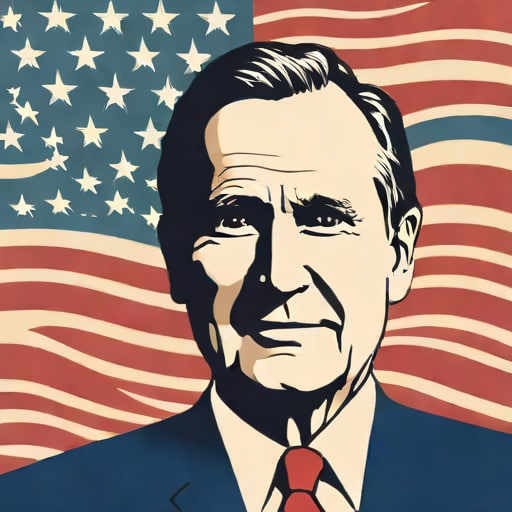
George H.W. Bush was a prominent figure in American politics whose career spanned several decades, culminating in his presidency from 1989 to 1993. Understanding his political affiliation is key to comprehending his policies, leadership style, and the historical context of his administration. George H.W. Bush was a member of the Republican Party, a political organization that has played a central role in shaping American governance and ideology. His alignment with the Republican Party influenced his positions on domestic policies, foreign affairs, and economic strategies, reflecting the broader goals and values of the party during the late 20th century. Examining his political career provides insight into the role of party affiliation in U.S. presidential leadership.
George H.W. Bush and the Republican Party
George H.W. Bush’s political career was deeply intertwined with the Republican Party. He joined the party during the early years of his political life and quickly became a prominent figure, serving in multiple key roles that aligned with Republican principles. The Republican Party, traditionally associated with conservatism, limited government intervention, free-market economics, and strong national defense, provided the framework within which Bush developed his policies and political philosophy. His loyalty to the party helped him gain the support necessary to ascend from Congressman to Vice President under Ronald Reagan, and eventually to President of the United States.
Early Political Career
Before becoming president, George H.W. Bush held several important positions that reflected his Republican affiliation. He was elected as a U.S. Congressman from Texas in 1966, representing a district that supported Republican ideals of fiscal conservatism and strong defense policies. Bush’s early political career also included appointments such as Ambassador to the United Nations, Chairman of the Republican National Committee, U.S. Liaison to China, and Director of Central Intelligence. Each of these roles reinforced his standing within the Republican Party and demonstrated his commitment to its policies both domestically and internationally.
Republican Party Ideology During Bush’s Era
The Republican Party during George H.W. Bush’s time was shaped by several key principles that influenced his presidency
- Fiscal ConservatismBush supported balanced budgets and policies aimed at controlling government spending.
- National SecurityStrong defense and a proactive approach to foreign policy were central to his administration.
- Free-Market EconomicsThe promotion of business development, trade, and private enterprise aligned with Republican economic philosophy.
- Social PoliciesWhile Bush often advocated for traditional family values, he occasionally embraced moderate stances to appeal to a broader electorate.
Bush’s Presidential Campaign and Republican Platform
George H.W. Bush ran for president in 1988 as the Republican candidate, emphasizing continuity with the Reagan administration’s achievements. His campaign highlighted economic growth, strong national defense, and international diplomacy, all key Republican priorities. By framing his platform around the party’s core values, Bush was able to secure widespread support from Republican voters and ultimately win the presidency with a significant electoral margin. His alignment with the Republican Party was a crucial factor in both his election strategy and his governance style.
Major Policies and Republican Principles
As president, George H.W. Bush implemented policies that reflected Republican ideals while also responding to the challenges of his time
Economic Policies
While Bush advocated for fiscal conservatism, his presidency faced economic challenges, including a recession in the early 1990s. He supported measures to control the budget deficit and promoted tax reforms, although his decision to raise taxes, despite his famous no new taxes pledge, was controversial within the Republican Party. This demonstrated the tension between political promises and the practical needs of governance, yet it underscored his commitment to long-term fiscal responsibility, a core Republican value.
Foreign Policy
George H.W. Bush’s foreign policy was strongly influenced by Republican principles of strong national defense and global leadership. His administration oversaw the successful coalition response to Iraq’s invasion of Kuwait during the Gulf War, reinforcing the United States’ role as a global power. Bush’s diplomatic strategies, including managing relations with the Soviet Union during its final years, highlighted his emphasis on international stability and Republican ideals of strategic leadership.
Social and Domestic Policies
On domestic issues, Bush often balanced Republican conservative principles with moderate stances. He supported education reform and environmental initiatives, demonstrating flexibility within party ideology. While his social policies reflected traditional values, he occasionally adopted pragmatic approaches to address pressing social concerns, illustrating the adaptability of Republican governance during his presidency.
Legacy and Republican Affiliation
George H.W. Bush’s affiliation with the Republican Party significantly shaped his legacy. As a Republican president, he navigated the complexities of domestic and international challenges while maintaining the party’s emphasis on fiscal responsibility, national security, and limited government intervention. His presidency left a lasting impact on U.S. foreign policy, particularly in shaping the post-Cold War world, and highlighted the influence of party affiliation on presidential decision-making. Although some of his choices, like the tax increase, were contentious among Republicans, his overall adherence to party principles reinforced his identity as a leader committed to Republican ideals.
Influence on Future Republican Leaders
Bush’s presidency also influenced future Republican leaders, including his son, George W. Bush, who later became the 43rd President of the United States. His pragmatic approach to governance, emphasis on international diplomacy, and commitment to party principles provided a model for subsequent Republican administrations. The strategies, policies, and decisions implemented by George H.W. Bush continue to inform Republican thought and leadership in contemporary American politics.
George H.W. Bush’s political affiliation with the Republican Party was central to his career, shaping his policies, leadership style, and public image. From his early congressional service to his presidency, Bush consistently upheld Republican principles such as fiscal conservatism, strong national defense, and support for free-market economics. His alignment with the party allowed him to navigate complex domestic and international challenges while leaving a lasting legacy in American politics. Understanding Bush’s political party affiliation provides essential context for evaluating his contributions to U.S. history, the evolution of the Republican Party, and the enduring influence of his leadership on future generations.