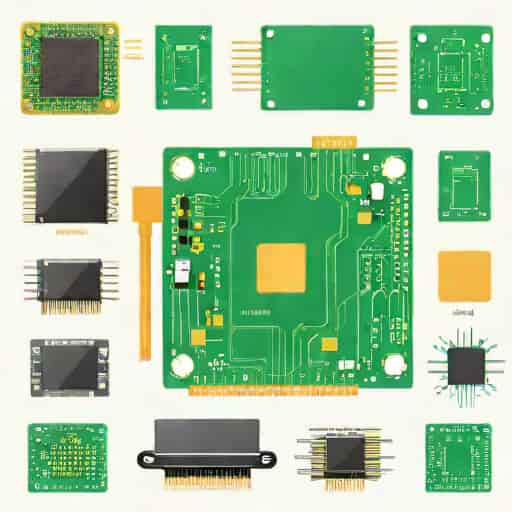
Working with microprocessors is a foundational skill for students and professionals in electronics and computer engineering. Among the many microprocessors studied in academic laboratories, the 8085 microprocessor remains a popular choice due to its simplicity, versatility, and historical significance. Familiarization with an 8085 microprocessor kit allows learners to gain hands-on experience in programming, interfacing, and understanding fundamental concepts of digital systems. By using the kit, beginners can translate theoretical knowledge into practical skills, enabling a deeper understanding of microprocessor operations, instruction sets, memory organization, and peripheral interfacing.
Introduction to the 8085 Microprocessor
The 8085 microprocessor is an 8-bit microprocessor developed by Intel in the mid-1970s. It is widely used in academic and training environments due to its straightforward architecture and ease of understanding. The 8085 operates with an 8-bit data bus and a 16-bit address bus, allowing it to access up to 64KB of memory. Its instruction set includes a variety of data transfer, arithmetic, logical, and control operations, making it suitable for learning fundamental programming and interfacing techniques.
Key Features of the 8085 Microprocessor
- 8-bit data bus and 16-bit address bus
- 74 instructions in its instruction set
- Five 8-bit registers (B, C, D, E, H, L) and an accumulator
- Single-phase +5V power supply
- Simple hardware interfacing capabilities with input/output devices
These features make the 8085 microprocessor ideal for beginners who want to learn programming concepts, data manipulation, and interfacing methods before moving on to more complex microprocessors or microcontrollers.
Understanding the 8085 Microprocessor Kit
An 8085 microprocessor kit is a complete training platform designed to provide hands-on experience with the 8085 architecture. The kit typically includes the microprocessor, memory modules (RAM and ROM), input/output interfaces, display devices like LEDs or seven-segment displays, and sometimes a keyboard or switches for data input. It allows users to write, load, and execute programs directly on the microprocessor, making it an essential tool for learning.
Components of the Kit
- Microprocessor ModuleContains the 8085 CPU along with necessary support circuits.
- Memory UnitTypically includes RAM for temporary storage and ROM for program storage.
- Input/Output InterfacesFacilitates interaction with external devices such as LEDs, switches, and displays.
- Control PanelIncludes switches or buttons to provide manual input, reset, or clock control.
- Power SupplyProvides regulated voltage required by the microprocessor and peripheral devices.
Familiarization with each component is crucial because understanding their role helps learners grasp the complete operation of the microprocessor system. For example, knowing how the input/output interface communicates with the CPU allows students to experiment with peripheral control programs effectively.
Steps to Familiarize with the 8085 Microprocessor Kit
Using an 8085 microprocessor kit requires a systematic approach. Beginners should follow a structured process to ensure comprehensive learning and avoid common mistakes. This process typically includes hardware understanding, basic programming, and interfacing experiments.
1. Exploring the Hardware
The first step is to understand the physical components and their connections. Learners should identify the CPU module, memory units, input/output devices, and control panel. Understanding how these elements interact is essential before executing any program. Observing data lines, address lines, and control signals can provide insight into microprocessor operations such as reading from or writing to memory.
2. Learning Basic Programming
Once the hardware is understood, learners can start writing simple programs in assembly language. The 8085 instruction set allows beginners to perform arithmetic operations, data transfer, logical operations, and branch instructions. Common exercises include
- Loading data into registers and memory locations
- Performing addition, subtraction, and other arithmetic operations
- Executing loops and conditional jumps
- Displaying results on connected LEDs or seven-segment displays
These exercises help learners see immediate results, reinforcing the understanding of how instructions translate into actions within the microprocessor.
3. Practicing Interfacing
After gaining confidence in programming, students can explore interfacing the 8085 with external devices. This involves writing programs to control LEDs, read input from switches, or interface with displays. Experiments with input/output ports deepen understanding of data transfer methods and the use of control signals like RD (read) and WR (write). Successful interfacing demonstrates how microprocessors interact with real-world devices, an essential skill for embedded system design.
Learning Objectives of Using the 8085 Kit
Familiarization with the 8085 microprocessor kit aims to achieve multiple learning objectives for students and beginners in electronics
- Understanding the architecture and functioning of an 8-bit microprocessor
- Learning assembly language programming for basic operations
- Gaining experience in data transfer and memory management
- Practicing interfacing with peripheral devices
- Developing problem-solving skills in a hardware-software environment
By meeting these objectives, learners build a solid foundation for advanced studies in microprocessors, microcontrollers, and embedded systems.
Tips for Effective Learning
To maximize the learning experience with an 8085 kit, beginners should adopt the following strategies
- Start with simple programs and gradually move to complex tasks
- Document each experiment to track results and learn from errors
- Use diagrams to visualize data flow and instruction execution
- Collaborate with peers to discuss different programming approaches
- Explore variations in interfacing to understand practical challenges
Applications and Practical Significance
Familiarization with the 8085 microprocessor kit is not limited to academic exercises. The skills acquired have practical applications in embedded system design, robotics, automation, and digital electronics. Understanding how to program and interface a microprocessor forms the basis for designing more complex systems using modern microcontrollers. Knowledge gained from the 8085 kit also aids in troubleshooting hardware and understanding low-level software operations.
Bridging Theory and Practice
The 8085 microprocessor kit provides a bridge between theoretical concepts and practical implementation. Students learn how abstract instructions in textbooks translate into real-world actions, such as turning on LEDs, controlling motors, or performing arithmetic operations on data. This experiential learning reinforces theoretical knowledge and enhances problem-solving skills in a tangible way.
Familiarization with the 8085 microprocessor kit is a vital step for anyone studying electronics or computer engineering. The hands-on experience helps learners understand the microprocessor architecture, programming, and interfacing in a practical context. By exploring the hardware, practicing assembly language programming, and performing interfacing experiments, students gain comprehensive insights into digital systems. The kit also develops critical thinking and problem-solving abilities, preparing learners for more advanced microprocessor and embedded system challenges. Overall, working with an 8085 microprocessor kit equips beginners with the knowledge and confidence to apply microprocessor concepts effectively in real-world applications, bridging the gap between theory and practice.