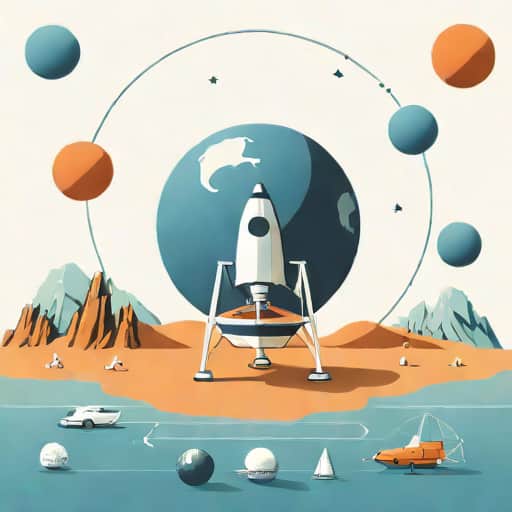
The question of whether life exists beyond Earth has fascinated scientists, philosophers, and the general public for centuries. As humans continue to explore the cosmos, advances in technology, astronomy, and astrobiology have made the search for extraterrestrial life more plausible than ever before. The vastness of the universe, combined with the discovery of exoplanets and extremophiles on Earth, has led researchers to consider that life may not be unique to our planet. Exploring the plausibility of life beyond Earth requires examining scientific evidence, theoretical frameworks, and the potential environments where life might exist.
The Vastness of the Universe and Probability of Life
The universe is incredibly vast, containing billions of galaxies, each with billions of stars and potentially even more planets. The sheer number of planets increases the statistical likelihood that some of them may host conditions suitable for life. Scientists estimate that there are more than 100 billion planets in the Milky Way alone, and discoveries of exoplanets within the habitable zones of their stars provide compelling targets for further study. The concept of the habitable zone refers to the region around a star where conditions allow for liquid water, an essential ingredient for life as we know it.
Exoplanets and Habitability
Exoplanets are planets that orbit stars outside our solar system, and thousands have been discovered in recent decades. Some of these planets lie in their star’s habitable zone, meaning they might have the right temperatures and environmental conditions to support life. Factors like planetary size, atmosphere, and chemical composition play critical roles in determining habitability. Scientists focus on Earth-like planets because life on Earth provides the most concrete model for what conditions are necessary for survival. Missions such as Kepler and TESS have greatly expanded our understanding of exoplanets, suggesting that habitable worlds may be more common than previously thought.
Life in Extreme Environments on Earth
The study of extremophiles organisms that thrive in extreme conditions on Earth has expanded the possibilities for life elsewhere. These organisms survive in environments once thought inhospitable, such as deep-sea hydrothermal vents, acidic lakes, high-radiation zones, and frozen polar regions. The existence of extremophiles demonstrates that life is highly adaptable and may arise in unexpected conditions beyond Earth. These findings suggest that planets and moons with harsh environments, previously considered unlikely to support life, could actually be viable habitats.
Implications for Extraterrestrial Life
- Moons like Europa and Enceladus have subsurface oceans beneath ice crusts, potentially harboring microbial life.
- Mars shows evidence of ancient water and seasonal liquid brines, suggesting past or even present microbial activity.
- Venus’ atmosphere contains trace chemicals like phosphine, which some scientists argue could indicate microbial life in high-altitude clouds.
These examples illustrate that life could exist in a variety of conditions, challenging traditional assumptions about habitability and broadening the search for extraterrestrial organisms.
Search for Biosignatures and Technosignatures
Modern astronomy and space exploration focus on identifying biosignatures and technosignatures, which are indicators of life or technological activity. Biosignatures include chemical markers such as oxygen, methane, or other compounds in a planet’s atmosphere that may suggest biological processes. Technosignatures, on the other hand, refer to evidence of advanced civilizations, such as artificial radio signals or megastructures. The detection of either would revolutionize our understanding of life in the universe and provide strong evidence for the plausibility of extraterrestrial life.
Current Methods and Missions
- The James Webb Space Telescope (JWST) analyzes atmospheres of exoplanets to detect potential biosignatures.
- Radio telescopes like the Allen Telescope Array search for unusual signals that could indicate intelligent life.
- Space probes like the Mars rovers and future Europa missions collect surface and subsurface data to assess habitability.
Theoretical Frameworks for Life Beyond Earth
Scientific theories such as the Drake Equation estimate the probability of intelligent civilizations in our galaxy based on factors like star formation, planetary systems, and the lifespan of technological societies. While the equation relies on many unknown variables, it provides a framework for understanding the statistical likelihood of extraterrestrial life. Additionally, panspermia the hypothesis that life can spread between planets via meteoroids or comets suggests that life may travel across the cosmos, increasing the plausibility of finding life on multiple celestial bodies.
Astrobiology and Interdisciplinary Research
Astrobiology is a multidisciplinary field combining biology, chemistry, geology, and astronomy to study the potential for life beyond Earth. Researchers examine the chemical building blocks of life, environmental conditions on other planets, and the evolutionary processes that could allow life to develop. This approach emphasizes that understanding life elsewhere requires not only space exploration but also in-depth knowledge of life on Earth and the principles that make life possible.
Challenges in Confirming Extraterrestrial Life
Despite the growing evidence and theoretical models, confirming life beyond Earth remains a significant challenge. Distance, technological limitations, and the subtlety of potential biosignatures make detection difficult. False positives are possible, as some chemical signatures can result from non-biological processes. Moreover, if life exists in microbial or sub-surface forms, it may be invisible to current observational techniques. Researchers must combine multiple lines of evidence and exercise caution to avoid premature conclusions.
Future Prospects
- Advancements in telescope technology will allow more detailed study of exoplanet atmospheres and surfaces.
- Next-generation space missions to moons and planets will explore subsurface oceans and ice layers for microbial life.
- International collaboration and data sharing will improve the accuracy and reliability of findings.
- Artificial intelligence and machine learning may help analyze vast amounts of astronomical data to identify promising signs of life.
Exploring the plausibility of life beyond Earth combines scientific inquiry, technological innovation, and philosophical curiosity. The discovery of exoplanets, extremophiles on Earth, and potential biosignatures on other celestial bodies supports the idea that life could exist elsewhere in the universe. While challenges remain in detection and confirmation, ongoing research and space exploration continue to expand our understanding of habitability and the potential for extraterrestrial life. As our knowledge grows, the search for life beyond Earth not only addresses profound questions about our place in the cosmos but also inspires humanity to explore, innovate, and imagine the possibilities of a universe filled with living worlds.