The Erinyes, also known as the Eumenides or the Furies, are among the most intriguing and fearsome figures in Greek mythology. These ancient deities represent vengeance, justice, and the inescapable consequences of wrongdoing, particularly crimes against family. Their story weaves through classical literature, from Hesiod’s Theogony to Aeschylus’ famous trilogy, highlighting the evolution of justice in Greek thought. Known for their terrifying appearance and relentless pursuit of wrongdoers, the Erinyes were feared by mortals and gods alike. At the same time, their later depiction as the Eumenides, or the kindly ones, reflects a transformation from wrathful agents of punishment to more protective and moralizing forces within society. Understanding the Erinyes offers insight into Greek cultural values, the interplay of fear and morality, and the ancient perception of justice.
The Origins of the Erinyes
The Erinyes are traditionally said to have sprung from the blood of Uranus, the sky god, when he was castrated by his son Cronus. Hesiod’s Theogony describes them as primordial chthonic deities, born from violence and intimately connected to the darker aspects of human experience. Their role was to pursue and punish those who committed serious moral crimes, particularly offenses such as murder, perjury, or violating family bonds. This origin story emphasizes their role as unavoidable forces of justice, born from the very chaos and cruelty of the divine world.
Names and Variations
The Erinyes are often depicted as a group of three sisters
- Alecto, who punishes moral crimes and anger.
- Megaira, who enforces vengeance against envy and jealousy.
- Tisiphone, who deals with murder and particularly blood crimes.
In some myths, their number and specific roles vary, reflecting local traditions and different literary sources. The alternative name, Eumenides, meaning the kindly ones, represents their later transformation in Athenian society from feared punishers to protectors of justice and civic order.
Appearance and Symbolism
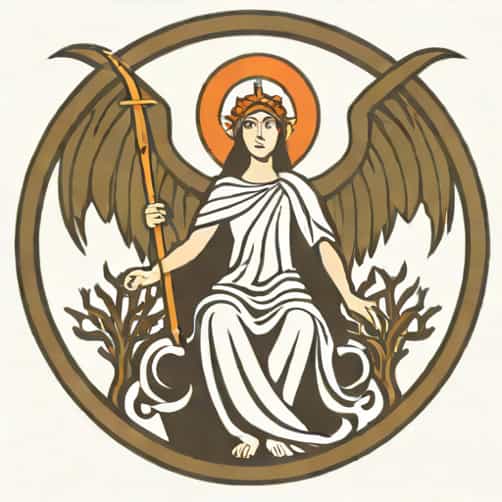
The Erinyes are often described as terrifying beings, with snakes entwined in their hair, eyes that drip venom, and bodies dark with shadow. They were sometimes depicted with wings and carrying scourges to punish the guilty. This fearsome appearance underscores their role as relentless avengers. Their connection to the earth, as chthonic deities, also highlights their link to deep moral laws and the idea that wrongdoing cannot escape divine retribution.
Symbolic Roles
Beyond their physical depiction, the Erinyes symbolize the moral and social consequences of crime. They act as reminders that human actions have repercussions, especially violations of familial and social duties. The Furies embody the notion that guilt and wrongdoing are inescapable, serving both as punishment and as a warning. In this way, they function as moral agents, ensuring that society upholds ethical standards and respect for sacred bonds.
The Erinyes in Literature
One of the most famous literary works featuring the Erinyes is Aeschylus’ trilogy, particularly the play The Eumenides. In this story, the goddess Athena intervenes to transform the Furies from relentless avengers into guardians of justice within the Athenian court system. The narrative follows the trial of Orestes, who kills his mother Clytemnestra to avenge his father Agamemnon. The Erinyes pursue Orestes for matricide, illustrating the tension between personal vengeance and societal law.
The Eumenides and Civic Justice
In The Eumenides, Athena offers the Erinyes a new role as protectors of civic order, shifting their focus from personal vengeance to lawful justice. This transition reflects the evolution of Greek ideas about morality, law, and social harmony. By becoming the Eumenides, the Furies embody the principle that punishment should be administered through reasoned judicial processes rather than unchecked rage, blending divine authority with human legal systems.
Roles and Functions
The Erinyes serve multiple functions within Greek mythology and society
- Agents of vengeance for serious moral and familial crimes.
- Enforcers of ethical behavior, ensuring societal and divine laws are respected.
- Symbols of conscience, reminding humans that wrongdoing carries consequences.
- Protectors of civic order when transformed into the Eumenides, supporting justice within structured courts.
These roles highlight the complexity of their character both terrifying and necessary, harsh yet ultimately guiding humans toward ethical behavior.
Influence on Later Culture
The concept of the Erinyes influenced later Roman mythology, where they were known as the Dirae. Their legacy persists in literature, art, and psychological interpretations, often symbolizing guilt, conscience, or the inevitability of justice. Writers and philosophers have drawn on their dual nature, exploring themes of vengeance, morality, and the tension between private and public justice.
Modern Interpretations
Today, the Erinyes are often referenced in discussions of morality, ethics, and justice. Their story resonates with universal themes of accountability, the consequences of wrongdoing, and the balance between vengeance and legal justice. The duality of their nature-as both fearsome Furies and protective Eumenides-provides a compelling metaphor for the human struggle to reconcile emotional impulses with rational law.
Psychological and Cultural Symbolism
Psychologically, the Erinyes can be seen as embodiments of guilt and internalized conscience, haunting individuals who commit moral transgressions. Culturally, they illustrate how societies evolve from reliance on personal revenge to structured legal systems, reflecting the development of organized justice and moral philosophy. Their enduring presence in literature and art shows the lasting human fascination with the concepts of retribution and moral order.
The Erinyes, or Eumenides, represent one of the most profound and enduring elements of Greek mythology. From their terrifying origins as relentless pursuers of vengeance to their transformation into the kindly protectors of justice, they encapsulate the tension between personal retribution and societal law. Their role highlights the Greek understanding of morality, family loyalty, and ethical responsibility, showing that wrongdoing, particularly against loved ones, cannot be ignored. By studying the Erinyes, we gain insight into the moral framework of ancient Greece, the evolution of justice, and the timeless human concerns with guilt, punishment, and ethical conduct.
Ultimately, the story of the Erinyes teaches that justice is both inevitable and necessary. Their dual nature, as Furies and Eumenides, reminds us that while vengeance may be fearsome, it can be transformed into structured, protective forces that uphold social order. This enduring myth continues to inspire reflection on morality, law, and the consequences of human actions, making the Erinyes a vital symbol in the tapestry of Greek mythology and beyond.