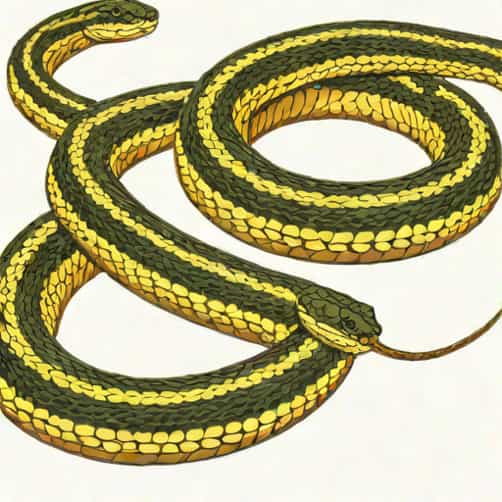
The eastern garter snake is a common reptile found throughout the eastern regions of North America, often seen in gardens, forests, wetlands, and suburban areas. Many people are curious about whether this snake is venomous and whether it poses a threat to humans or pets. Understanding the biology, behavior, and potential risks associated with eastern garter snakes is important for anyone living in or visiting areas where they are prevalent. Despite their often alarming appearance and quick movements, eastern garter snakes are generally harmless and play an important ecological role in controlling pests and maintaining local biodiversity.
Overview of the Eastern Garter Snake
The eastern garter snake (Thamnophis sirtalis sirtalis) is a nonvenomous species that belongs to the Colubridae family. These snakes are easily recognized by their characteristic longitudinal stripes, which usually run along the length of their bodies, and their varied coloration ranging from brown to green, often with yellow or orange stripes. Adults typically reach lengths of 18 to 26 inches, though some can grow larger. Their diet consists primarily of small amphibians, insects, earthworms, and occasionally small fish or rodents, making them valuable in controlling pest populations.
Venom and Toxicity
While eastern garter snakes do produce a mild venom, it is not considered dangerous to humans. Their venom is primarily used to subdue small prey like amphibians and invertebrates. In scientific terms, the venom is delivered through modified saliva rather than through specialized fangs like those of pit vipers. When humans are bitten, the effects are usually limited to minor irritation, redness, or localized swelling. Serious allergic reactions are extremely rare, and bites almost never require medical attention beyond basic cleaning of the wound.
Misconceptions About Venomous Snakes
One of the most common misconceptions about eastern garter snakes is that they are highly venomous and pose a significant threat to humans. This belief likely arises from their rapid movements, defensive behaviors, and resemblance to other more dangerous snakes. However, their venom is very weak and their teeth are small, making bites a minor concern in almost all cases. Educational efforts are important to help people differentiate between harmless species like garter snakes and truly venomous species such as copperheads or rattlesnakes.
Defensive Behavior
When threatened, eastern garter snakes may display several defensive behaviors that can intimidate humans or pets. These behaviors include
- Rapid movements or fleeing to hide under vegetation or rocks.
- Hissing or vibrating their tails to mimic more dangerous snakes.
- Releasing a foul-smelling musk from glands near the tail to deter predators.
- Biting in self-defense, though these bites are rarely harmful.
Understanding these behaviors helps people remain calm when encountering garter snakes and reduces unnecessary fear or attempts to kill the snakes.
Ecological Importance
Eastern garter snakes play a vital role in ecosystems throughout their range. By feeding on amphibians, insects, and small rodents, they help maintain balanced populations and reduce the risk of overpopulation of certain species. In addition, they serve as prey for larger predators such as hawks, owls, and raccoons, forming an essential link in the food web. Protecting garter snakes and their habitats ensures that ecosystems remain healthy and resilient.
Habitat and Distribution
Eastern garter snakes are highly adaptable and can thrive in a wide range of environments. Common habitats include
- Wetlands and marshes, where amphibian prey is abundant.
- Wooded areas with plenty of leaf litter and undergrowth for hiding.
- Suburban gardens, parks, and yards that provide shelter and food sources.
- Fields and meadows, which offer opportunities for hunting insects and small mammals.
Their adaptability allows them to coexist with humans in rural, suburban, and even some urban areas without posing a significant threat.
Identifying Eastern Garter Snakes
Being able to correctly identify eastern garter snakes helps prevent unnecessary concern about venomous snakes. Key identification features include
- Three longitudinal stripes running from head to tail, often yellow or orange on a darker background.
- A relatively slender body with smooth scales.
- A small, slightly pointed head that blends with the neck.
- Behavior that includes slow movements when not threatened and quick bursts when disturbed.
By recognizing these characteristics, people can differentiate garter snakes from more dangerous species and take appropriate precautions.
Safety Tips Around Garter Snakes
Even though eastern garter snakes are not dangerous, it is wise to exercise basic safety measures when encountering any wild snake
- Do not attempt to pick up or provoke the snake.
- Keep pets and children away from areas where snakes are present.
- Wear gloves when gardening or handling debris in areas with snake activity.
- Allow the snake to move away naturally; they usually do not seek human contact.
The eastern garter snake is a fascinating and largely harmless species that contributes significantly to the health of its ecosystem. While it does produce a mild venom, this venom is only effective against small prey and poses little to no danger to humans. Misconceptions about its venomous nature often lead to unnecessary fear, but understanding the snake’s behavior, ecological role, and identification features can help people coexist safely with these reptiles. Observing eastern garter snakes in their natural habitats provides an opportunity to appreciate their importance, beauty, and the vital balance they bring to the environments of eastern North America.