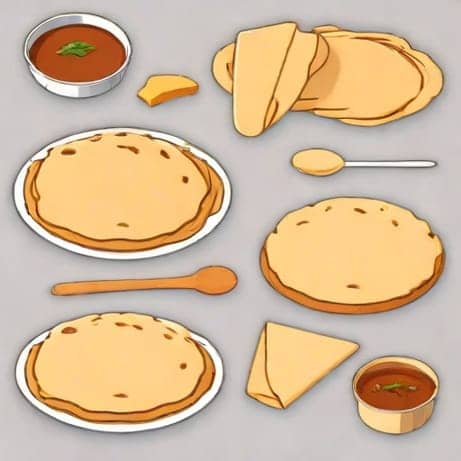
In Indian households, flatbreads are more than just food; they are part of daily life, culture, and tradition. Among the many varieties of Indian breads, roti and chapati are two of the most commonly used terms, often leading to confusion. Many people use the words interchangeably, while others insist there is a difference. Understanding the difference between roti and chapati in Hindi language usage and cultural context helps clarify why both terms exist and how they are applied in everyday conversation.
Meaning of Roti in Hindi Usage
In Hindi, the word roti is a broad and flexible term. It is commonly used to refer to any type of Indian flatbread made from flour and cooked on a flat surface. When someone says roti in Hindi, they may not always mean a specific recipe or method.
Roti in Hindi can also be used metaphorically to mean food or livelihood. For example, phrases related to earning a living often use the word roti, showing how deeply the term is rooted in daily language and culture.
Roti as a General Category
From a linguistic point of view, roti acts as an umbrella term. It may include different types of flatbreads depending on the region, ingredients, or cooking style.
-
Wheat-based flatbreads
-
Millet or corn flatbreads
-
Thin or thick variations
This wide usage is one of the main reasons why people often think roti and chapati are exactly the same.
Meaning of Chapati in Hindi Usage
The word chapati in Hindi refers to a more specific type of flatbread. Chapati usually means a thin, unleavened flatbread made from whole wheat flour, also known as atta.
In many Hindi-speaking regions, chapati is considered a type of roti rather than a separate category. This distinction becomes clearer when listening to how people speak in daily life.
Chapati as a Specific Preparation
Chapati is traditionally made using a simple dough of whole wheat flour and water. It is rolled thin and cooked on a hot pan, often puffing up when exposed to direct heat.
Because of its simplicity and consistency, chapati is often associated with everyday home-cooked meals.
Linguistic Difference Between Roti and Chapati in Hindi
From a Hindi language perspective, the difference between roti and chapati is subtle rather than strict. Roti is the more general term, while chapati is more descriptive.
In spoken Hindi, someone may say do roti to mean two flatbreads, regardless of whether they are technically chapatis. On the other hand, using the word chapati may emphasize the style or preparation.
Ingredient Differences Explained Simply
One commonly discussed point in the difference between roti and chapati is the ingredients used. While both are often made from whole wheat flour, roti as a category can include variations.
Typical Ingredients for Roti
-
Whole wheat flour
-
Other flours such as jowar, bajra, or makki
-
Water
Typical Ingredients for Chapati
-
Whole wheat flour (atta)
-
Water
This makes chapati a more standardized form, while roti can be more diverse.
Cooking Method and Thickness
Another point often mentioned when discussing the difference between roti and chapati in Hindi is the cooking method. Chapatis are usually rolled very thin and cooked evenly.
Roti, depending on the type, may be thicker or thinner. Some rotis are cooked directly on the flame, while others may stay on the pan throughout the cooking process.
Puffing and Texture
Chapatis are known for puffing up when cooked properly, creating air pockets inside. This is often seen as a sign of good technique.
Roti may or may not puff, depending on its ingredients and thickness.
Cultural and Regional Usage
The difference between roti and chapati in Hindi becomes more noticeable when looking at regional habits. In North India, chapati is a daily staple and the term is widely used.
In other regions, people may simply say roti, even when referring to what is technically a chapati.
Urban and Rural Language Differences
In urban Hindi, both words are commonly understood and used. In rural areas, roti is often the preferred word because of its broader meaning.
This shows how language adapts to lifestyle and tradition.
Roti and Chapati in Everyday Conversation
In daily Hindi conversation, the difference between roti and chapati rarely causes misunderstanding. Context usually makes the meaning clear.
For example, when someone asks if chapatis are ready, they are likely referring to freshly cooked wheat flatbreads. When someone says they need roti for dinner, the focus is on food in general.
Nutritional Perception
Many people believe chapati is healthier because it is usually made from whole wheat flour without oil or butter. This perception has made chapati popular among health-conscious individuals.
Roti, being a broader term, includes both simple and richer variations, depending on ingredients.
Why the Confusion Exists
The confusion around the difference between roti and chapati in Hindi exists mainly because the language allows flexibility. Hindi often uses one word to cover multiple related ideas.
Over time, food terms have evolved through usage rather than strict definitions.
Modern Usage and Global Influence
Outside India, the word chapati is more commonly used in restaurants and cookbooks to describe Indian flatbread. Roti may be used to describe a broader range of breads.
This global usage has also influenced how people within India perceive the two terms.
Simple Way to Remember the Difference
A practical way to understand the difference is to remember that chapati is a type of roti. All chapatis are rotis, but not all rotis are chapatis.
This explanation aligns well with how the terms are used in Hindi-speaking communities.
the Difference Between Roti and Chapati in Hindi
The difference between roti and chapati in Hindi is more about language, context, and tradition than strict culinary rules. Roti represents a broad idea of flatbread and sustenance, while chapati refers to a specific, simple preparation.
Understanding this distinction adds depth to both language and food culture, helping people appreciate how everyday words carry history, habit, and meaning beyond the plate.