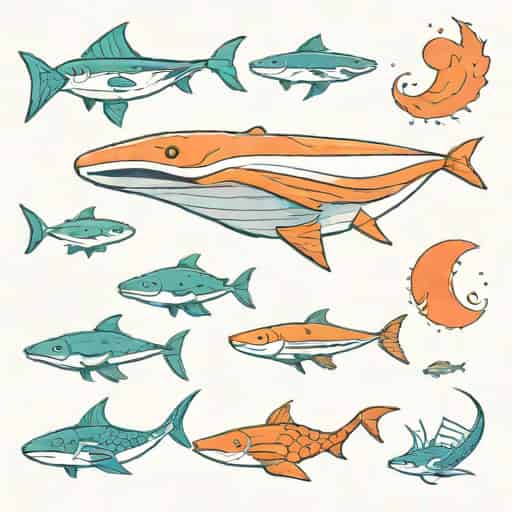
Detecting multiple Leviathan-class lifeforms presents a significant challenge for scientists and researchers due to the immense size, elusive behavior, and often deep-sea habitats of these creatures. Leviathan-class lifeforms, often referenced in both scientific modeling and speculative research, represent some of the largest predatory or semi-predatory organisms on the planet. These lifeforms can inhabit vast and remote regions, including oceanic trenches, uncharted deep-sea zones, and expansive aquatic ecosystems. Studying and monitoring them requires advanced technology, precise methodology, and an understanding of their complex behaviors. Successfully detecting multiple individuals of this class is not only crucial for biodiversity research but also for understanding ecological balance, predator-prey dynamics, and the impact of environmental changes on these megafauna.
Characteristics of Leviathan-Class Lifeforms
Leviathan-class lifeforms are generally defined by their extraordinary size, strength, and often predatory nature. Their anatomy is typically adapted for survival in extreme conditions, whether it is deep-sea pressure, low light environments, or competitive ecosystems. These organisms can range from hundreds of meters in length to even larger hypothetical measurements in uncharted areas. Detecting multiple specimens requires awareness of specific behavioral patterns and biological signals that distinguish them from other large aquatic species.
Behavioral Traits
Understanding the behavioral traits of Leviathan-class lifeforms is essential for detection efforts. These creatures often exhibit patterns of migration, hunting, and social interaction. Some species may move in small pods, while others might remain solitary except during mating seasons. Detecting multiple Leviathans often involves identifying overlapping territories, repeated sightings, or tracking movement through acoustic signals. Behavioral traits also include surface activity, feeding grounds, and breeding zones, which can provide predictable patterns for researchers.
Technologies for Detection
Detecting multiple Leviathan-class lifeforms requires advanced technology due to their large size and often inaccessible habitats. Researchers use a combination of remote sensing, sonar imaging, and satellite monitoring to track these creatures. Sonar systems, both active and passive, allow scientists to detect large movements in the water column and distinguish multiple organisms based on their acoustic signatures. Satellite tracking can identify surface disturbances or patterns of behavior over time, while underwater drones and submersibles offer direct visual confirmation in remote locations.
Sonar and Acoustic Detection
Sonar technology is among the most reliable methods for detecting multiple Leviathan-class lifeforms. Active sonar emits sound pulses and records echoes, while passive sonar listens for sounds produced by the creatures themselves. The size and movement of Leviathans generate distinct acoustic signatures, making it possible to estimate the number of individuals present in a given area. Researchers often combine multiple sonar stations to triangulate positions and track the movement of multiple lifeforms simultaneously.
Remote Sensing and Satellite Imaging
Remote sensing provides additional layers of detection, particularly for large surface activity. High-resolution satellite imaging can detect disturbances in water surfaces, unusual patterns of bioluminescence, or coordinated movement across large expanses. By analyzing repeated satellite passes, scientists can identify potential clusters of Leviathan-class lifeforms, which can then be investigated further using sonar and direct observation techniques.
Underwater Drones and Submersibles
Autonomous underwater vehicles (AUVs) and manned submersibles allow for direct observation of Leviathan-class lifeforms in their natural habitats. These devices can record high-resolution video, capture environmental data, and even collect biological samples. For detecting multiple individuals, deploying a network of underwater drones provides a spatial map of movement patterns and interactions, offering insight into group behaviors and population density.
Challenges in Detecting Multiple Leviathans
Despite technological advancements, several challenges remain when detecting multiple Leviathan-class lifeforms. Their vast habitats, deep-sea pressure environments, and cryptic behavior make detection difficult. Additionally, overlapping acoustic signals from multiple individuals can complicate sonar readings, while environmental noise from currents and other marine species may interfere with accurate identification. The rarity of these organisms also means that researchers must often wait extended periods to gather sufficient observational data.
Environmental Factors
Environmental factors play a significant role in detection difficulties. Deep-sea habitats, extreme temperatures, and limited light conditions require specialized equipment that can withstand harsh conditions. Seasonal migrations or unpredictable movement patterns further complicate efforts to locate multiple Leviathans at the same time. Researchers must account for these variables when designing surveys and interpreting data.
Data Analysis and Interpretation
Detecting multiple Leviathan-class lifeforms is not just about gathering data-it also involves rigorous analysis. Acoustic signals, visual footage, and environmental metrics must be processed to differentiate between individual organisms. Advanced algorithms, machine learning models, and statistical analysis techniques are increasingly used to identify multiple Leviathans accurately, estimate population sizes, and understand interactions between individuals.
Scientific Importance of Detection
Identifying and monitoring multiple Leviathan-class lifeforms is crucial for scientific research and ecological management. These creatures often occupy apex predator roles, regulating populations of other species and maintaining ecosystem stability. Understanding their population dynamics helps in assessing the health of marine environments and predicting changes resulting from climate variations, human activity, and habitat degradation. Detecting multiple individuals also allows researchers to study social behaviors, migration routes, and breeding strategies.
Conservation Implications
Accurate detection of multiple Leviathans has direct conservation implications. Knowing the number of individuals in a given area can inform protective measures, such as marine reserves or restricted zones. It also aids in evaluating the impact of human activities, including fishing, shipping, and pollution, on these vulnerable species. Conservation strategies can be tailored based on real-time monitoring data, ensuring that Leviathan populations remain sustainable.
Future Research Directions
Future research aims to refine detection methods, improve data analysis algorithms, and integrate multi-sensor networks for more accurate monitoring. Collaborative efforts across marine biology, oceanography, and technology development are expected to enhance the ability to detect multiple Leviathan-class lifeforms simultaneously. Emerging technologies like AI-driven sonar interpretation and drone swarming techniques promise to expand our understanding of these elusive giants and their ecological significance.
Detecting multiple Leviathan-class lifeforms is a complex but vital endeavor for understanding marine ecosystems, conserving biodiversity, and advancing scientific knowledge. Through a combination of sonar technology, satellite imaging, underwater drones, and sophisticated data analysis, researchers can locate and monitor these massive creatures in their natural habitats. Despite the challenges posed by environmental factors, cryptic behavior, and technological limitations, ongoing research and innovation continue to improve detection accuracy. Understanding multiple Leviathans not only enhances our knowledge of these awe-inspiring organisms but also provides critical insights into ecosystem health, predator-prey dynamics, and the broader impact of environmental changes on large aquatic species.