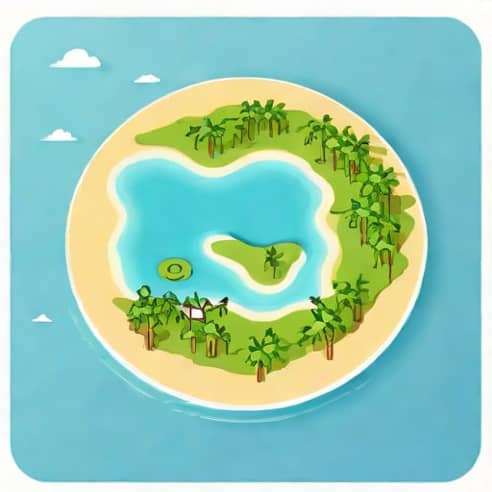
In the study of geography, understanding the term atoll is essential for grasping the formation and characteristics of unique coastal and oceanic features. An atoll is a type of coral island that forms a ring-shaped structure, often surrounding a central lagoon. These formations are typically found in tropical ocean regions and are created through a combination of volcanic activity, coral growth, and gradual erosion. Atolls are not only fascinating from a geological perspective, but they also play crucial roles in marine ecosystems and human settlement. This topic will explore the definition of an atoll, its formation process, geographical examples, ecological significance, and practical considerations for humans who live on or near these distinctive landforms.
Definition of Atoll
An atoll is a ring-shaped island, typically made of coral, that encircles a central lagoon. Unlike other islands that form from volcanic or tectonic activity alone, atolls result from a complex process involving the growth of coral reefs on the edges of a sinking volcanic island. The term atoll is used specifically in geography to describe this unique formation, which combines both marine and terrestrial elements. Atolls are often low-lying and may consist of multiple small islets forming the circular structure around a calm lagoon, making them visually striking and ecologically important.
Formation of Atolls
The formation of an atoll is a gradual process that can take thousands or even millions of years. It begins with a volcanic island rising above the ocean surface. Coral reefs start to form along the coastline of this island, creating a fringing reef. Over time, the volcanic island slowly erodes and sinks due to geological and sea level changes, while the coral continues to grow upwards. Eventually, the central island may disappear below sea level, leaving a ring of coral reefs surrounding a lagoon. This process was first described scientifically by Charles Darwin during his voyage on the HMS Beagle and remains one of the fundamental concepts in marine geology and physical geography.
Characteristics of Atolls
Atolls have several defining characteristics that make them distinct from other types of islands
- Ring-shaped structureThe coral formation typically creates a circular or oval ring, enclosing a lagoon.
- LagoonsThe central water body is often calm and shallow, providing a unique marine habitat.
- Low elevationAtolls are usually flat and only slightly above sea level, which makes them vulnerable to storm surges and rising sea levels.
- Coral compositionThe majority of the landmass is made up of coral debris, sand, and small rocks.
- BiodiversityAtolls support rich marine life, including fish, mollusks, sea birds, and other coastal species.
Examples of Atolls in the World
Atolls are commonly found in tropical and subtropical oceans. Some well-known examples include
- MaldivesA nation in the Indian Ocean composed of 26 atolls with hundreds of islands.
- Bikini AtollLocated in the Marshall Islands, it is famous for historical nuclear testing.
- FunafutiThe capital atoll of Tuvalu, known for its extensive lagoon and coral reefs.
- Kiritimati (Christmas Island)Part of Kiribati, it is one of the largest coral atolls in the world.
- RangiroaA large atoll in French Polynesia, known for its diving sites and biodiversity.
Ecological Significance of Atolls
Atolls play an essential role in marine and coastal ecosystems. Their coral reefs provide habitats for thousands of marine species, acting as nurseries for fish and other aquatic life. The lagoon often supports seagrass beds and mangroves, which stabilize sediments and provide food for birds and other wildlife. Coral reefs in atolls also act as natural barriers against ocean waves, protecting coastal areas from erosion and storms. The ecological balance of atolls is delicate, and these environments are highly sensitive to climate change, ocean acidification, and human activity.
Human Interaction with Atolls
Humans have settled on atolls for centuries, benefiting from fishing, tourism, and sometimes agriculture. However, living on atolls poses challenges due to limited freshwater resources, low elevation, and vulnerability to natural disasters such as cyclones and tsunamis. Sustainable management is crucial to preserve both the human communities and the fragile ecosystems of atolls. In addition, many atolls are now destinations for ecotourism, scientific research, and marine conservation efforts.
Atolls and Climate Change
Atolls are among the most vulnerable landforms to the impacts of climate change. Rising sea levels threaten to submerge low-lying islands, while ocean warming and acidification harm coral reefs. These changes can lead to loss of biodiversity, reduced fish stocks, and displacement of human populations. Efforts to protect atolls include coral reef restoration, sustainable tourism practices, and international cooperation on climate adaptation strategies. Understanding the geography and formation of atolls is essential for planning and implementing effective conservation measures.
Why Studying Atolls is Important
Studying atolls provides valuable insights into marine geology, climate science, and ecosystem dynamics. Geographers, ecologists, and oceanographers analyze atolls to understand coral reef growth, sediment deposition, and the effects of sea level changes over time. Additionally, atolls offer a natural laboratory for studying biodiversity, sustainable resource management, and human-environment interaction. Their unique structure and ecological significance make them key subjects in both academic research and environmental policy.
An atoll is a remarkable geographic feature that illustrates the intricate relationships between volcanic activity, coral growth, and oceanic processes. Its ring-shaped structure, central lagoon, and low-lying islands make it both beautiful and ecologically important. Atolls support diverse marine life, provide resources for human communities, and offer insights into geological and environmental changes. However, they are also highly vulnerable to climate change and human impact. By understanding atolls, their formation, and their significance, we can appreciate the delicate balance of nature and work toward preserving these unique and vital landforms for future generations. Geography enthusiasts, ecologists, and travelers alike benefit from recognizing the importance of atolls in the natural world, emphasizing the need for sustainable interaction with these extraordinary features.