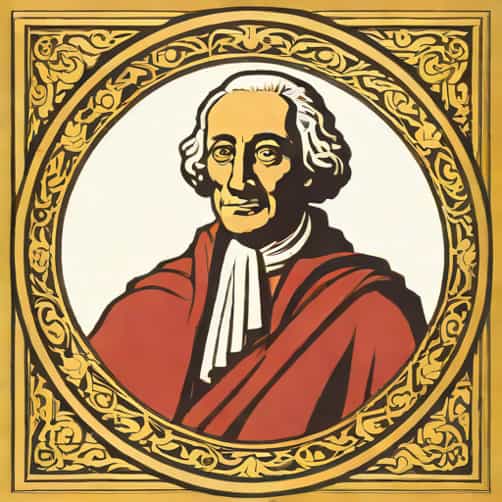
Baron de Montesquieu, born Charles-Louis de Secondat in 1689, was a French philosopher and political thinker whose ideas significantly influenced modern political theory. Known for his incisive analysis of government structures and the principles of liberty, Montesquieu’s beliefs remain relevant in discussions about democracy, the rule of law, and the separation of powers. His reflections on society, human nature, and governance continue to shape contemporary political thought and constitutional frameworks around the world.
Early Life and Intellectual Background
Montesquieu was born into a noble family in La Brède, near Bordeaux, France. Educated in law at the University of Bordeaux, he developed a keen interest in history, law, and philosophy. Early exposure to the legal and political systems of France helped Montesquieu understand the intricacies of governance and the impact of laws on society. His noble upbringing allowed him access to intellectual circles where he could engage with the ideas of other Enlightenment thinkers, fostering his analytical and critical approach to societal structures.
Core Beliefs and Philosophical Principles
Separation of Powers
One of Montesquieu’s most enduring contributions to political theory is the concept of the separation of powers. He argued that political authority should be divided among distinct branches of government-legislative, executive, and judicial-to prevent any single branch from becoming too powerful. Montesquieu believed that this system was essential for safeguarding liberty and maintaining a balance of power. His ideas directly influenced the structure of modern democratic governments, particularly the United States Constitution, which implements a separation of powers to ensure checks and balances.
The Rule of Law
Montesquieu emphasized that laws must govern a nation, rather than arbitrary decisions by rulers. He advocated for the establishment of a legal framework that applies equally to all citizens, including those in positions of power. According to Montesquieu, the rule of law protects individual freedoms and provides stability in society. By codifying laws and ensuring they are enforced impartially, governments can prevent abuse of power and promote justice.
Moderation and Liberty
Montesquieu valued moderation in governance and warned against extremes. He believed that unchecked power, whether in the hands of a monarch or a legislative body, could lead to tyranny. Liberty, according to Montesquieu, flourishes when political power is distributed and balanced, allowing citizens to participate in civic life without fear of oppression. He argued that freedom and social order are interconnected, with each requiring careful maintenance to ensure a healthy political environment.
Climate and Geography Influence on Societies
Another unique aspect of Montesquieu’s philosophy is his attention to the role of climate and geography in shaping human behavior and political institutions. In his seminal work, The Spirit of the Laws, he posited that the physical environment could influence the laws, customs, and governance of a nation. For example, harsher climates might encourage stricter laws and more centralized authority, whereas temperate regions might foster individual freedom and more democratic governance. This perspective introduced a comparative and empirical approach to political science, emphasizing that context matters in understanding government and society.
Views on Democracy and Republics
Montesquieu distinguished between different forms of government, including monarchies, republics, and despotisms. He believed that republics, where citizens participate in governance either directly or through elected representatives, are most compatible with virtue and civic responsibility. However, he also recognized the potential dangers of factionalism and corruption, advocating for a system of checks and balances to mitigate these risks. In monarchies, he favored constitutional constraints on royal power, while he warned that despotisms, characterized by absolute and unchecked authority, undermine both liberty and societal well-being.
Influence of Roman Law
Montesquieu drew heavily on the history of Rome and its legal traditions. He admired the Roman Republic for its civic institutions and the balance it struck between public duty and individual rights. By studying historical examples, Montesquieu derived lessons about the importance of laws, institutional design, and the consequences of concentrated power. This historical lens allowed him to develop principles that could guide contemporary governments toward stability and liberty.
Impact on Modern Political Thought
The beliefs of Montesquieu have had a profound and lasting impact on political theory, law, and constitutional design. His advocacy for the separation of powers influenced many democratic constitutions, including that of the United States and other modern republics. Political scientists continue to study his work to understand how power, laws, and social conditions interact to shape societies. Montesquieu’s ideas also resonate in discussions about human rights, governance reforms, and the promotion of accountable institutions worldwide.
Legacy in the Enlightenment
As part of the broader Enlightenment movement, Montesquieu’s work emphasized reason, empiricism, and critical inquiry into political and social structures. He influenced contemporary thinkers and writers, including Voltaire, Rousseau, and later, the framers of democratic constitutions. His insistence on the careful organization of power and the protection of liberty aligns with Enlightenment ideals of rationality, justice, and human dignity.
Criticisms and Limitations
While Montesquieu’s contributions are widely celebrated, some critics argue that his theories do not fully account for the complexities of modern governance. For instance, the notion that climate alone significantly shapes societies may be considered overly deterministic. Additionally, implementing a perfect balance of powers can be challenging, and some governments have struggled to apply his principles effectively. Nevertheless, his work provides a valuable framework for analyzing political institutions and guiding reform.
Baron de Montesquieu’s beliefs form a cornerstone of modern political thought. His principles of the separation of powers, the rule of law, moderation in governance, and the contextual understanding of societies have shaped democratic institutions worldwide. By advocating for liberty, justice, and accountability, Montesquieu offered a vision of governance that remains relevant centuries after his death. His work continues to inspire policymakers, scholars, and citizens to consider the careful design of political institutions and the protection of individual freedoms as central to a just and stable society.