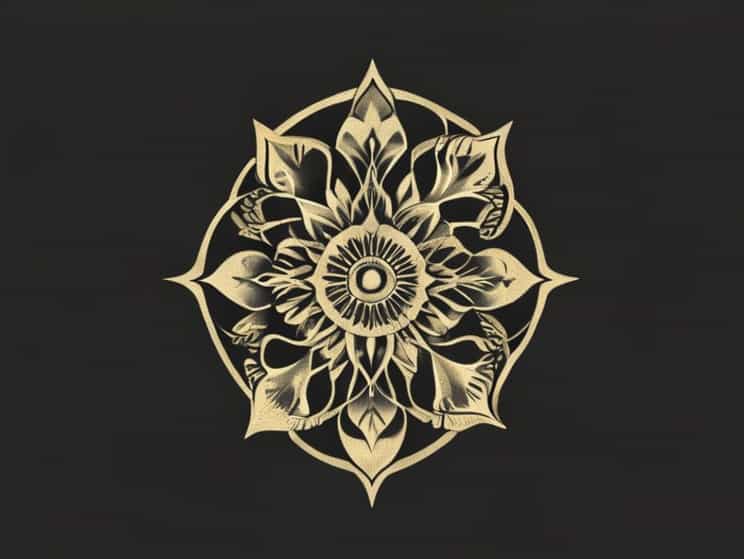
The phrase a portend of the artist as a young mandala suggests a vision that blends personal growth, creativity, and spiritual symbolism. It brings together two powerful images the artist in the early stages of becoming and the mandala as a timeless symbol of wholeness and balance. To understand this expression is to reflect on how creativity unfolds, how young artists shape their identity, and how the mandala mirrors the journey of inner exploration. The portend implies a sign, a foreshadowing, that what begins in youthful imagination may later manifest into something profound and complete.
The Artist’s Journey in Youth
A young artist often stands at the threshold of self-discovery. Their early works are experiments, sketches, and reflections of their inner world. Just as a mandala begins with a central point and expands outward in patterns, the young artist also builds identity and expression step by step. Each stroke, word, or sound becomes a fragment of a larger vision that will only reveal its full meaning with time.
Exploration and Uncertainty
At the beginning, the artist does not always know the destination. Youth is a time of uncertainty, but it is also filled with bold experimentation. This stage mirrors the unfinished mandala open, evolving, and shifting. Mistakes are not failures; they are part of the design. The portend is in the courage to begin, knowing that the final form has not yet arrived.
- Testing new techniques and styles.
- Seeking inspiration from culture, nature, and personal experiences.
- Balancing between imitation and originality.
The Mandala as a Metaphor
A mandala, traditionally used in spiritual practices, symbolizes wholeness, harmony, and the cycle of life. Its circular patterns radiate from the center, suggesting unity between the inner self and the outer world. When connected to the image of the young artist, the mandala becomes more than decoration it becomes a metaphor for growth and identity.
Center and Expansion
Every mandala starts with a single center point. Similarly, the young artist begins with a core perhaps an instinct, a passion, or a question. From there, creativity expands outward in layers. The patterns may be symmetrical or chaotic, but they are always interconnected. This structure suggests that the early impulses of youth will eventually contribute to a larger, cohesive design.
Portend as a Sign of Becoming
The word portend conveys a sense of foreshadowing, as if the presence of the young artist is already a signal of what is to come. When linked with the mandala, it suggests that even in its unfinished state, the journey contains signs of eventual greatness. The young artist may not yet recognize the full picture, but the seeds of maturity are visible in their early creations.
Recognizing Early Patterns
Teachers, mentors, and peers often notice recurring motifs in the works of young artists. These early patterns function like the first geometric shapes of a mandala. They indicate direction, energy, and possibility. Though not yet complete, they reveal a trajectory toward deeper meaning.
The Interplay of Chaos and Order
Art, especially in youth, often oscillates between chaos and order. A mandala represents structured order, but within its construction lies freedom and fluidity. Likewise, the young artist learns to embrace mistakes, accidents, and improvisations. These unpredictable elements eventually shape the harmony of the final work.
- Spontaneous creativity parallels chaotic energy.
- Deliberate practice introduces balance and structure.
- Together, they form a dynamic path toward mastery.
The Mandala as Self-Reflection
To create or contemplate a mandala is to engage in meditation. For a young artist, this process reflects self-exploration. Each brushstroke, line, or note is a dialogue with the self. The mandala’s circular design reinforces the idea that identity is not linear but cyclical constantly revisited, redefined, and renewed. The portend here is that the artist’s self-awareness will deepen, eventually crystallizing into a clearer artistic voice.
Wholeness in Creative Growth
Even when incomplete, the mandala reflects a sense of wholeness. Similarly, a young artist, though still learning, already embodies the essence of artistry. Growth does not erase earlier stages but integrates them into a larger pattern. The youthful struggles, doubts, and passions all become part of the circle of creativity.
The Role of Symbolism
A mandala is rich in symbolic meaning cosmos, balance, infinity. For a young artist, symbolism becomes a tool to connect inner vision with outer expression. The portend lies in how early symbols, even those drawn unconsciously, may resurface in later works with greater clarity. Over time, they reveal continuity and coherence across the artist’s journey.
Symbols as Guides
- Nature motifs like circles, suns, and trees may appear in early works.
- Abstract shapes may hint at emotions too complex for words.
- Repetition of certain forms suggests subconscious preoccupations.
Mentorship and Influence
No young artist creates in isolation. Like mandalas inspired by cultural traditions, the artist’s growth is influenced by teachers, peers, and society. Each influence becomes a layer in the mandala of identity. The portend is that through guidance and challenge, the artist will eventually integrate external lessons into an authentic personal vision.
From Youth to Maturity
The journey of the artist mirrors the unfolding of a mandala. Youth is the opening stage, where the lines are drawn and the spaces filled with color. Over time, the design becomes richer, more complex, and more harmonious. The portend of the artist as a young mandala is the assurance that growth will come, that early impulses will mature into profound expression.
Continuity Across Time
Just as a mandala reflects eternal cycles, the artist’s growth is ongoing. Even in maturity, the spirit of youth remains present. The early portend is never lost; it becomes embedded in the fabric of later works, reminding the artist of their beginnings and the infinite cycle of creation.
The vision of a portend of the artist as a young mandala brings together themes of growth, symbolism, and self-discovery. It highlights how early artistic experiments foreshadow the eventual wholeness of creative identity. The mandala serves as a metaphor for balance, expansion, and interconnectedness, while the idea of portend reminds us that even in youth, the seeds of artistry are visible. The journey of the artist, like the unfolding of a mandala, is not about rushing to completion but embracing every stage as part of a larger, timeless design.