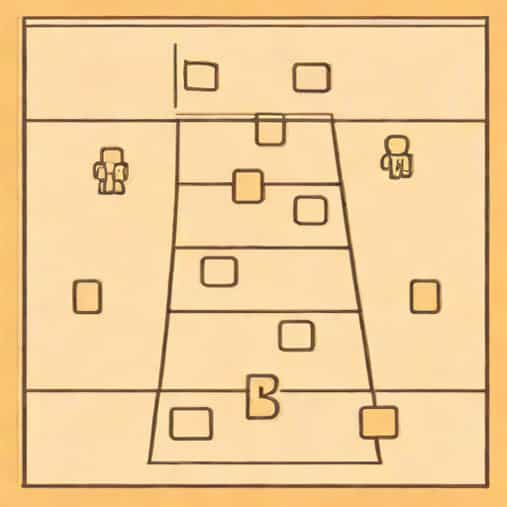
When you imagine a picture of Hoppy Hopscotch, you might think of bright chalk lines drawn on a playground, children jumping from square to square, and laughter filling the air. Hopscotch is a timeless childhood game, and Hoppy Hopscotch evokes the joyful, carefree movement of kids at play. The phrase brings to mind not just a game but an image full of color, rhythm, and energy. Whether you visualize it as an illustration, a real-life photo, or a digital artwork, a picture of Hoppy Hopscotch captures the spirit of childhood fun and simple creativity that transcends generations.
The Meaning Behind Hoppy Hopscotch
The phrase Hoppy Hopscotch combines two words that perfectly describe the action of the game. Hoppy suggests lively, bouncing movements – like the way players hop on one foot from square to square. Hopscotch, of course, is the name of the traditional playground game played with numbered squares drawn on the ground. Together, these words form a playful, rhythmic expression that captures the movement and excitement of children jumping through a pattern of numbers with balance and skill.
In a picture of Hoppy Hopscotch, you might see a child mid-jump, one leg bent, arms outstretched for balance, and a look of concentration mixed with joy. It’s a moment frozen in time that reminds viewers of childhood innocence and the universal love of play.
What a Picture of Hoppy Hopscotch Represents
A picture of Hoppy Hopscotch can symbolize many things depending on the context. At first glance, it simply portrays a child’s game. But on a deeper level, it reflects themes of balance, growth, imagination, and perseverance. The squares in hopscotch are like the steps in life – each one must be taken carefully, but there’s always room for fun and creativity along the way.
Some common interpretations include
- Innocence and nostalgiaA reminder of childhood memories and simpler times.
- Growth and learningEach square represents progress, patience, and small achievements.
- Play and imaginationThe colorful lines and playful motion symbolize the creativity that defines youth.
In an artistic sense, a picture of Hoppy Hopscotch might use bright colors, chalk textures, and expressive body language to convey these feelings. It can be realistic, cartoonish, or even abstract – the emotion it evokes matters more than the style itself.
The History of Hopscotch
To truly understand the charm of a picture of Hoppy Hopscotch, it helps to know where the game originated. Hopscotch has been played for centuries, with evidence suggesting that its roots date back to ancient Rome. Roman soldiers reportedly used hop-and-jump exercises as part of their training, marking paths on the ground that resembled hopscotch patterns. Over time, children imitated these movements in a simplified form, adding numbers and turning it into a game.
In England, the game was known as scotch-hop or scotch-hoppers, eventually evolving into the modern name hopscotch. Across different cultures, variations emerged – from rayuela in Spain and Latin America to marelle in France and piko in the Philippines. Despite these regional differences, the concept remains the same draw a pattern on the ground, throw a marker, and hop through the sequence without losing balance.
This long history adds depth to any depiction of hopscotch. A picture of Hoppy Hopscotch, therefore, connects today’s children with generations of players before them, showing how simple games can endure through time.
Visual Elements Found in a Picture of Hoppy Hopscotch
When you think about what might appear in a picture of Hoppy Hopscotch, certain visual details immediately come to mind. These elements make the image come alive and convey the excitement of playtime.
- Chalk drawingsBrightly colored chalk lines form the familiar numbered grid. The texture of the chalk gives the picture a handmade, nostalgic quality.
- Children playingKids of different ages and backgrounds can be seen jumping, laughing, and taking turns.
- Outdoor settingThe background might show a schoolyard, a neighborhood sidewalk, or a sunny park.
- Motion and energyA good picture of Hoppy Hopscotch often captures movement – a child mid-hop, a chalk piece rolling, or dust lifting off the ground.
- Colors and joyShades of yellow, pink, blue, and green often dominate, symbolizing happiness and vibrancy.
These details combine to create a vivid image that instantly transports the viewer into a scene of playful activity. Whether captured in a photograph or drawn in an illustration, each element contributes to the emotional tone of the picture.
The Role of Hoppy Hopscotch in Modern Culture
Even in the digital age, where children often spend more time with screens than outdoors, hopscotch still holds a place in childhood play. Modern pictures of Hoppy Hopscotch can serve as a reminder of the importance of physical activity and outdoor games. Parents, teachers, and communities often use hopscotch as a fun way to encourage kids to move, socialize, and develop coordination.
In pop culture and art, hopscotch imagery appears frequently – from nostalgic illustrations to symbolic uses in movies, books, and advertisements. The image of a hopscotch grid often represents innocence, dreams, or the passage from childhood to adulthood. A picture of Hoppy Hopscotch, therefore, can appeal to both children and adults, reminding everyone of the joy of simple pleasures.
Educational Benefits Highlighted by Hoppy Hopscotch
Beyond fun, hopscotch provides numerous developmental benefits. A picture of Hoppy Hopscotch is more than a pretty scene – it symbolizes learning in motion. Through this game, children develop physical and cognitive skills that play an important role in their growth.
- Balance and coordinationHopping on one foot strengthens muscles and improves body control.
- Counting and sequencingThe numbered squares help children learn numbers and order in a playful way.
- Social interactionKids learn to take turns, follow rules, and celebrate small wins together.
- CreativityDrawing the hopscotch pattern and decorating it allows for artistic expression.
For these reasons, educators often incorporate hopscotch into early learning environments. A picture of Hoppy Hopscotch might be displayed in classrooms or playgrounds to inspire active learning and joyful movement.
Modern Interpretations of Hoppy Hopscotch
Artists and designers have reimagined the concept of hopscotch in various creative ways. A modern picture of Hoppy Hopscotch might feature digital artwork, animated versions, or even augmented reality designs that allow users to interact with the game on a screen. Street artists sometimes paint large, colorful hopscotch patterns on sidewalks as public art, turning urban spaces into playgrounds for everyone.
Some modern versions even mix traditional hopscotch with new themes, such as galaxy hopscotch (with stars and planets instead of numbers) or eco-hopscotch, where each square contains an environmental message. These creative reinterpretations show how the idea of Hoppy Hopscotch continues to evolve while keeping its playful essence alive.
The Timeless Joy of Hoppy Hopscotch
A picture of Hoppy Hopscotch is more than a simple image of children at play – it is a celebration of movement, imagination, and connection. It represents how something as small as a piece of chalk and a few drawn lines can spark joy, creativity, and friendship. Across cultures and generations, hopscotch remains a symbol of playful freedom and learning through fun.
Whether it’s a photo hanging in a school hallway, an illustration in a children’s book, or an artistic depiction on a city street, the picture of Hoppy Hopscotch continues to capture hearts. It reminds us that sometimes, the happiest moments come from the simplest games – ones where all you need is a little space, a few numbers, and the courage to hop forward, one square at a time.