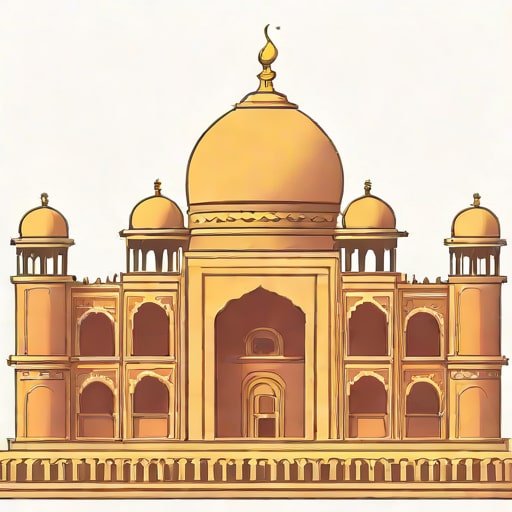
The Delhi Sultanate is one of the most important periods in Indian history, spanning from the early 13th century to the early 16th century. For students in class 7, understanding the Delhi Sultanate is crucial because it provides insights into the political, cultural, and social transformations that took place in India during medieval times. The Delhi Sultanate was established by Muslim rulers who came from different regions such as Central Asia and Afghanistan, and it played a significant role in shaping the history of northern India. Studying this period helps students understand how India’s medieval political systems evolved, the role of various rulers, and the influence of religion, art, and architecture during this era.
Introduction to Delhi Sultanate
The Delhi Sultanate refers to a series of Muslim dynasties that ruled over large parts of northern India from 1206 to 1526. The term Sultanate indicates a kingdom ruled by a Sultan, a Muslim sovereign. The establishment of the Delhi Sultanate marked a major shift in Indian history as it brought new governance systems, cultural influences, and economic changes. The rulers introduced Persian culture, administration methods, and architectural styles, which greatly impacted Indian society. Understanding the Delhi Sultanate is essential for class 7 students as it forms a core part of their history curriculum.
Major Dynasties of the Delhi Sultanate
The Delhi Sultanate was not ruled by a single dynasty. Over three centuries, five major dynasties controlled the sultanate, each contributing differently to its development and governance.
1. The Mamluk (Slave) Dynasty (1206-1290)
The Mamluk Dynasty was the first dynasty of the Delhi Sultanate, founded by Qutb-ud-din Aibak, a former slave who became a general. This dynasty laid the foundation of Muslim rule in India and was known for establishing the administrative framework and introducing Persian language in governance. Some notable rulers included Qutb-ud-din Aibak and Iltutmish, who strengthened the sultanate and built significant monuments, including the famous Qutb Minar.
2. The Khilji Dynasty (1290-1320)
The Khilji Dynasty is known for its military conquests and administrative reforms. Alauddin Khilji, the most prominent ruler of this dynasty, expanded the sultanate to cover large parts of India. He introduced measures to control the market and strengthen the army, which were innovative for that time. The Khilji Dynasty also saw the promotion of trade and cultural development.
3. The Tughlaq Dynasty (1320-1414)
The Tughlaq Dynasty is recognized for ambitious projects and territorial expansion. Muhammad bin Tughlaq attempted to shift the capital and introduced new administrative policies, some of which were unsuccessful, leading to unrest. However, this period witnessed significant developments in agriculture, irrigation, and trade. The Tughlaq rulers also built impressive architectural structures.
4. The Sayyid Dynasty (1414-1451)
The Sayyid Dynasty was relatively short-lived and focused mainly on maintaining the stability of the sultanate after the decline of the Tughlaqs. While not as famous for military conquests, they played a role in administration and governance during a period of political fragmentation.
5. The Lodi Dynasty (1451-1526)
The Lodi Dynasty was the last dynasty of the Delhi Sultanate. Bahlul Lodi, the founder, strengthened the sultanate and maintained peace in northern India. The Lodis were of Afghan origin and emphasized efficient administration and military organization. The dynasty came to an end when Babur defeated Ibrahim Lodi at the Battle of Panipat in 1526, establishing the Mughal Empire.
Administration During the Delhi Sultanate
The Delhi Sultanate introduced new systems of governance that differed from previous Indian kingdoms. The administration was centralized with the Sultan at the top, assisted by ministers and officials. Revenue collection was an important aspect of governance, and land revenue formed the backbone of the state’s economy. The sultans employed various strategies to maintain control over their territories, including a strong army and regional governors called Amirs or Subedars.
Key Features of Administration
- Centralized authority with the Sultan as the supreme ruler.
- Revenue collection system based on land taxes.
- Appointment of regional governors to oversee provinces.
- Maintenance of a strong military to protect and expand territories.
- Use of Persian language in administration and court affairs.
Society and Culture under the Delhi Sultanate
The Delhi Sultanate influenced Indian society and culture in many ways. The rulers introduced Islamic culture, which blended with local traditions to create a rich and diverse society. Persian became the language of administration and culture, and education and literature flourished. Architecture also saw significant developments, with the construction of mosques, forts, and monuments such as the Qutb Minar and Alai Darwaza.
Religion and Society
Islamic principles influenced social norms, legal systems, and religious practices. While the majority of the population remained Hindu, interactions between different communities led to cultural exchanges. Sufi saints played an important role in spreading Islamic teachings and promoting harmony.
Art and Architecture
The Delhi Sultanate is famous for Indo-Islamic architecture. The Qutb Minar, constructed during the Mamluk Dynasty, is one of the finest examples. Other structures, such as mosques, tombs, and forts, demonstrated intricate designs and Persian influences. The fusion of Indian and Islamic styles created unique architectural traditions.
Economy and Trade
Trade and agriculture were vital to the economy of the Delhi Sultanate. Agricultural reforms, irrigation projects, and land revenue systems helped improve production. Trade routes were expanded, and cities like Delhi, Agra, and Multan became important centers of commerce. Markets were regulated, and taxes were collected to fund administration and military campaigns.
Significance of the Delhi Sultanate for Class 7 Students
Learning about the Delhi Sultanate helps class 7 students understand how medieval India was organized politically, socially, and culturally. It provides insights into the evolution of governance, the role of religion and culture, and the impact of different dynasties on Indian history. Knowledge of this period also lays the foundation for understanding the Mughal Empire, which succeeded the Delhi Sultanate.
Key Takeaways
- The Delhi Sultanate lasted from 1206 to 1526 and included five major dynasties.
- It introduced centralized administration, Persian culture, and architectural innovations.
- Military conquests and governance reforms were essential for maintaining control over vast territories.
- The period saw interactions between different religious and cultural communities.
- Studying this era helps students appreciate the continuity and change in Indian history.
The Delhi Sultanate was a transformative period in Indian history, shaping politics, society, culture, and architecture. For class 7 students, understanding the Delhi Sultanate is essential to grasp the complexities of medieval India. It highlights the contributions of various dynasties, the development of administration, the blending of cultures, and the economic and social changes that laid the groundwork for subsequent historical developments. By studying the Delhi Sultanate, students gain a comprehensive understanding of how India evolved during this critical period.