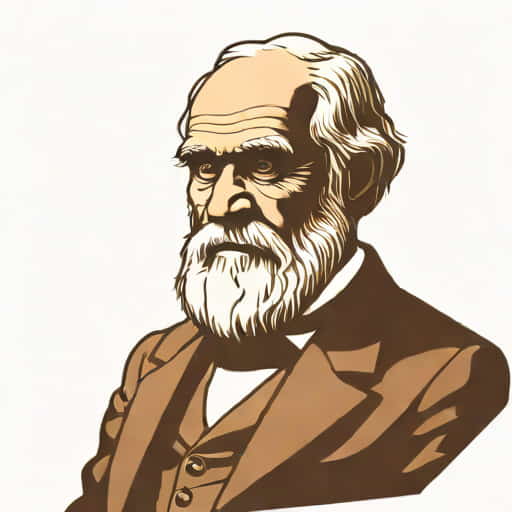
Charles Waring Darwin, a name often overshadowed by his more famous grandfather Charles Robert Darwin, played a unique role in the history of science and exploration during the late 19th and early 20th centuries. While not as widely recognized as the pioneer of evolutionary theory, Charles Waring Darwin contributed to scientific understanding through his work in natural history, botany, and environmental studies. His life and career provide insight into the broader Darwinian legacy, illustrating how scientific curiosity and meticulous observation were passed down through generations. By examining his achievements, collaborations, and personal dedication to research, one can appreciate the influence of his contributions to both the scientific community and the preservation of natural knowledge.
Early Life and Background
Born into the renowned Darwin family, Charles Waring Darwin grew up surrounded by scientific inquiry and intellectual discussion. His early exposure to natural history, experiments, and field observations shaped his interest in the study of living organisms and ecological systems. Family correspondence and diaries reveal that from a young age, he was encouraged to explore the natural world, document his findings, and engage in critical thinking. This environment fostered a deep sense of curiosity and a methodical approach to scientific investigation that would define his later work.
Education and Formative Experiences
Charles Waring Darwin received a rigorous education in the sciences, attending prominent schools where he focused on biology, botany, and geology. His formal studies were complemented by fieldwork, excursions, and hands-on experiments, emphasizing observational skills and empirical evidence. Early publications and reports from his student years demonstrate a keen ability to analyze patterns in nature, a skill that became central to his contributions in later life. Moreover, his exposure to the broader intellectual circles of the Darwin family provided mentorship and inspiration for his career in science.
Scientific Contributions
Although Charles Waring Darwin did not achieve the groundbreaking fame of his grandfather, his contributions to scientific understanding were substantial. He conducted detailed research in botany, examining plant structures, growth patterns, and adaptive mechanisms. His studies often focused on the interaction between organisms and their environment, reflecting an evolutionary perspective influenced by the family’s intellectual heritage. Through careful documentation and experimentation, he helped illuminate aspects of plant physiology and ecological dynamics that were less understood at the time.
Botanical Research
- Investigation of plant growth and adaptation in varied environmental conditions.
- Analysis of pollination mechanisms and reproductive strategies in flowering plants.
- Documentation of plant species in specific regions, contributing to regional floras.
- Examination of plant interactions with insects and other fauna, reflecting early ecological principles.
Exploration and Field Work
Fieldwork was a significant aspect of Charles Waring Darwin’s career, enabling him to observe natural processes directly and collect specimens for study. His expeditions often involved meticulous mapping of plant populations, soil analysis, and documentation of local biodiversity. Through these endeavors, he contributed to the scientific understanding of species distribution and environmental adaptation. Field notes from these journeys reveal a combination of patience, precision, and curiosity, emphasizing his commitment to empirical observation as the foundation for reliable scientific conclusions.
Collaboration and Influence
Charles Waring Darwin collaborated with contemporaries in the fields of botany, zoology, and ecology. His work was referenced in broader scientific discussions of adaptation, plant physiology, and environmental interactions. While not a household name, his contributions helped support the emerging framework of ecological science and added depth to ongoing research in evolutionary biology. Furthermore, his efforts in mentoring younger scientists and sharing knowledge reinforced the Darwin family’s lasting impact on the scientific community.
Publications and Legacy
Although Charles Waring Darwin did not publish as extensively as his grandfather, his writings included detailed studies, field reports, and technical notes. These works often appeared in scientific journals and contributed valuable data to the understanding of plant biology and ecology. His meticulous documentation, careful analysis, and integration of observational data with theoretical frameworks ensured that his contributions were respected and referenced by other scientists. Over time, his work has gained renewed attention as historians and biologists examine the broader Darwin family’s influence on scientific thought.
Educational Impact
Beyond research, Charles Waring Darwin’s engagement in teaching and mentorship left a lasting mark. By guiding students and young researchers, he helped foster a culture of rigorous scientific inquiry and observation-based study. His approach emphasized critical thinking, attention to detail, and ethical engagement with nature, principles that continue to resonate in botanical and ecological education. Many of his protégés carried forward his methods and insights, further extending the Darwin legacy in scientific education and research.
Personal Life and Values
Charles Waring Darwin’s personal life reflected his dedication to intellectual pursuits, family, and environmental stewardship. He maintained close relationships with relatives and colleagues, often collaborating on projects and sharing observations. Beyond his scientific work, he valued conservation and the careful study of natural habitats, recognizing the importance of preserving biodiversity for future generations. His life exemplified the integration of personal values with professional dedication, creating a model of responsible and thoughtful scientific practice.
Philosophical Perspective
Like other members of the Darwin family, Charles Waring Darwin embraced a philosophy of observation and inquiry grounded in empirical evidence. He valued patience, meticulous study, and the systematic exploration of natural phenomena. This perspective influenced both his research approach and his interactions with the broader scientific community. His work demonstrates how careful observation, combined with a reflective and ethical mindset, can contribute meaningfully to the advancement of knowledge.
Recognition and Historical Context
Although overshadowed by Charles Darwin’s monumental contributions to evolutionary theory, Charles Waring Darwin earned recognition among specialized scientific communities for his detailed and reliable research. His work was appreciated by peers who valued the accuracy of his field observations and the methodological rigor of his studies. In the historical context of late 19th and early 20th-century science, his contributions helped fill gaps in botanical and ecological knowledge and supported the broader understanding of adaptation and species interactions.
Integration with Darwinian Legacy
Charles Waring Darwin represents an important link in the broader Darwinian tradition of careful observation, analytical reasoning, and scientific curiosity. While his achievements did not revolutionize biology in the way his grandfather’s theories did, they reinforced the principles of empirical study and systematic research. His life and career illustrate the enduring influence of the Darwin family on the scientific enterprise and demonstrate how successive generations contributed to the cumulative growth of knowledge in natural history.
Charles Waring Darwin exemplifies the continued scientific spirit of the Darwin family, blending curiosity, meticulous research, and ethical engagement with the natural world. Through his contributions to botany, ecology, and field studies, he expanded understanding of plant adaptation, environmental interactions, and species distribution. His work underscores the importance of careful observation, empirical evidence, and collaboration in advancing scientific knowledge. While his name may not be as widely known as that of his grandfather, Charles Waring Darwin’s legacy persists in the detailed records, mentorship, and scientific rigor he left behind. By studying his life and contributions, we gain a richer appreciation of the Darwinian tradition and the enduring value of careful, systematic inquiry in the pursuit of knowledge.