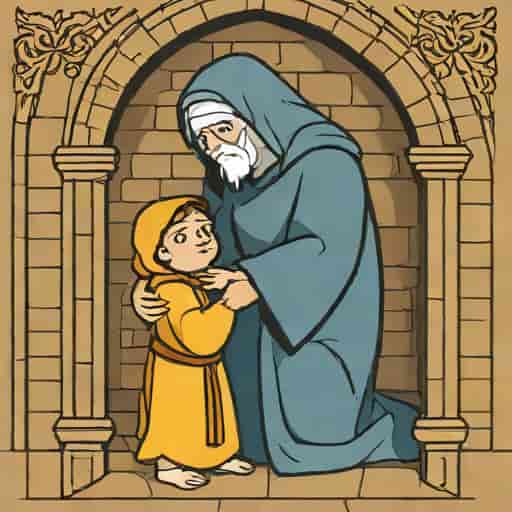
The story of Quasimodo, the hunchback of Notre Dame, is one of the most poignant and enduring tales in literature, capturing the complexities of love, acceptance, and human cruelty. One of the lesser-discussed aspects of Quasimodo’s story is his mother and the role she plays in his origin and fate. Although Victor Hugo’s novel, The Hunchback of Notre Dame, focuses primarily on Quasimodo’s life within the cathedral and his relationships with characters like Esmeralda and Claude Frollo, understanding Quasimodo’s mother provides essential context for his tragic life. Her absence, decisions, and the circumstances surrounding Quasimodo’s birth shape the narrative and highlight themes of abandonment, social prejudice, and compassion that run throughout Hugo’s masterpiece.
Quasimodo’s Birth and Mother’s Role
In Victor Hugo’s novel, Quasimodo is described as a deformed child born to a woman of low social standing. His mother is often referenced indirectly, and little is revealed about her personal history or motivations. However, it is understood that she was a poor woman, which played a significant role in the circumstances of Quasimodo’s upbringing. The physical deformities that marked Quasimodo at birth-his hunched back and other distinctive features-prompted immediate societal rejection. His mother’s inability or unwillingness to care for him in a society that stigmatized disability contributed to his eventual abandonment. This early rejection set the stage for Quasimodo’s isolation and shaped his path toward the Notre Dame cathedral as both refuge and home.
Societal Context and Motherhood
The depiction of Quasimodo’s mother reflects the harsh realities faced by women in 15th-century Paris, the setting of Hugo’s novel. Mothers of children with disabilities often faced enormous social pressure and stigma, sometimes resulting in abandonment or extreme hardship. Hugo uses this societal judgment to critique broader issues of marginalization and inhumanity. Quasimodo’s mother, though absent from much of the narrative, symbolizes the social structures that failed both her and her son. Her inability to protect him underscores the vulnerability of marginalized individuals in a rigid and judgmental society.
Abandonment and Its Effects on Quasimodo
Quasimodo’s mother’s absence has profound effects on his character and emotional development. Left without maternal care, Quasimodo is taken in by Claude Frollo, the archdeacon of Notre Dame, who raises him within the cathedral. While Frollo provides Quasimodo with physical shelter and education, he also imposes strict control and moral guidance shaped by his own obsessions and rigidity. Quasimodo’s mother’s absence means that he never experiences the nurturing and unconditional love typically provided by a parent. This lack of early maternal affection contributes to Quasimodo’s initial social awkwardness and emotional vulnerability, making him both sympathetic and tragic in Hugo’s portrayal.
Impact on Personality and Relationships
Despite the absence of his mother, Quasimodo develops deep emotional capacities, particularly for loyalty, love, and compassion. His bond with Esmeralda, the kind-hearted gypsy girl, and his protective relationship with the cathedral itself highlight his capacity for connection. Scholars often interpret Quasimodo’s devotion to Notre Dame as a surrogate form of maternal attachment, where the cathedral becomes a symbol of safety, nurturing, and stability in the absence of his mother. Hugo’s narrative suggests that while Quasimodo’s early life was marked by deprivation, he compensates through alternative attachments, illustrating the resilience of the human spirit.
Victor Hugo’s Commentary on Motherhood
Through the brief but significant reference to Quasimodo’s mother, Hugo comments on societal attitudes toward women and children in marginalized positions. His portrayal highlights the consequences of poverty, social stigma, and lack of compassion. By showing how Quasimodo’s life is shaped by the absence of maternal care, Hugo critiques a society that allows human beings to be abandoned and devalued based on appearance and social class. Quasimodo’s mother, while largely absent in the story, becomes a symbol of both the fragility and complexity of maternal influence in a world dominated by rigid social hierarchies.
Motherhood, Compassion, and Social Critique
The narrative encourages readers to reflect on broader ethical questions. How does society treat those who are different or disabled? What responsibilities do parents and communities have toward vulnerable children? Quasimodo’s mother’s story, though minimal in the text, opens a window into these questions. Hugo’s work consistently intertwines personal stories with social commentary, using the absence of maternal care as a lens to explore injustice, prejudice, and human responsibility.
The Mother-Son Dynamic and Literary Themes
In literary analysis, the mother-son dynamic in The Hunchback of Notre Dame is often discussed in terms of absence and surrogate relationships. Quasimodo’s lack of a mother forces him to form attachments elsewhere, which becomes a central theme of the novel. His relationship with Frollo, despite its complexity, serves as a quasi-parental bond, while his admiration and love for Esmeralda introduce a different form of emotional fulfillment. The absence of maternal guidance allows Hugo to explore alternative forms of family, attachment, and social belonging, making Quasimodo’s story richer and more poignant.
Symbolism of Maternal Absence
Quasimodo’s mother also functions symbolically within Hugo’s narrative. Her absence emphasizes themes of neglect, abandonment, and societal rejection. The novel repeatedly contrasts characters who receive love and protection with those, like Quasimodo, who are denied it. This contrast reinforces the moral lessons about compassion, tolerance, and the societal responsibility to care for the vulnerable. The mother’s absence is thus not just a personal tragedy but a narrative tool that strengthens the novel’s social critique.
The story of Quasimodo’s mother in Victor Hugo’s The Hunchback of Notre Dame provides essential context for understanding the character’s development, emotional life, and the novel’s broader social themes. Though her presence is minimal, the impact of her absence shapes Quasimodo’s experiences, highlighting issues of abandonment, social prejudice, and the importance of surrogate care. Hugo’s treatment of Quasimodo’s mother reflects both historical realities and universal themes of maternal influence, societal responsibility, and human resilience. By examining her role, readers gain a deeper understanding of the moral and emotional complexities of Quasimodo’s life, as well as Hugo’s enduring critique of social injustice and the human capacity for compassion.