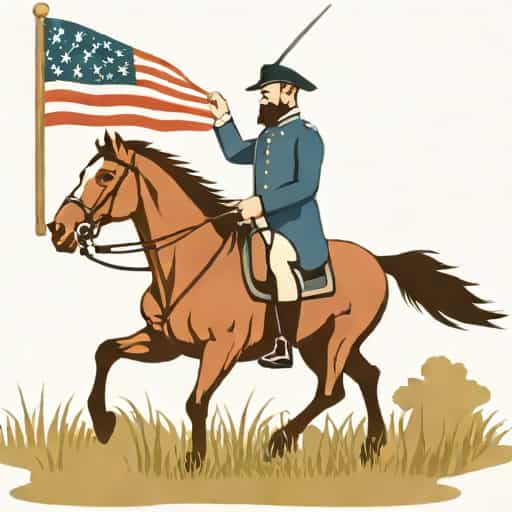
The Battle of Chancellorsville, fought from April 30 to May 6, 1863, stands as one of the most significant encounters in the American Civil War. Known for its strategic brilliance and costly outcomes, this battle involved the Confederate Army of Northern Virginia under General Robert E. Lee and the Union Army of the Potomac led by Major General Joseph Hooker. Despite being heavily outnumbered, Lee executed a daring and unconventional strategy that resulted in a Confederate victory. The battle is remembered not only for its tactical implications but also for the profound impact it had on the course of the war, military leadership, and soldier morale.
Strategic Context of Chancellorsville
By the spring of 1863, the Union sought to regain momentum after a series of setbacks. Major General Joseph Hooker devised an ambitious plan to outflank Lee’s forces and strike the Confederates in northern Virginia. The Union Army, numbering approximately 130,000 troops, held numerical superiority over Lee’s 60,000 soldiers. Despite these advantages, Hooker’s cautious approach and reliance on conventional tactics would contrast sharply with Lee’s innovative strategy. Understanding the context of Chancellorsville helps explain why the battle is considered a classic example of tactical ingenuity overcoming numerical disadvantage.
Key Military Strategies
The most famous tactical maneuver at Chancellorsville was Lee’s decision to split his forces in the face of a larger enemy. He sent General Thomas Stonewall Jackson on a flanking march to attack the Union right, a bold move that surprised Hooker and forced the Union army into a defensive posture. This maneuver demonstrated Lee’s audacity and ability to exploit the terrain and enemy weaknesses. Jackson’s attack inflicted heavy casualties and contributed to the Union retreat, highlighting the importance of flexibility, deception, and decisive action in military strategy.
Major Events and Outcomes
Several key events define the Battle of Chancellorsville
- The Union army initially established strong defensive positions but failed to press their numerical advantage effectively.
- Stonewall Jackson’s flanking maneuver on May 2 caught Union forces off guard, causing chaos and significant losses.
- Jackson was mortally wounded by friendly fire during a night reconnaissance, creating a profound loss for the Confederacy despite their victory.
- Union forces eventually withdrew from the battlefield, marking a Confederate tactical success but at a high cost in casualties.
These events demonstrate the complexity of the battle, where both strategic brilliance and tragic misfortune shaped the outcome.
Casualties and Human Cost
The Battle of Chancellorsville was one of the bloodiest of the Civil War. The Union suffered approximately 17,000 casualties, while the Confederates lost around 13,000. The high human cost, including the death of Stonewall Jackson, underscored the brutal reality of Civil War combat. Jackson’s loss deprived Lee of one of his most trusted commanders, affecting Confederate leadership in subsequent campaigns. The battle highlighted the importance of leadership, coordination, and the human toll of warfare, factors that influenced both armies’ strategies in the remainder of the war.
Significance in Military History
Chancellorsville is often studied for its tactical lessons. Lee’s willingness to divide his forces in the presence of a superior enemy exemplifies bold, unconventional thinking. The battle illustrates how terrain, surprise, and timing can compensate for numerical inferiority. Military academies continue to analyze Chancellorsville as a case study in command decision-making, illustrating both the potential and risks of audacious strategies. The battle’s lessons remain relevant for understanding the dynamics of leadership, initiative, and adaptability in combat situations.
Impact on the Civil War
The Confederate victory at Chancellorsville had both immediate and long-term consequences. It boosted Southern morale and reinforced confidence in Lee’s leadership. However, the loss of Jackson weakened Confederate command structure and foreshadowed challenges in later campaigns, including the pivotal Battle of Gettysburg. For the Union, the defeat prompted reevaluation of leadership, strategy, and army organization, influencing how subsequent offensives were planned. Chancellorsville thus played a crucial role in shaping the strategic landscape of the Civil War.
Psychological and Cultural Implications
Beyond military strategy, the battle had profound psychological effects. Confederate soldiers were emboldened by their ability to defeat a larger army, while Union forces experienced a blow to morale. The battle also entered the cultural memory of the Civil War, symbolizing both heroic ingenuity and tragic sacrifice. The death of Stonewall Jackson, in particular, became emblematic of the human cost of war, inspiring accounts, memoirs, and historical analysis that continue to shape public understanding of the conflict.
Lessons for Leadership
The Battle of Chancellorsville offers several leadership lessons
- The importance of decisive action in the face of uncertainty
- Effective use of terrain and intelligence to gain tactical advantage
- The risks and rewards of dividing forces in critical situations
- The need for clear communication and coordination to prevent friendly fire and other tragedies
These lessons highlight why the battle remains a focal point for military studies and discussions on command and strategy.
The Battle of Chancellorsville holds enduring importance in the history of the American Civil War. Its combination of strategic brilliance, high human cost, and lasting consequences makes it a pivotal event for both Union and Confederate forces. Lee’s audacious tactics demonstrated the potential of innovative military strategy, while the loss of Stonewall Jackson illustrated the vulnerability of even the most successful armies. The battle’s impact on morale, leadership, and subsequent campaigns underscores its significance in shaping the trajectory of the war. Today, Chancellorsville serves as a critical example of courage, tactical skill, and the complex interplay between strategy and human experience in warfare.