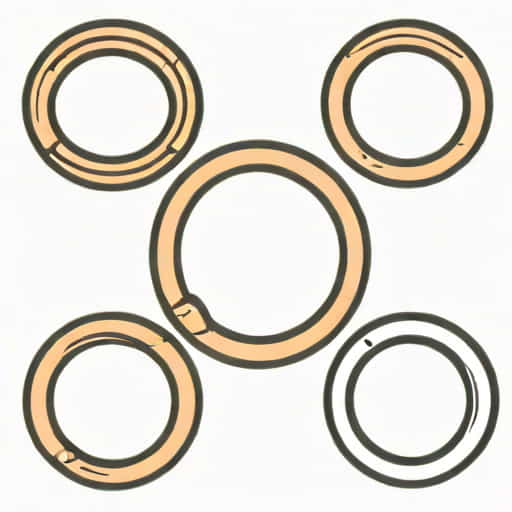
The phrase incomplete cartilaginous rings are present in is commonly encountered in basic anatomy and biology, especially when learning about the respiratory system. At first glance, it may sound technical, but the concept behind it is actually quite simple and fascinating. These structures play an essential role in keeping certain airways open while still allowing flexibility. Understanding where incomplete cartilaginous rings are found helps explain how breathing works efficiently in the human body.
What Are Cartilaginous Rings?
Cartilaginous rings are supportive structures made of cartilage, a firm yet flexible connective tissue. Cartilage is strong enough to maintain shape but soft enough to allow movement and expansion. In the respiratory system, cartilage helps keep air passages open so that air can flow freely in and out of the lungs.
These rings are especially important in areas where collapse could block airflow. Without cartilaginous support, breathing would become difficult, particularly during inhalation when pressure inside the airway changes.
Understanding Incomplete Cartilaginous Rings
Incomplete cartilaginous rings are not fully closed circles. Instead, they are shaped more like the letter C. This open part of the ring faces a specific direction and serves an important purpose. The structure provides firmness where needed while allowing space for other nearby organs to function properly.
This design shows how anatomy balances stability and flexibility. Rather than being rigid tubes, certain airways are designed to adapt to movement and pressure changes.
Incomplete Cartilaginous Rings Are Present in the Trachea
The most well-known answer to the statement incomplete cartilaginous rings are present in is the trachea. The trachea, also known as the windpipe, is a tube that carries air from the throat to the lungs. It sits in front of the esophagus, which is the tube that carries food.
The trachea contains a series of C-shaped cartilaginous rings that keep it open at all times. These rings prevent the airway from collapsing during breathing, coughing, or movement of the neck.
Why the Rings Are Incomplete
The open part of each cartilaginous ring faces backward, toward the esophagus. This design allows the esophagus to expand when food is swallowed. If the rings were complete circles, swallowing would be more difficult and uncomfortable.
Muscle tissue fills the open section of the ring. This muscle can contract or relax, adjusting the diameter of the trachea slightly when needed, such as during coughing.
Structure of the Tracheal Cartilage
The cartilage in the trachea is made of hyaline cartilage. This type of cartilage is smooth and resilient, providing both strength and flexibility. Each ring is stacked along the length of the trachea, forming a supportive framework.
On average, the human trachea contains about 15 to 20 cartilaginous rings. Together, they form a semi-rigid tube that stays open even when air pressure changes.
Function of Incomplete Cartilaginous Rings
The primary function of incomplete cartilaginous rings is to maintain airway patency. In simple terms, they keep the airway open so air can move freely. This is essential for normal breathing and oxygen delivery to the lungs.
Another function is flexibility. The trachea needs to move as the neck bends and twists. The incomplete rings allow this movement without compromising airflow.
Comparison With Other Parts of the Respiratory System
Understanding where incomplete cartilaginous rings are present becomes clearer when comparing the trachea to other airways.
Bronchi
As the trachea divides into the bronchi, the cartilage changes form. Instead of C-shaped rings, the bronchi contain irregular cartilage plates. These plates still provide support but allow even more flexibility as the airways branch into the lungs.
Bronchioles
Bronchioles do not contain cartilage at all. Instead, they rely on smooth muscle to regulate airflow. This difference highlights how incomplete cartilaginous rings are specifically adapted for larger airways like the trachea.
Why Incomplete Rings Are Important for Breathing
Breathing involves constant pressure changes inside the chest. During inhalation, negative pressure could cause soft tubes to collapse. The cartilaginous rings prevent this from happening in the trachea.
At the same time, activities like coughing require the trachea to narrow slightly to increase air speed. The muscle at the open end of the rings makes this possible.
Development and Growth
In infants and children, the trachea is more flexible than in adults. The cartilaginous rings are softer, which makes the airway more adaptable but also more vulnerable to collapse. As a person grows, the cartilage becomes firmer, providing greater stability.
This explains why certain breathing issues are more common in young children and often improve with age.
Clinical Relevance
The fact that incomplete cartilaginous rings are present in the trachea is important in medical practice. Doctors consider this structure when performing procedures such as intubation or tracheostomy.
Conditions that weaken cartilage, such as inflammation or injury, can affect breathing. Understanding normal tracheal anatomy helps healthcare professionals diagnose and manage these issues.
Evolutionary Advantage
From an evolutionary perspective, incomplete cartilaginous rings provide a smart solution to competing needs. The airway must remain open, but nearby organs must also function without restriction.
This design allows humans and other mammals to breathe efficiently while eating, speaking, and moving the neck freely.
Common Misunderstandings
Some people assume that all cartilage rings in the body are complete circles. In reality, structure varies depending on function. The trachea is a perfect example of how incomplete structures can be more effective than complete ones.
Another misunderstanding is that cartilage is rigid like bone. In fact, cartilage is flexible and well-suited for dynamic systems like the respiratory tract.
Summary and Key Takeaways
The statement incomplete cartilaginous rings are present in refers most accurately to the trachea. These C-shaped rings made of hyaline cartilage keep the airway open while allowing flexibility and space for the esophagus.
This unique structure supports breathing, swallowing, and movement, showing how form and function work together in the human body. By understanding where and why these rings exist, it becomes easier to appreciate the efficiency and elegance of the respiratory system.