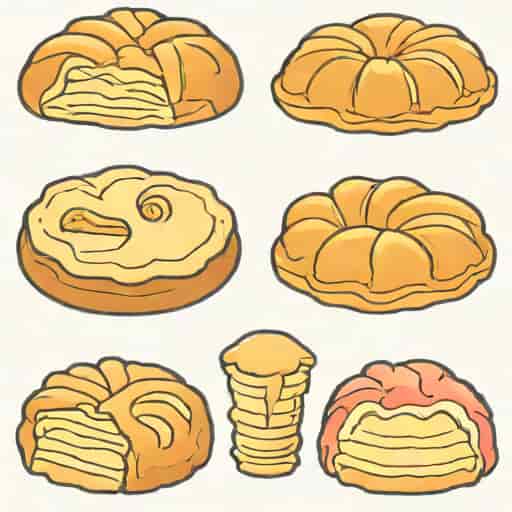
Baking is both an art and a science, and understanding the different types of pastry is essential for anyone interested in cooking or professional baking. Two of the most commonly used pastry types in both sweet and savory dishes are shortcrust and puff pastry. While they may appear similar to the untrained eye, their ingredients, preparation methods, texture, and applications are quite different. Knowing the distinction between shortcrust and puff pastry can help bakers achieve the desired results, whether creating a crisp pie, a flaky tart, or a delicate pastry dessert. Both have unique characteristics that influence taste, presentation, and the overall eating experience.
What is Shortcrust Pastry?
Shortcrust pastry is a type of pastry known for its crumbly, tender texture and rich, buttery flavor. It is often used as a base for pies, tarts, quiches, and other baked dishes where a firm, yet delicate crust is required. The name shortcrust comes from the short texture, meaning the pastry has a high fat content that prevents the formation of long gluten strands, resulting in a soft, crumbly consistency rather than a chewy one. Shortcrust pastry is versatile and can be sweet or savory depending on the recipe and the additional ingredients used.
Ingredients and Preparation
- Main ingredients Flour, fat (usually butter or shortening), a small amount of water, and sometimes eggs.
- The fat is rubbed into the flour to create a crumb-like texture before water is added to bind the dough.
- The dough is usually chilled before rolling out, which helps maintain its tender texture and prevents shrinking during baking.
- Shortcrust pastry does not require folding or layering, making it simpler to prepare than puff pastry.
Characteristics of Shortcrust Pastry
- Crumbly and tender texture, not flaky.
- Holds its shape well, making it ideal for pies and tarts.
- Rich buttery flavor that enhances both sweet and savory dishes.
- Easy to handle and roll out without extensive technique.
What is Puff Pastry?
Puff pastry is a laminated dough known for its light, airy, and flaky texture. It is made by folding layers of dough and fat repeatedly to create multiple thin layers that puff up when baked. This type of pastry is used in dishes such as croissants, vol-au-vents, palmiers, and layered pastries. The process of creating puff pastry is more labor-intensive than shortcrust, requiring precision and patience to ensure the proper rise and flakiness. Puff pastry relies on steam generated during baking to separate the layers and create the characteristic light texture.
Ingredients and Preparation
- Main ingredients Flour, water, fat (usually butter), and sometimes a pinch of salt.
- The dough is rolled out and folded over a block of butter in a process called lamination, repeated several times to create layers.
- The dough must be kept cold to prevent the butter from melting into the flour, which is crucial for proper puffing.
- Puff pastry can be made from scratch or bought pre-made, with ready-to-use options available for convenience.
Characteristics of Puff Pastry
- Light, airy, and extremely flaky texture due to layered dough and butter.
- Rises significantly in the oven, creating distinct layers.
- Delicate and crisp exterior with a soft interior.
- Requires careful handling and temperature control to maintain its structure.
Key Differences Between Shortcrust and Puff Pastry
Although both shortcrust and puff pastry are fundamental in baking, they differ significantly in preparation, texture, and applications. Understanding these differences ensures that bakers choose the right pastry for the intended dish.
Texture
- Shortcrust Crumbly and tender, dense yet delicate.
- Puff Flaky, light, and airy, with distinct layers that separate during baking.
Preparation Method
- Shortcrust Simple mixing and rubbing in of fat; no layering required.
- Puff Laminated dough requiring repeated rolling and folding with butter to create layers.
Fat Content and Function
- Shortcrust Fat is fully incorporated into the flour, producing a short texture and preventing gluten development.
- Puff Fat is layered between dough sheets, creating separation and steam pockets that lead to puffing.
Ease of Use
- Shortcrust Easier and quicker to prepare, suitable for beginners.
- Puff More complex, requiring skill and careful handling to achieve optimal rise and flakiness.
Typical Uses
- Shortcrust Pie crusts, tart shells, quiches, and pastries that need a sturdy base.
- Puff Croissants, vol-au-vents, turnovers, and decorative layered pastries.
Applications in Cooking and Baking
Choosing between shortcrust and puff pastry depends largely on the dish being prepared. Shortcrust is ideal for recipes that require a stable, buttery base that supports fillings without collapsing. Puff pastry, by contrast, is perfect for dishes that need a light, flaky texture or an impressive layered appearance. In professional baking, understanding the differences allows chefs to select the appropriate pastry for both taste and presentation, ensuring that the final product meets the desired quality and texture standards.
Shortcrust Applications
- Apple pie, custard tart, quiche Lorraine.
- Pastries that are filled and baked with a dense, stable base.
- Dishes requiring a buttery, crumbly texture.
Puff Pastry Applications
- Beef Wellington, palmiers, cheese straws.
- Layered desserts such as mille-feuille or vol-au-vent.
- Recipes where visual appeal and flakiness are key components.
shortcrust and puff pastry are two distinct types of pastry that play unique roles in baking. Shortcrust pastry is characterized by its crumbly, tender texture and simple preparation, making it ideal for pies, tarts, and quiches. Puff pastry is light, flaky, and layered, requiring careful lamination and temperature control to achieve its signature rise and delicate texture. Understanding the differences in texture, preparation, fat incorporation, and typical uses allows bakers to select the right pastry for their recipes. Whether creating a buttery tart or an airy, layered dessert, knowing how to use shortcrust and puff pastry effectively enhances both the flavor and appearance of the finished dish.