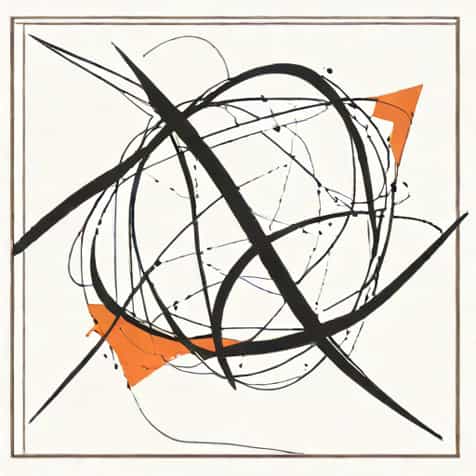
Gestural abstraction is a form of abstract art that emphasizes the physical act of painting or creating as an expressive gesture. It is often associated with spontaneous, dynamic brushstrokes and a focus on the artist’s movement, energy, and emotional state. Rather than depicting recognizable objects or scenes, gestural abstraction captures the essence of expression through form, color, and texture. This artistic approach emerged as a significant movement in the mid-20th century and has influenced contemporary art practices. Understanding gestural abstraction involves exploring its origins, techniques, notable artists, and its role in the broader context of abstract expressionism and modern art.
Definition of Gestural Abstraction
Gestural abstraction is a style of painting where the emphasis is placed on the artist’s gesture, movement, and physical engagement with the medium. It is a subset of abstract expressionism, a broader movement that emerged in the United States after World War II. Unlike traditional representational art, which focuses on accurately portraying subjects, gestural abstraction prioritizes the act of creation itself. The marks, strokes, and textures on the canvas reflect the artist’s emotions, energy, and psychological state, making the artwork a record of the creative process.
Key Characteristics of Gestural Abstraction
- Spontaneity and improvisation Artists often create works quickly or intuitively, emphasizing instinct over planning.
- Dynamic brushwork Bold, sweeping strokes or drips convey movement and energy.
- Focus on process The creation process is as important as the final artwork, capturing the artist’s gestures and emotions.
- Emotional expression Colors, lines, and forms communicate feelings rather than literal subjects.
- Large-scale canvases Many gestural abstraction works are created on large surfaces to allow full-body movement and dramatic gestures.
Historical Context and Origins
Gestural abstraction emerged in the 1940s and 1950s, primarily in New York, as part of the larger abstract expressionist movement. Artists were reacting to the trauma of World War II, seeking new ways to express personal and collective emotions. Influences came from European modernism, surrealism, and automatic drawing, as well as the desire to break away from traditional artistic conventions. The movement emphasized individual expression and the physical act of painting as a means of exploring subconscious thoughts and emotional states.
Influences on Gestural Abstraction
- European modernism Artists like Wassily Kandinsky explored abstraction and the expressive potential of color and form.
- Surrealism Techniques such as automatism encouraged spontaneous creation without conscious control.
- Action painting A term popularized by art critic Harold Rosenberg, highlighting painting as a performance or event.
Techniques in Gestural Abstraction
Gestural abstraction employs a variety of techniques that emphasize physical engagement and expressive movement. Artists use tools such as brushes, palette knives, or even their hands to apply paint, allowing for fluid and energetic marks. Techniques often include dripping, splattering, or layering colors to create texture and depth. The unpredictability of the medium contributes to the sense of spontaneity, making each artwork unique and personal.
Common Techniques
- Brushstrokes Broad, sweeping motions that convey energy and emotion.
- Drip painting Letting paint fall freely onto the canvas to create organic patterns.
- Impasto Applying thick layers of paint to add texture and dimensionality.
- Mixed media Incorporating materials such as sand, fabric, or ink to enhance expressive qualities.
Notable Artists
Several artists are closely associated with gestural abstraction, contributing to its development and recognition as a key movement within abstract expressionism. Their work showcases the diversity and intensity of gestural techniques, highlighting the personal and performative aspects of this style.
Key Figures
- Jackson Pollock Famous for his drip paintings, Pollock’s work exemplifies action painting and the emphasis on gesture and movement.
- Willem de Kooning Known for combining gestural brushwork with figurative elements, creating dynamic and emotionally charged compositions.
- Franz Kline Recognized for bold black-and-white brushstrokes that convey power and immediacy.
- Lee Krasner Used gestural techniques to explore color, texture, and form, often creating layered, abstract compositions.
Gestural Abstraction in Contemporary Art
Gestural abstraction continues to influence contemporary art practices, inspiring artists to explore the relationship between movement, emotion, and material. Contemporary artists often experiment with new media, digital tools, and performance elements, expanding the concept of gestural expression beyond traditional painting. The focus on process, spontaneity, and physical engagement remains central, demonstrating the enduring appeal of gestural abstraction as a mode of creative expression.
Modern Applications
- Performance-based art Artists incorporate live gestures, movements, or actions as part of the artwork’s creation.
- Digital gestural abstraction Using tablets, software, or virtual tools to create expressive digital works.
- Installation art Large-scale, immersive installations that capture the energy and movement characteristic of gestural abstraction.
Impact and Significance
Gestural abstraction has had a profound impact on modern and contemporary art. By emphasizing process, movement, and personal expression, it challenged traditional notions of representation and artistic value. It also opened the door for experimental techniques and interdisciplinary practices, influencing not only painters but also performance artists, sculptors, and digital creators. The movement highlights the importance of emotion, intuition, and physicality in the creative process, leaving a lasting legacy in the art world.
Key Contributions
- Expanded the boundaries of abstract art by emphasizing physical gesture over representation.
- Encouraged artists to explore subconscious and emotional content through spontaneous creation.
- Influenced contemporary artistic practices, including performance, installation, and digital media.
- Highlighted the importance of the artist’s presence and physical engagement in the creation of artwork.
Gestural abstraction is a powerful form of abstract art that focuses on the physical act of creation, expressive movement, and emotional intensity. Emerging from the abstract expressionist movement of the mid-20th century, it has been shaped by influences such as European modernism, surrealism, and action painting. Techniques like brushstrokes, drip painting, and impasto allow artists to convey energy, spontaneity, and emotion through their work. Iconic figures such as Jackson Pollock, Willem de Kooning, and Franz Kline exemplified the movement, which continues to inspire contemporary artists across diverse media. Gestural abstraction emphasizes the process of creation as much as the final product, celebrating intuition, emotion, and physicality. Its enduring significance in art history underscores the importance of expressive freedom and the powerful connection between the artist’s gesture and the viewer’s experience.