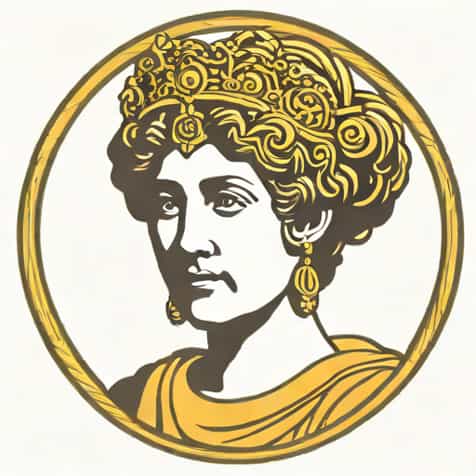
Agrippina the Younger, mother of the infamous Roman emperor Nero, has long fascinated historians and art enthusiasts alike. She was one of the most powerful women of ancient Rome, and with power came curiosity about her presence, her aura, and most importantly, her physical appearance. What did Agrippina look like? This question lingers because she lived during a time when portraits, sculptures, and coins served as both political propaganda and personal representation. By studying historical records, ancient statues, and artistic depictions, we can piece together a portrait of a woman who was both admired and feared in her era.
Ancient Descriptions of Agrippina
Roman historians rarely focused on physical details unless they were symbolic of character. Still, some accounts provide hints about how Agrippina the Younger appeared to her contemporaries. She was often described as elegant, striking, and dignified. Sources suggest that she carried herself with an air of authority, blending beauty with an intimidating presence. Her features were considered noble, consistent with her prestigious lineage as the great-granddaughter of Augustus.
Writers like Tacitus and Suetonius did not provide extensive details about her hairstyle or clothing, but they highlighted her confidence and commanding aura. These descriptions, while not portraits in the modern sense, suggest that her appearance was closely tied to her political identity and her ability to influence those around her.
Sculptures and Busts of Agrippina
Archaeology offers a clearer view of what Agrippina might have looked like. Several busts and statues believed to represent her survive, and they provide physical details often missing from written sources. These sculptures show a woman with well-defined facial features strong cheekbones, a straight nose, and an expression that balances calmness with determination.
One of the most famous pieces is the marble bust of Agrippina housed in the Capitoline Museums in Rome. It depicts her with neatly arranged hair, parted in the middle and styled in waves along the sides. This hairstyle was popular among Roman noblewomen and signaled both sophistication and status. Her features are symmetrical, giving her an appearance of classical Roman beauty, though her expression conveys seriousness rather than softness.
Agrippina on Roman Coins
Another important source for understanding what Agrippina looked like comes from Roman coinage. Coins circulated widely throughout the empire, carrying not only monetary value but also political messages. When Agrippina’s image appeared on coins, it was meant to project her legitimacy, power, and connection to the Julio-Claudian dynasty.
On coins, Agrippina is usually shown with a strong profile, again with a straight nose and defined jawline. Her hair is often depicted in intricate styles, carefully carved to demonstrate her refinement. These images confirm the idea that Agrippina’s appearance was carefully managed to enhance her role as the mother of an emperor and a central figure in Roman politics.
Comparing Ancient Beauty Standards
To understand how Agrippina’s look was perceived, it helps to consider Roman beauty standards of the first century. Roman elite women were expected to embody dignity, restraint, and refinement. Heavy makeup was discouraged among the upper classes, as it was associated with vanity or lower status. Hairstyles, however, were elaborate and carefully maintained, often involving braids, curls, and intricate designs.
Agrippina’s portraits show her adhering to these ideals, with polished hairstyles and balanced features. Her look was not just about beauty but about communicating power and respectability in a world where appearances were political tools.
The Symbolism Behind Her Image
When asking what Agrippina looked like, it is important to recognize that her image was never neutral. Every bust, coin, or statue was part of a larger narrative. Her portraits were designed to portray her as a rightful member of the Julio-Claudian dynasty, as a dignified mother of Nero, and as a woman with authority. The calm, composed features we see in surviving works were deliberate choices meant to highlight her legitimacy and leadership qualities.
This is why her depictions avoid softness or excessive sensuality. Instead, they emphasize strength and seriousness, aligning her physical image with her reputation as a shrewd and ambitious political figure.
Did Agrippina Have Distinctive Features?
Based on visual evidence, certain features appear consistently in her portraits
- HairTypically parted in the middle and styled in waves or curls, reflecting aristocratic fashion of her time.
- Face shapeOval with high cheekbones and a smooth forehead.
- NoseStraight and proportionate, a common marker of Roman ideals of nobility.
- ExpressionCalm, composed, often serious, suggesting intelligence and authority.
These recurring details suggest that Agrippina’s image was carefully standardized, ensuring that her appearance carried consistent meaning across the empire.
Modern Interpretations of Agrippina’s Look
Today, historians and artists continue to reconstruct Agrippina’s face using digital technology and comparative studies. These reconstructions attempt to combine evidence from statues, coins, and written descriptions. While no reconstruction can be perfect, they provide a vivid sense of how she may have appeared a woman with sharp, symmetrical features, carefully styled hair, and a gaze that conveyed strength.
Modern representations often emphasize her power rather than just her beauty, echoing the way Romans themselves wanted her remembered. The combination of elegance and severity in her portraits has led many to describe her as both regal and intimidating.
Agrippina’s Image in Popular Culture
In addition to scholarly reconstructions, Agrippina has appeared in films, television dramas, and novels. These portrayals often exaggerate certain aspects of her appearance to align with her reputation as a manipulative and ambitious figure. Costume designers emphasize Roman hairstyles, jewelry, and clothing to highlight her wealth and authority. While these depictions may not always be historically accurate, they reflect the enduring fascination with her image and legacy.
Why Her Appearance Still Matters
Understanding what Agrippina looked like is more than just curiosity about physical beauty. Her appearance was part of her political strategy, a carefully curated image that helped her maintain influence in the male-dominated world of Roman politics. By studying her portraits, we learn not only about her features but also about how power, gender, and identity were communicated in ancient Rome.
Her look continues to capture attention because it embodies the intersection of personal identity and public image. Agrippina was not simply a mother, wife, or daughter of emperors-she was a force in her own right, and her physical presence was part of that power.
So, what did Agrippina look like? The evidence suggests she was a woman with refined Roman features, symmetrical and dignified, enhanced by carefully styled hair and a commanding expression. Sculptures, coins, and descriptions present her as elegant yet serious, projecting authority more than softness. Her appearance was a political tool, shaped to reflect her status in the Julio-Claudian dynasty. Even today, her image continues to intrigue scholars and the public alike, serving as a reminder of how beauty, power, and history are deeply intertwined.