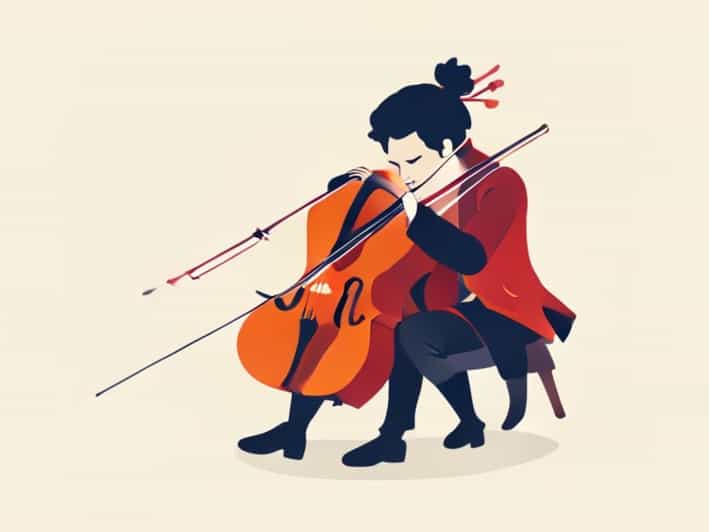
Joseph Haydn, often called the Father of the String Quartet, transformed this musical form from a private entertainment for aristocratic audiences into a more accessible and widely appreciated genre. Before Haydn, string quartets were primarily composed for small, elite gatherings, often performed in the private chambers of wealthy patrons. Haydn’s innovative approach expanded the expressive capabilities of the quartet while balancing each instrument’s role, allowing the music to communicate directly with listeners beyond the elite. By emphasizing dialogue between the instruments and incorporating wit, emotion, and clarity, Haydn democratized the string quartet and made it a central part of chamber music culture in the Classical era.
The Early String Quartet and Its Limitations
Before Haydn’s contributions, string quartets were largely simplistic and served as light entertainment for private audiences. These early quartets often featured a dominant first violin with the remaining instruments supporting the melody. The texture was predictable, and there was little interplay between the instruments. Composers of the early 18th century tended to focus on pleasing aristocratic patrons rather than creating works with broader expressive or structural innovation. Consequently, string quartets were somewhat elitist, limited to private spaces, and inaccessible to the general public.
Haydn’s Approach to Composition
Haydn’s genius lay in his ability to combine sophistication with clarity and accessibility. When composing string quartets, he emphasized balance among the four instruments-two violins, a viola, and a cello. Rather than allowing one instrument to dominate, Haydn wrote music that encouraged dialogue, conversation, and interplay among the parts. This approach transformed the quartet from a background entertainment into a dynamic and engaging musical experience. Haydn also explored thematic development, harmonic contrast, and rhythmic variety, making his quartets emotionally expressive and intellectually stimulating.
Equality Among Instruments
One of Haydn’s most important innovations was treating all four instruments as equals. In many of his early quartets, the first violin still carried the main melody, but he increasingly gave significant material to the second violin, viola, and cello. This democratization of instrumental roles allowed for richer textures and more intricate interactions within the ensemble. The cello, which previously often played a purely supportive role, was given melodic importance, and the viola contributed unique harmonic and counterpoint lines. By distributing musical responsibility more evenly, Haydn expanded the expressive possibilities of the string quartet.
Examples of Instrumental Dialogue
- In the Emperor Quartet, Op. 76, No. 3, the cello plays a prominent role in both accompaniment and thematic passages, rather than remaining in the background.
- The second violin often participates in imitative passages and counters the first violin’s melody, creating conversation between the instruments.
- Haydn’s use of harmonic support from the viola adds depth and subtlety to the overall texture, allowing for more nuanced musical statements.
Structural Innovation and Accessibility
Haydn also democratized the string quartet by developing clear, comprehensible structures that appealed to a wide audience. He popularized the four-movement format, which became standard a fast opening movement, a slow second movement, a minuet and trio, and a lively finale. This structure provided balance and predictability, making the music approachable while still allowing for creativity within each movement. By combining formal clarity with expressive richness, Haydn created quartets that were intellectually satisfying but also emotionally engaging for listeners of varying musical backgrounds.
Melody and Humor
Another key to Haydn’s democratization was his use of memorable melodies and subtle humor. His quartets often feature playful motifs, unexpected pauses, and witty rhythmic shifts. These elements make the music enjoyable for amateur performers and audiences alike. Humor and charm in music allowed listeners to feel a personal connection with the work, breaking down the sense of exclusivity that previously surrounded string quartets. By making the music relatable and entertaining, Haydn broadened its appeal beyond elite circles.
Publishing and Public Access
Haydn further democratized the string quartet through the publication of his works. By allowing his quartets to be printed and distributed, he ensured that the music could be performed in homes and smaller concert settings, not just in aristocratic courts. Amateur musicians could now access high-quality compositions, which encouraged widespread practice and performance. This accessibility contributed to the string quartet becoming a central element of domestic music-making in the late 18th and early 19th centuries, paving the way for future composers to reach broader audiences.
Impact on Later Composers
Haydn’s influence extended far beyond his own compositions. Wolfgang Amadeus Mozart and Ludwig van Beethoven, among others, adopted his principles of equality among instruments, structural clarity, and expressive interplay. Beethoven, in particular, pushed the quartet form to new dramatic heights, building upon Haydn’s foundation of dialogue and accessibility. By establishing a model that combined sophistication with public engagement, Haydn ensured that the string quartet would continue to evolve while remaining approachable to a wide audience.
Joseph Haydn transformed the string quartet from a private, elite entertainment into a democratic, engaging musical form accessible to many. Through his innovations in instrumental equality, thematic interplay, structural clarity, memorable melodies, and publication, he broadened the appeal of the quartet while maintaining high artistic standards. Haydn’s work not only elevated the string quartet as a central genre of chamber music but also created a foundation for future composers to continue exploring its expressive potential. By balancing technical mastery with accessibility, Haydn truly democratized the string quartet and left an enduring legacy that shaped Western classical music for generations.