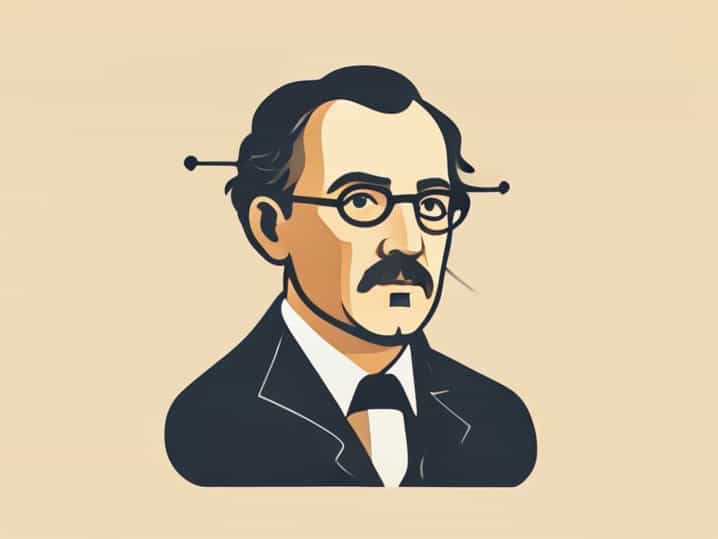
George Boole was a 19th-century mathematician whose work laid the groundwork for modern computing technology. His contributions, especially in the field of logic and algebra, were revolutionary and continue to influence the way computers operate today. Although Boole lived long before the invention of digital computers, his ideas about binary logic and symbolic reasoning created a foundation for the development of digital circuits, programming languages, and algorithm design. Understanding how George Boole affected computing technology provides insight into the connection between abstract mathematics and practical applications in our digital world.
Who Was George Boole?
George Boole was born on November 2, 1815, in Lincoln, England. He came from a modest family and received much of his education through self-study. Boole showed exceptional talent in mathematics from a young age and went on to become a mathematician, logician, and philosopher. His most notable work, The Laws of Thought, published in 1854, introduced a systematic way to use logic through mathematical symbols. Boole’s approach to logic was unique because he represented logical statements algebraically, allowing them to be manipulated just like numerical equations.
The Concept of Boolean Algebra
One of Boole’s most important contributions to computing technology is Boolean algebra. Boolean algebra is a branch of mathematics in which variables can have only two possible values true or false, often represented as 1 and 0 in computing. In his system, Boole defined operations such as AND, OR, and NOT, which correspond to fundamental logical relationships. These simple operations form the basis of decision-making in modern computers, allowing machines to process information, make comparisons, and execute programs accurately.
Boole’s Impact on Digital Computing
Although computers did not exist during Boole’s lifetime, his work directly influenced the design of digital electronic circuits. Digital computers operate using binary systems, meaning that they process data as combinations of zeros and ones. Boolean algebra provides the rules for manipulating these binary values. Logical operations derived from Boole’s principles determine how computer circuits evaluate conditions, store data, and perform computations.
Logic Gates and Circuits
Boolean algebra is the foundation of logic gates, which are the building blocks of digital circuits. Logic gates are electronic devices that implement Boolean functions, such as AND, OR, and NOT. These gates can be combined to create complex circuits that perform arithmetic calculations, data storage, and decision-making processes in computers. Without Boole’s work, engineers would not have a systematic method to design circuits that can handle binary information reliably.
Programming and Algorithms
Boolean logic is also essential in computer programming and algorithm design. In programming languages, Boolean expressions are used to control the flow of a program, such as conditional statements and loops. For example, an if statement in a program checks whether a condition is true or false before executing a certain block of code. These conditional operations rely on the principles Boole established, making his work indispensable for modern software development.
Boole’s Influence on Computer Science Education
George Boole’s ideas continue to shape computer science education. Students studying programming, algorithms, or digital electronics often begin with Boolean logic as a fundamental concept. Understanding Boolean algebra is crucial for learning about circuit design, programming structures, and artificial intelligence. Many computer science textbooks and courses dedicate significant attention to Boolean concepts, illustrating the lasting impact of Boole’s work on how computing technology is taught and understood.
Practical Applications Today
Boolean logic is applied in nearly every aspect of modern computing technology. Some key applications include
- Search EnginesBoolean operators like AND, OR, and NOT are used to refine search queries, helping users find relevant information quickly.
- Data StorageComputers use binary systems and Boolean logic to encode, store, and retrieve vast amounts of data efficiently.
- Artificial IntelligenceBoolean principles are applied in decision-making algorithms, enabling AI systems to evaluate conditions and make logical choices.
- Networking and SecurityBoolean logic is used in firewall rules, routing algorithms, and encryption systems to maintain secure and efficient communication.
- Everyday ElectronicsDevices like smartphones, tablets, and calculators rely on circuits governed by Boolean logic to function correctly.
The Lasting Legacy of George Boole
George Boole’s contributions extend far beyond mathematics. By bridging the gap between abstract logic and practical computation, he became one of the foundational figures in computer science. His work demonstrates how theoretical ideas can have profound and lasting effects on technology and society. Today, every digital device, from laptops to smartphones, relies on principles derived from Boolean algebra. Boole’s legacy shows that even ideas developed in the 19th century can shape the technological landscape of the 21st century.
Recognition and Honors
Throughout the years, George Boole has been recognized for his pioneering contributions. Universities and institutions around the world teach Boolean logic as a core part of mathematics and computer science. Several awards, scholarships, and memorials have been established in his honor, highlighting his influence on technology, logic, and education. While he did not live to see the digital age, his work continues to impact millions of people globally through the computing devices they use every day.
George Boole’s work on Boolean algebra and logical reasoning profoundly affected the development of computing technology. From digital circuits and logic gates to programming languages and algorithms, his principles form the backbone of modern computers. Boole demonstrated how abstract mathematical ideas can translate into practical solutions that power the digital world. His influence extends to education, engineering, software development, and everyday technology, making him one of the most important figures in the history of computing. By understanding George Boole’s contributions, we gain a deeper appreciation for the fundamental logic that drives our modern technological society.