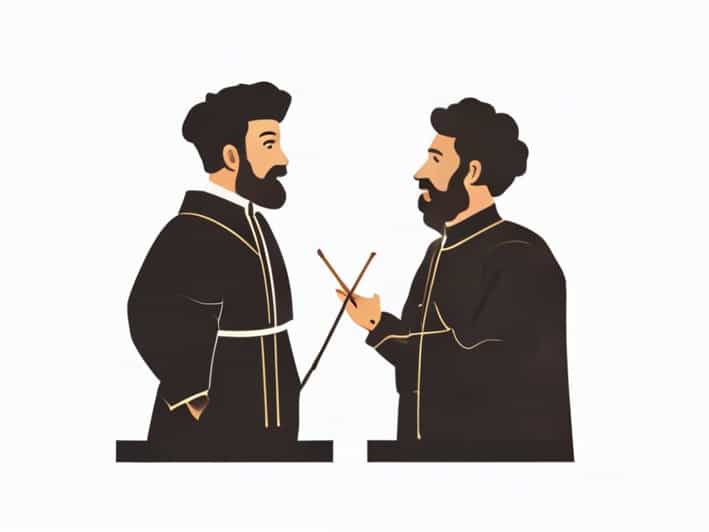
In William Shakespeare’s playHamlet, many important themes are revealed not only through dramatic events but also through quieter conversations. One such moment occurs when Polonius gives instructions to his servant Reynaldo regarding his son Laertes, who is studying in Paris. Although the scene may seem minor at first, it provides deep insight into Polonius’s character, his parenting style, and the atmosphere of surveillance and mistrust that runs throughout the play. Understanding the task Polonius gives to Reynaldo helps readers better grasp the moral and psychological tensions inHamlet.
The Context of Polonius and Reynaldo’s Scene
The task Polonius gives to Reynaldo appears in Act 2, Scene 1 ofHamlet. At this point in the play, Polonius is established as the Lord Chamberlain of Denmark and a father who is deeply concerned with reputation, control, and appearances. His son Laertes has recently left for France, and Polonius claims to worry about his behavior abroad.
Rather than trusting his son directly, Polonius chooses to send Reynaldo to Paris. The purpose of this mission is not simply to check on Laertes’s well-being, but to secretly investigate his conduct. This decision reflects the play’s broader themes of spying, deception, and indirect communication.
Who Is Reynaldo?
Reynaldo is a servant in Polonius’s household. While he does not appear often in the play, his role in this scene is significant. He represents obedience and loyalty to authority, carrying out Polonius’s wishes without openly questioning their morality.
By choosing Reynaldo rather than writing directly to Laertes or visiting him himself, Polonius demonstrates his preference for control through intermediaries. Reynaldo becomes a tool for gathering information rather than a messenger of care or affection.
The Main Task Polonius Gives to Reynaldo
Polonius instructs Reynaldo to travel to Paris and find out how Laertes is behaving. However, instead of asking direct questions, Polonius tells Reynaldo to use a deceptive strategy. He wants Reynaldo to spread mild rumors about Laertes in order to see how others respond.
The task can be summarized as indirect surveillance. Polonius believes that by hinting at small faults, such as gambling or drinking, Reynaldo can encourage others to reveal what they truly know about Laertes. Polonius thinks this method is clever and effective.
Polonius’s Instructions in Detail
Polonius carefully explains how Reynaldo should approach Laertes’s acquaintances. He advises him to appear casual and conversational, not accusatory. The goal is to observe reactions, not to confront anyone directly.
Polonius specifically tells Reynaldo to avoid accusing Laertes of serious crimes. Instead, he should suggest common youthful misbehavior. According to Polonius, this makes the deception believable and socially acceptable.
The Strategy of Indirect Accusation
One of the most revealing aspects of Polonius’s task is his belief in indirect accusation as a way to uncover truth. He explains that people are more likely to correct small false statements than respond to direct questioning.
This strategy reflects Polonius’s worldview. He values cleverness and manipulation over honesty and trust. For him, truth is something to be extracted through tricks rather than built through open relationships.
What This Task Reveals About Polonius
Polonius as a Controlling Father
Polonius’s instructions to Reynaldo reveal a father who lacks trust in his own son. Instead of believing in Laertes’s character or upbringing, Polonius assumes the worst and seeks confirmation.
This behavior suggests that Polonius values reputation more than emotional connection. His concern is not whether Laertes is happy or morally grounded, but whether his behavior could bring shame to the family.
Polonius as a Manipulative Thinker
The task also highlights Polonius’s tendency toward manipulation. He prides himself on being clever and strategic, even when simpler and more honest approaches would suffice.
Ironically, Polonius’s love of schemes often makes him appear foolish. Shakespeare uses this scene to show how excessive cunning can cross into self-deception.
The Role of Spying in Hamlet
The task Polonius gives to Reynaldo is part of a larger pattern of spying inHamlet. Throughout the play, characters observe one another secretly, often with harmful consequences.
Polonius spies on his own children, Claudius spies on Hamlet, and even Hamlet arranges performances to observe others’ reactions. This environment of constant surveillance creates paranoia and distrust.
Polonius’s Moral Blindness
Although Polonius believes his plan is wise, he fails to consider its moral implications. He is willing to damage his son’s reputation, even temporarily, in order to satisfy his curiosity.
This moral blindness reflects a broader theme in the play the danger of prioritizing control and image over integrity. Polonius justifies his actions as fatherly concern, but his methods suggest insecurity rather than wisdom.
Reynaldo’s Reaction to the Task
Reynaldo listens politely and follows instructions, but his brief questions suggest mild discomfort or confusion. He asks for clarification, indicating that Polonius’s plan is not entirely straightforward.
However, Reynaldo does not challenge the ethics of the task. His role emphasizes how authority figures in the play often go unquestioned, allowing manipulation to continue unchecked.
The Contrast Between Polonius and Laertes
Interestingly, Polonius’s behavior contrasts sharply with the advice he gives Laertes earlier in the play. Polonius famously urges his son to be honest, moderate, and true to himself.
Yet when Laertes is out of sight, Polonius acts in a way that contradicts his own principles. This hypocrisy underscores one of Shakespeare’s critiques of authority figures who preach virtue but practice control.
Why This Scene Matters to the Play
Although the task Polonius gives to Reynaldo does not directly advance the main plot, it enriches the audience’s understanding of the play’s moral landscape. It shows how deception has become normalized in the Danish court.
This scene also prepares the audience for Polonius’s later actions, including his decision to spy on Hamlet and Ophelia. His death later in the play can be seen as the tragic consequence of a life spent intruding into others’ affairs.
The task Polonius gives to Reynaldo is a subtle but important moment inHamlet. By instructing Reynaldo to spy on Laertes through indirect rumors, Polonius reveals his controlling nature, lack of trust, and reliance on manipulation.
This scene reinforces key themes of surveillance, deception, and moral confusion that define the play. It also exposes the gap between Polonius’s public wisdom and private behavior. Through this task, Shakespeare invites readers to question whether cleverness without integrity can ever lead to true understanding.