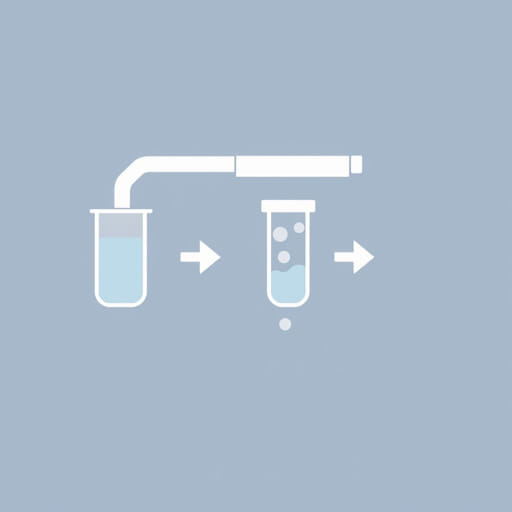
The process of filtration is a widely used method in both scientific and everyday contexts for separating solids from liquids or gases. Filtration relies on a barrier or filter medium that allows certain substances to pass through while retaining others based on ptopic size or other physical properties. This process is essential in water purification, chemical laboratories, pharmaceutical manufacturing, and even in everyday kitchen activities such as making coffee. Filtration not only improves the clarity and quality of liquids but also plays a critical role in ensuring safety, removing impurities, and enabling precise experimental outcomes. Understanding the principles, types, and applications of filtration provides valuable insight into one of the most fundamental techniques in science and industry.
Understanding Filtration
Filtration is a separation technique that uses a porous barrier to separate solid ptopics from a fluid, which can be either a liquid or a gas. The substance that passes through the filter is called the filtrate, while the solid retained on the filter is known as the residue. The efficiency of filtration depends on factors such as ptopic size, filter material, and the physical properties of the fluid. This process can occur under gravity, where the liquid slowly passes through a filter, or under applied pressure, where a pump or vacuum is used to accelerate filtration. Filtration is fundamentally a physical process and does not involve chemical changes to the substances involved.
Types of Filtration
Filtration can be categorized into several types, depending on the method and purpose
- Gravity FiltrationThis simple method relies on gravity to pull the liquid through a filter medium. It is commonly used in laboratories for separating insoluble solids from liquids.
- Vacuum FiltrationThis technique uses a vacuum to draw the liquid through the filter more quickly and efficiently. It is suitable for faster separation and is often used in chemical synthesis and pharmaceutical industries.
- Pressure FiltrationPressure is applied to push the fluid through the filter, which is useful for industrial applications where large volumes need to be filtered rapidly.
- Membrane FiltrationThis method employs membranes with specific pore sizes to separate ptopics, bacteria, or even viruses from liquids, often used in water treatment and microbiology.
- Depth FiltrationThe filter medium has multiple layers, allowing it to trap ptopics throughout its depth, making it effective for removing a wide range of ptopic sizes.
The Filtration Mechanism
The mechanism of filtration is based on the physical obstruction of ptopics larger than the filter pores. As a fluid passes through the filter, solid ptopics are trapped on or within the filter material, while the fluid continues to flow through. In some cases, additional mechanisms such as adsorption, where ptopics adhere to the filter surface, also contribute to the filtration process. Factors that influence the filtration mechanism include the size of ptopics relative to the pore size, fluid viscosity, pressure applied, and the characteristics of the filter medium. Optimizing these factors ensures efficient separation and minimizes the risk of filter clogging.
Filter Materials
Various materials are used to create filters, depending on the application and required precision. Common filter materials include
- PaperWidely used in laboratories for simple liquid filtration and coffee-making processes.
- ClothOften used in traditional methods for filtering liquids such as milk or juice.
- Glass FiberProvides high efficiency and chemical resistance, suitable for analytical and industrial filtration.
- Membrane MaterialsInclude polymers like cellulose acetate, polyethersulfone, or nylon, which are used for microfiltration and ultrafiltration.
- Metal MeshProvides strength and durability for industrial applications involving high temperatures or abrasive fluids.
Applications of Filtration
Filtration is integral to numerous fields, with applications ranging from everyday life to advanced scientific research
- Water PurificationFiltration removes sediment, debris, and microorganisms from water, making it safe for consumption.
- Pharmaceutical IndustryFiltration ensures the purity of drugs and prevents contamination during production.
- Food and Beverage IndustryUsed to clarify liquids such as juice, beer, and wine, and to remove impurities from oils and syrups.
- Chemical LaboratoriesFiltration separates precipitates from reaction mixtures and purifies chemical solutions.
- Environmental ScienceFiltration helps in studying pollutants, monitoring water quality, and removing contaminants from industrial effluents.
Advantages of Filtration
Filtration offers several advantages that make it a preferred method for separation
- Simple and straightforward technique that is easy to implement.
- Effective in separating solids from liquids and gases.
- Preserves the chemical composition of the substances involved.
- Scalable for both laboratory and industrial applications.
- Can be combined with other methods for enhanced purification and separation.
Challenges in Filtration
Despite its widespread use, filtration presents certain challenges that must be managed. Clogging of the filter medium by fine ptopics can slow down or stop the process. Selecting the appropriate filter pore size is critical; too large, and unwanted ptopics pass through, too small, and filtration becomes slow or impractical. Additionally, some fluids may contain substances that interact chemically with the filter material, leading to degradation or contamination. In industrial applications, high pressures or corrosive fluids require filters made from robust and chemically resistant materials to ensure longevity and reliability.
Filtration in Scientific Research
In scientific research, filtration is crucial for obtaining pure substances and precise experimental results. Microfiltration and ultrafiltration are commonly used to separate microorganisms, proteins, or macromolecules from solutions. Filtration also facilitates the collection of particulate matter for analytical studies, including environmental monitoring and chemical characterization. The ability to control and reproduce filtration conditions makes it a valuable technique in both experimental and applied research.
The process of filtration is an essential method for separating solids from liquids or gases across a wide range of applications. Its simplicity, effectiveness, and versatility make it indispensable in laboratories, industries, and daily life. By understanding the principles, types, materials, and mechanisms of filtration, users can optimize its efficiency and ensure desired outcomes. From water purification to pharmaceutical production, filtration ensures safety, quality, and precision. As technology advances, filtration techniques continue to evolve, offering more efficient, selective, and sustainable methods for separating and purifying substances, highlighting the enduring importance of this fundamental process in science and industry.