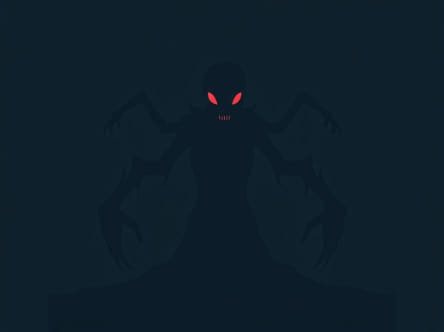
Across the vast landscape of fictional horror, science fiction, and fantasy, certain creatures have captured the collective imagination in ways that linger far beyond the final page or frame. While many are grotesque or dangerous, only a few can truly be called unnerving those that chill the mind as much as the spine. These creatures haunt dreams not because of their claws or teeth, but because of what they represent, how they behave, and how they distort reality. Among them, one figure often rises above the rest the most unnerving creature in fiction does not merely frighten; it unsettles the soul, often blurring the line between monstrous and human.
What Makes a Creature Unnerving?
Before identifying the most unnerving creature in fiction, it’s essential to understand what the term unnerving actually entails. Unlike simple fear or shock, unnerving experiences dig deeper. They evoke discomfort, anxiety, and disorientation. A truly unnerving fictional creature tends to
- Distort familiar forms or behaviors
- Operate without predictable logic
- Invade psychological boundaries
- Reflect hidden human fears or flaws
Such creatures often trigger an uncanny response. They may appear almost human, but something is off an emotionless stare, inhuman stillness, or distorted morality. These are not monsters that roar in the night but beings that quietly erode the viewer’s or reader’s sense of safety and understanding.
The Candidates Creatures That Disturb
Over time, literature and film have offered numerous unsettling beings. Among the most often mentioned are
The Pale Man from Pan’s Labyrinth
This eyeless creature, with its hands held high to see through embedded eyes, is horrifying not just in design but in behavior. It remains eerily still until provoked, then moves with shocking violence, consuming innocent children. Its lair, decorated with the remains of past victims, adds to its terror. The Pale Man’s silence, patience, and ritualistic habits make it deeply disturbing.
The Dementors from Harry Potter
These floating, wraithlike beings do not harm physically but emotionally. They drain happiness, leaving only despair. Their kiss can suck out a soul, making them metaphors for depression and hopelessness. Their very presence chills the air and paralyzes characters emotionally, creating an atmosphere of inescapable dread.
The Thing from John Carpenter’s The Thing
This creature’s unnerving nature lies in its ability to imitate perfectly. It can become anyone, making trust impossible. The paranoia it generates within the group who is still human? is where the real horror resides. It breaks down not only the body but also the concept of identity and truth.
The Gentlemen from Buffy the Vampire Slayer
Clad in Victorian suits and moving silently, The Gentlemen float just above the ground, never speaking. They steal voices so that their victims cannot scream. With eerie smiles and polite hand gestures, they remove hearts while maintaining an air of quiet civility, making their violence more disturbing than chaotic monsters.
Why the Xenomorph Stands Out
Among all these contenders, the Xenomorph from the Alien franchise arguably stands as the most unnerving creature in fiction. Designed by artist H.R. Giger, the Xenomorph is more than a monster; it is the embodiment of unnatural horror. Its features combine human, insect, and mechanical elements in a design that feels wrong yet deeply compelling.
The Anatomy of Terror
The Xenomorph’s body is sleek and black, with a smooth, elongated skull and a second jaw hidden inside its mouth. Its acid blood, hidden reproductive methods, and serpentine tail make it a biological weapon of fear. It does not kill for sustenance it kills because it is programmed to reproduce and survive.
What truly makes the Xenomorph unnerving is its lack of emotion. It does not rage. It does not hesitate. It moves with slow precision or sudden speed, depending on its target. It stalks like a predator, but not one that shares any emotion we can recognize. There is no reasoning with it. It simply exists, and in its presence, nothing is safe.
Psychological Horror of the Xenomorph
The Xenomorph operates on multiple levels of terror. First is the body horror its method of reproduction involves implanting an embryo inside a living host. The chest-bursting scene has become infamous not just for shock value but for the sense of betrayal it brings your own body becomes your doom.
Second is the fear of violation. The facehugger, which attaches forcibly to its host’s mouth, is a symbol of helplessness and assault. These creatures bypass all defenses mental, physical, and emotional leaving victims exposed and helpless.
Third is the psychological toll of being hunted. In the original Alien film, the crew of the Nostromo are stalked one by one in a dark, claustrophobic spaceship. The Xenomorph hides in vents, waits in silence, and kills without warning. It doesn’t announce its presence with roars or stomps it simply appears and takes life. The fear becomes internalized, mirroring the characters’ anxiety and hopelessness.
The Xenomorph and the Uncanny
The Xenomorph reflects humanity’s deepest fears not just of death, but of transformation, violation, and loss of identity. It takes elements of human anatomy and perverts them into something foreign. Its lifecycle from facehugger to chestburster to full adult resembles parasitic insects but with human hosts, amplifying the unease.
Its appearance triggers the uncanny valley effect. Though not exactly humanoid, its shape and posture are close enough to make viewers uncomfortable. It moves like something intelligent but remains wordless and inhuman. Its intelligence seems cold and tactical, rather than emotional or instinctive, making it impossible to relate to.
Influence and Legacy
Few creatures have had the cultural impact of the Xenomorph. It has inspired countless imitations in horror and science fiction, but few capture its unnerving essence. The Xenomorph’s power lies in its minimalism it does not over-explain itself, nor does it require dialogue to terrify. Its presence in confined settings spaceships, laboratories, colonies creates a pressure-cooker environment where fear has no release valve.
As the franchise evolved, so did the creature, but its core remained intact. Whether in Aliens, where it becomes a hive organism, or Alien Covenant, where its origins are explored, the Xenomorph continues to embody existential dread and primal horror. It serves as a mirror for humanity’s relationship with nature, technology, and our own vulnerabilities.
While many fictional creatures evoke fear or awe, the most unnerving creature in fiction is one that operates beneath the surface mentally, emotionally, and symbolically. The Xenomorph represents a perfect storm of fear visually disturbing, psychologically invasive, and biologically alien. It is not merely a monster, but a silent, slithering reflection of humanity’s darkest anxieties. Its lack of motive, emotion, or reason makes it terrifying in ways that no villain or ghost could match. In the quiet vacuum of space, where no one can hear you scream, it is not just the silence that unnerves it’s what hides inside it.