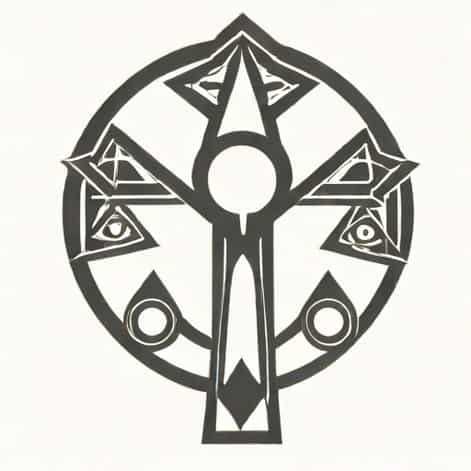
The ankh, a symbol resembling a cross with a loop at the top, is a widely recognized emblem in both ancient Egyptian culture and modern subcultures. For many, it represents life, immortality, and the mysteries of existence. Over the years, the ankh has transcended its historical and religious origins to become a significant icon in the goth subculture. Goths, who often embrace themes of darkness, mysticism, and the aesthetics of life and death, find in the ankh a symbol that resonates deeply with their worldview. The attraction is not merely decorative; it intertwines with goths’ fascination with symbolism, mortality, and identity, making the ankh an enduring accessory and motif in their fashion, music, and art.
Historical Origins of the Ankh
The ankh originates from ancient Egypt, where it was a potent symbol of eternal life. Known as the key of life or crux ansata, it appeared in tomb paintings, hieroglyphics, and religious artifacts. Egyptian gods are often depicted holding the ankh, signifying their divine power to grant life and sustain the universe. This connection to immortality, the afterlife, and spiritual energy gives the ankh a mystical allure. For goths, who frequently explore themes of death, mortality, and the supernatural, the ankh’s historical weight provides a sense of depth and connection to something timeless and otherworldly.
The Ankh and Gothic Symbolism
Goths are drawn to symbols that carry emotional and philosophical significance. The ankh represents a fusion of life and death, a concept central to goth aesthetics. While many goths are associated with dark clothing, somber music, and melancholic art, their interest often goes beyond mere darkness. The ankh embodies balance-the coexistence of vitality and mortality. Its curved, graceful lines contrast with the rigidity of a traditional cross, offering a more enigmatic and fluid symbol that complements goth fashion and ideology.
Connection to Life, Death, and Rebirth
Life, death, and rebirth are recurring motifs in goth culture, mirrored in music, literature, and personal expression. The ankh, as a representation of eternal life, resonates with these themes. Goths are frequently drawn to exploring existential questions and contemplating the cycles of existence. Wearing or displaying the ankh allows individuals to symbolically engage with these concepts, presenting a visual reminder of life’s fragility and the possibilities beyond death. It becomes a personal talisman reflecting introspection and spiritual exploration.
Fashion and Aesthetic Appeal
The ankh’s distinctive shape and elegant design make it a versatile accessory in goth fashion. It can be worn as necklaces, earrings, rings, and incorporated into clothing patterns. The looped top combined with the vertical cross creates a design that is both striking and sophisticated, complementing the goth preference for dramatic, eye-catching accessories. Its simplicity allows it to pair seamlessly with other motifs, such as skulls, bats, or roses, while still maintaining its unique symbolism.
Influence of Music and Pop Culture
Music has played a significant role in popularizing the ankh among goths. Bands and artists associated with goth, post-punk, and industrial music often use the ankh as part of their imagery, reinforcing its association with the subculture. Album covers, music videos, and stage designs frequently feature ankhs, linking the symbol with themes of darkness, romance, and mystery. Icons like Siouxsie Sioux and other goth figures have helped embed the ankh in the visual vocabulary of the scene, making it a recognizable and aspirational emblem for fans.
Spiritual and Personal Meaning
Beyond aesthetics, the ankh carries spiritual significance for many goths. Some adopt it as a symbol of personal transformation, resilience, or inner strength. Its ancient Egyptian roots provide a connection to a civilization deeply engaged with concepts of life, death, and the afterlife, offering a sense of historical continuity and cosmic significance. For others, the ankh may represent a commitment to individuality, a reminder to embrace life fully while acknowledging its impermanence. This personal connection reinforces the goth identity, emphasizing introspection, philosophy, and the search for meaning.
Ankh as a Statement of Identity
In goth culture, symbols are not just decorative-they convey identity and philosophy. Wearing an ankh can signal membership in the goth community or alignment with its values. It communicates an appreciation for the macabre, the mystical, and the aesthetically unconventional. This shared symbolism fosters a sense of belonging, creating subtle bonds among individuals who appreciate the ankh’s layered meanings.
The Allure of Ancient Mysticism
Goths often have a fascination with history, mythology, and the occult. The ankh’s origins in ancient Egyptian spirituality offer a tangible link to mystical knowledge and forgotten traditions. Its association with gods, ritual, and hidden wisdom appeals to those who explore alternative spiritualities or enjoy the allure of esoteric symbolism. This blend of historical depth and mysterious power makes the ankh particularly compelling within goth circles.
Modern Adaptations and Popularity
Today, the ankh has become a mainstream symbol within goth culture while also crossing into alternative fashion, jewelry design, and popular culture. Its prevalence in tattoos, digital art, and fashion statements underscores its enduring appeal. The ankh’s adaptability allows it to maintain relevance across generations, evolving from an ancient hieroglyph to a modern emblem of style, spirituality, and identity.
Integration in Everyday Life
Many goths incorporate ankhs into everyday life beyond fashion. Home décor, accessories, and artwork featuring the ankh reflect personal tastes and philosophical leanings. This integration highlights the symbol’s versatility and the depth of its appeal. By placing the ankh in their daily environment, goths continuously engage with its symbolic meaning, reinforcing its role as both a cultural and personal icon.
Symbolism in Tattoos and Art
Gothic art and body modification often embrace the ankh as a motif. Tattoos of ankhs may be combined with roses, moons, or skulls, blending beauty with darkness. Artists and individuals alike use the symbol to explore themes of mortality, spirituality, and self-expression. These artistic interpretations reinforce the ankh’s place as a central element of goth visual culture, bridging the gap between tradition and contemporary creativity.
The ankh’s enduring appeal to goths lies in its multifaceted symbolism. It bridges ancient spirituality and modern subculture, embodying themes of life, death, immortality, and personal identity. Its aesthetic elegance, historical significance, and philosophical depth make it more than a fashion accessory-it is a meaningful emblem that resonates on emotional, intellectual, and spiritual levels. For goths, the ankh represents a celebration of life’s mysteries, a reflection on mortality, and a connection to a timeless, mystical legacy. Its presence in fashion, music, art, and personal expression ensures that the ankh remains an iconic symbol within the goth community, representing a unique blend of beauty, darkness, and profound meaning.
Ultimately, the fascination with ankhs is about more than style-it’s about embracing a worldview that values introspection, symbolism, and the interconnectedness of life and death. As goth culture continues to evolve, the ankh will likely remain a central symbol, a reminder of the past, a statement of identity, and a timeless emblem of the mysteries that draw humans to explore the shadowed corners of existence.