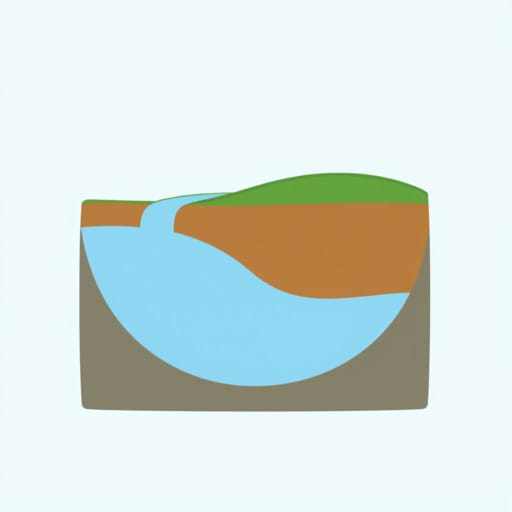
Groundwater is one of the most vital sources of fresh water on Earth, yet it is often overlooked because it exists beneath the surface where it is not immediately visible. Unlike rivers, lakes, or oceans, groundwater resides in the pore spaces of soil and rock formations, making it a hidden but critical component of the global water cycle. Understanding where groundwater is located and how it moves through underground reservoirs is essential for water management, agriculture, urban planning, and environmental conservation. Its availability and quality directly affect millions of people who depend on wells and aquifers for drinking water, irrigation, and industrial use.
Definition of Groundwater
Groundwater is the water present beneath Earth’s surface in soil pore spaces and in the fractures of rock formations. It originates primarily from precipitation, such as rain and snow, which infiltrates the soil and percolates downward until it reaches a saturated zone known as an aquifer. Unlike surface water, groundwater is stored in underground layers of permeable rock, sand, or gravel that allow water to accumulate and flow slowly over time.
Locations of Groundwater
Groundwater is located in several types of subsurface formations, which can vary in depth, composition, and accessibility. These locations are categorized based on their geologic and hydrologic properties.
Soil and Unsaturated Zones
The uppermost layer where groundwater is initially found is called the unsaturated or vadose zone. In this zone, water exists in the spaces between soil ptopics but is not fully saturated. Water in the unsaturated zone moves downward due to gravity and capillary forces, eventually reaching the saturated zone. Though this layer does not serve as a major water source, it plays a crucial role in filtering and replenishing aquifers below.
Aquifers
The primary storage areas for groundwater are aquifers, which are porous and permeable rock or sediment layers that hold water. Aquifers can be categorized into two main types
- Unconfined AquifersThese aquifers have a permeable layer on top, allowing water to flow freely from the surface down into the water-bearing formation. The water table, which is the upper boundary of the saturated zone, fluctuates depending on precipitation and usage.
- Confined AquifersConfined aquifers are trapped between two impermeable layers of rock or clay, creating pressure that can sometimes force water to the surface naturally through artesian wells. These aquifers are less susceptible to contamination but are often deeper and more challenging to access.
Fractured Rocks
In addition to sedimentary aquifers, groundwater is also located in fractured rock formations. Water moves through cracks, fissures, and joints in solid rock, making it accessible in areas where traditional aquifers are absent. This type of groundwater is common in mountainous regions and areas with significant geological activity. Fractured rock aquifers may have limited storage capacity but can serve as a vital water source for communities and ecosystems.
Permeable Soil Layers
Groundwater can also accumulate in sandy or gravelly soil layers that have high permeability. These layers act as natural reservoirs, allowing water to infiltrate and move easily through the soil. Permeable soils are especially important for rural and agricultural areas where shallow wells draw water directly from these underground layers.
Factors Influencing Groundwater Location
The location and movement of groundwater are influenced by several natural factors, including geology, topography, precipitation, and human activity.
Geology
The type of rock and sediment in an area largely determines where groundwater can accumulate. Porous rocks like sandstone or limestone can store significant amounts of water, while impermeable rocks like granite or clay restrict water movement. Karst landscapes, formed by the dissolution of soluble rocks, often contain extensive underground reservoirs and caves filled with groundwater.
Topography
Groundwater tends to accumulate in low-lying areas where surface water infiltrates more easily. Valleys, basins, and floodplains often have shallow water tables, while elevated areas may have deeper groundwater reservoirs. Topographic slopes also affect the direction and speed of groundwater flow, influencing its accessibility for wells and springs.
Climate and Precipitation
Regions with higher rainfall tend to have more abundant groundwater, as precipitation infiltrates the soil and replenishes aquifers. Conversely, arid and semi-arid regions have limited groundwater resources because of low recharge rates and high evaporation. Seasonal variations can also affect groundwater levels, with water tables rising during wet seasons and declining during dry periods.
Human Activities
Human actions such as agriculture, urban development, and groundwater extraction significantly influence groundwater locations. Over-pumping of wells can lower water tables, creating areas of depletion. Conversely, artificial recharge techniques, like rainwater harvesting and managed aquifer recharge, can enhance groundwater storage in targeted locations.
Groundwater Flow and Movement
Groundwater is not stationary; it moves slowly through soil and rock formations due to gravity and pressure differences. The direction of flow is generally from high to low hydraulic head, meaning water moves from areas of higher elevation or pressure toward lower areas. Understanding groundwater flow is essential for water resource management, contamination prevention, and sustainable usage planning.
Recharge and Discharge Areas
Recharge areas are regions where surface water infiltrates to replenish aquifers. These can include forests, grasslands, and permeable urban landscapes. Discharge areas are where groundwater returns to the surface, such as springs, rivers, wetlands, and coastal zones. Mapping recharge and discharge zones helps determine the location and availability of groundwater for human and ecological needs.
Groundwater is located beneath the Earth’s surface in soil pores, sediment layers, fractured rocks, and aquifers, forming a hidden yet essential part of the global water supply. Its availability is influenced by geology, topography, climate, and human activity. From shallow wells to deep confined aquifers, groundwater supports drinking water, agriculture, industry, and natural ecosystems. Understanding where groundwater is located and how it moves is crucial for sustainable water management and ensuring long-term access to this critical resource. By protecting recharge areas, managing extraction, and monitoring groundwater flow, we can maintain the balance of this vital underground reservoir for future generations.