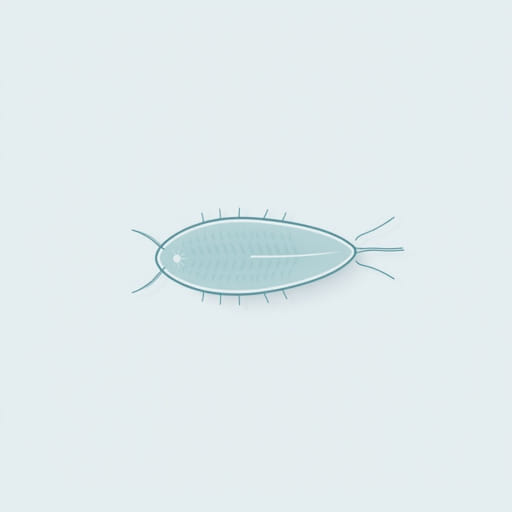
Paramecium is a fascinating single-celled organism that captures the imagination of biologists and science enthusiasts alike. These microscopic protozoans are commonly found in freshwater environments, including ponds, lakes, and slow-moving streams. Despite their simple structure as unicellular organisms, paramecia exhibit a variety of unique features that make them highly adaptable and efficient in their environment. Their complex behaviors, specialized organelles, and remarkable methods of locomotion and feeding have made them a model organism in scientific research for over a century. Understanding the distinct features of paramecium sheds light not only on the life of single-celled organisms but also on the principles of cellular biology and evolution.
Structure of Paramecium
Paramecia belong to the group of ciliate protozoans, characterized by the presence of hair-like structures called cilia covering their outer surface. These cilia play a crucial role in movement and feeding. The overall shape of a paramecium is elongated and slipper-like, providing an efficient form for swimming in aquatic environments. Inside the cell, several specialized organelles allow paramecia to perform functions necessary for survival and reproduction.
Cilia and Locomotion
Cilia are one of the most distinctive features of paramecia. These tiny, hair-like projections beat in a coordinated fashion, propelling the organism through water in a smooth, gliding motion. The ciliary movement is not only used for locomotion but also for directing food ptopics toward the oral groove. This dual functionality demonstrates how a single structure can serve multiple purposes, making paramecia highly efficient in their environment.
Feeding Mechanism
Paramecia are heterotrophic organisms, meaning they obtain their nutrients by consuming other microscopic organisms such as bacteria and algae. They possess a specialized feeding structure known as the oral groove, which functions like a microscopic conveyor belt. Cilia lining the oral groove create water currents that sweep food ptopics into the cell mouth, or cytostome. Once inside, food vacuoles form around the ptopics, where digestive enzymes break down the food to release nutrients.
Contractile Vacuoles
One of the most remarkable adaptations of paramecia is their contractile vacuoles, which help maintain osmotic balance in freshwater environments. Freshwater habitats have lower solute concentrations than the cell interior, causing water to constantly flow into the paramecium by osmosis. The contractile vacuoles periodically expel excess water, preventing the cell from swelling and bursting. This feature is vital for the survival of paramecia in hypotonic conditions and demonstrates their remarkable ability to adapt to their environment.
Reproduction in Paramecium
Paramecia exhibit both asexual and sexual reproduction, making them highly versatile organisms in terms of population growth and genetic diversity. Asexual reproduction occurs through binary fission, where the cell divides into two genetically identical daughter cells. This process allows for rapid population increase in favorable conditions.
Conjugation
In addition to binary fission, paramecia can engage in sexual reproduction through a process called conjugation. During conjugation, two paramecia align side by side and exchange genetic material via their micronuclei. Although conjugation does not produce new individuals immediately, it introduces genetic variation, which can enhance the adaptability of the population to changing environments. This dual mode of reproduction highlights the organism’s ability to balance rapid growth with long-term evolutionary benefits.
Sensory and Behavioral Adaptations
Despite being single-celled, paramecia exhibit complex behaviors in response to environmental stimuli. They can detect chemical signals, light, and temperature changes, allowing them to navigate effectively. For instance, paramecia can move toward areas rich in food (positive chemotaxis) and away from harmful substances (negative chemotaxis). This behavioral flexibility is crucial for survival in dynamic freshwater ecosystems.
Trichocysts and Defense Mechanisms
Paramecia also possess defense mechanisms to protect themselves from predators. One such adaptation is the presence of trichocysts, which are tiny, rod-like organelles embedded in the cell membrane. When threatened, trichocysts can discharge sharp, needle-like structures to deter predators or anchor the paramecium temporarily to avoid harm. This rapid response system demonstrates how even single-celled organisms have evolved sophisticated protective strategies.
Unique Cellular Structures
Paramecia contain several other specialized organelles that contribute to their uniqueness. The macronucleus controls the everyday metabolic activities and overall functioning of the cell, while the micronucleus is involved in reproductive processes and genetic exchange. This separation of roles between nuclei is a distinctive feature among protozoans and provides a level of cellular specialization rarely seen in unicellular organisms.
Endosymbiotic Relationships
In some cases, paramecia host symbiotic bacteria within their cytoplasm. These endosymbionts can assist in digestion, provide additional nutrients, or offer protection from harmful microorganisms. Such mutualistic relationships further enhance the adaptability and survival of paramecia in diverse aquatic habitats.
Ecological Importance
Paramecia play a crucial role in freshwater ecosystems. As primary consumers of bacteria and small algae, they help regulate microbial populations and contribute to nutrient cycling. They also serve as a food source for larger microorganisms and small aquatic animals, forming an integral part of the food web. Their presence and population dynamics can serve as indicators of water quality and ecosystem health.
Scientific Significance
Paramecia have been widely used in scientific research due to their complex behaviors, well-defined cellular structures, and ease of cultivation in laboratory conditions. They serve as model organisms for studying cellular processes such as locomotion, digestion, osmoregulation, and genetic exchange. Research on paramecia has contributed to a deeper understanding of cell biology, protozoan ecology, and evolutionary biology.
Paramecia are extraordinary single-celled organisms that demonstrate how complexity and efficiency can exist at a microscopic level. Their unique features, including cilia for locomotion, contractile vacuoles for osmoregulation, specialized nuclei for reproduction, and trichocysts for defense, make them highly adaptable to freshwater environments. Additionally, their dual modes of reproduction and ability to respond to environmental stimuli highlight their sophistication as unicellular organisms. Beyond their ecological significance, paramecia continue to provide valuable insights in scientific research, making them a remarkable subject of study. Understanding the distinctive features of paramecium not only enriches our knowledge of protozoans but also sheds light on the fundamental principles of life at the cellular level.