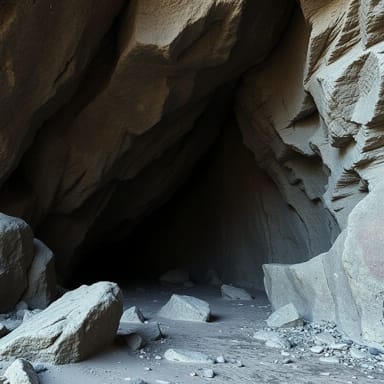
Deep beneath the Earth’s surface, molten rock known as magma slowly cools and solidifies to form large underground bodies of igneous rock. These formations are not only significant in the study of geology but also help us understand Earth’s internal structure and volcanic processes. Known collectively as intrusive or plutonic igneous bodies, they take various shapes and sizes, depending on how and where the magma intrudes into the surrounding rock layers. These underground igneous rock bodies are called plutons, and they form a crucial part of Earth’s crust.
Understanding Underground Igneous Rock Bodies
What Are Intrusive Igneous Rocks?
Igneous rocks form from the cooling and solidification of magma or lava. When this cooling happens beneath the Earth’s surface, the rocks are called intrusive igneous rocks. Because they cool slowly, they typically have large, visible crystals. These rocks include granite, diorite, and gabbro. The structures in which these rocks form underground are called igneous intrusions or plutonic bodies.
Terminology Plutonic vs. Intrusive
Both plutonic and intrusive describe the same process magma that solidifies beneath the surface but the terms are used in slightly different contexts. Plutonic often refers to the rock itself (e.g., plutonic rocks like granite), while intrusive refers more to the geological setting or the process (e.g., intrusive formation or intrusive igneous body).
Main Types of Underground Igneous Rock Bodies
Batholiths
Batholiths are the largest type of underground igneous rock bodies. They can span hundreds of kilometers in area and are usually made up of coarse-grained rocks like granite. Batholiths form deep in the crust and are exposed at the surface only after long periods of erosion. Famous examples include the Sierra Nevada Batholith in California.
Stocks
Stocks are similar to batholiths but smaller in size. Like batholiths, they are composed mainly of coarse-grained intrusive rocks. Stocks often represent the upper portions of batholiths and may also appear at the surface due to uplift and erosion.
Laccoliths
Laccoliths form when magma intrudes between rock layers and pushes the overlying strata upward into a dome shape. Unlike batholiths and stocks, laccoliths do not penetrate deep into the crust but instead reside closer to the surface. They often lead to the formation of dome-shaped mountains.
Lopoliths
Lopoliths are the opposite of laccoliths in shape. Instead of doming upward, they sag downward. These concave igneous intrusions typically form when large volumes of magma accumulate and cause the underlying strata to subside. Lopoliths are often composed of mafic rocks like gabbro or basalt.
Sills
Sills are tabular or sheet-like intrusions that form parallel to the existing rock layers. They typically form when magma spreads horizontally through bedding planes. Sills can vary in thickness but are generally much thinner than batholiths or laccoliths. An example of a large sill is the Palisades Sill in New York and New Jersey.
Dikes
Dikes are vertical or steeply inclined intrusions that cut across existing rock layers. Unlike sills, which are horizontal, dikes form when magma moves upward through cracks and fissures. Dikes can be narrow or wide and may form in groups called dike swarms.
Formation of Underground Igneous Bodies
The Role of Magma
Magma forms deep within the Earth, often at tectonic boundaries or hotspots. As it rises through the crust, it may intrude into existing rock layers. The rate at which the magma cools and the surrounding pressure conditions influence the final shape and texture of the rock body.
Slow Cooling and Crystallization
Because underground igneous bodies cool slowly, they allow crystals to grow to larger sizes. This slow cooling process results in the coarse-grained texture seen in many intrusive rocks like granite and diorite. The texture helps geologists identify intrusive rocks during field studies.
Geological Importance of Plutonic Bodies
Formation of Mountain Ranges
Many mountain ranges are underlain by large plutonic bodies. Over millions of years, erosion removes the overlying sedimentary rock, revealing the hardened magma that once lay beneath the surface. The Rocky Mountains, Andes, and Himalayas all feature exposed plutonic rock in various locations.
Indicators of Tectonic Activity
The presence of intrusive bodies often marks regions of past tectonic activity. For example, the intrusion of magma into continental crust usually occurs at convergent boundaries, where one tectonic plate is forced under another. These regions often produce batholiths and other large intrusions.
Economic Resources
Underground igneous rock bodies are frequently associated with valuable mineral deposits. As magma cools, it concentrates certain elements, forming ore bodies that can be mined for copper, gold, molybdenum, and other metals. These resources are vital to various industries and economies.
How Geologists Study Underground Igneous Bodies
Field Observation
When portions of plutonic bodies become exposed at the surface, geologists can study their structure, composition, and mineral content. This helps them understand the depth and conditions under which the rock formed.
Drilling and Core Sampling
In areas where the plutonic body remains buried, drilling is used to extract core samples. These cylindrical rock samples allow scientists to analyze the rock’s composition, age, and origin without full excavation.
Geophysical Methods
Geologists also use geophysical techniques like seismic reflection, gravity surveys, and magnetic mapping to detect underground igneous bodies. These methods help estimate the size, shape, and location of plutonic formations beneath the Earth’s surface.
Examples from Around the World
Sierra Nevada Batholith, USA
This massive granite body underlies much of the Sierra Nevada mountain range in California. It formed during the Mesozoic Era and is now exposed at the surface due to uplift and erosion.
Bushveld Complex, South Africa
One of the largest layered mafic intrusions on Earth, the Bushveld Complex is a classic example of a lopolith. It is also one of the most significant sources of platinum-group metals.
Great Dyke, Zimbabwe
A prominent example of a large dike, the Great Dyke stretches over 500 kilometers and contains valuable chromite and platinum deposits.
Underground igneous rock bodies are called plutons or intrusive igneous bodies. These formations include batholiths, stocks, laccoliths, lopoliths, sills, and dikes. Each type has unique characteristics that reveal much about Earth’s internal processes and history. Understanding these rock bodies helps scientists interpret tectonic activity, discover natural resources, and gain insight into the planet’s geologic evolution. As erosion continues to expose these ancient intrusions, they offer a window into the deep past and the powerful forces that shape our world.