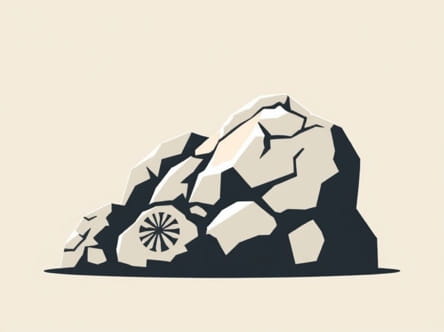
Throughout Earth’s history, the preservation of past life forms has largely depended on specific types of rocks that are capable of capturing and protecting organic remains. These remains, known as fossils, provide a window into ancient environments and the organisms that once inhabited them. The rocks which contain fossils are essential to the study of paleontology and evolutionary biology. Understanding which rocks are fossil-rich and how they form can help us piece together Earth’s long and complex story, offering insights into climate changes, mass extinctions, and the gradual development of life on our planet.
Types of Rocks and Their Ability to Preserve Fossils
The Three Main Rock Types
All rocks on Earth fall into one of three broad categories igneous, sedimentary, and metamorphic. While each type plays a role in Earth’s geological processes, only certain types are ideal for preserving fossils.
- Igneous Rocks– Formed from cooled magma or lava. These rocks rarely contain fossils because the intense heat destroys organic material.
- Metamorphic Rocks– Created when existing rocks are subjected to heat and pressure. Fossils, if initially present, are often distorted or destroyed during metamorphism.
- Sedimentary Rocks– Formed from the accumulation and compaction of sediments. These rocks are the primary fossil-bearing rocks and provide most of our fossil record.
Among the three types, sedimentary rocks are by far the most important for fossil preservation due to their gentle formation process and ability to trap and encase organic remains over long periods.
Sedimentary Rocks The True Fossil Containers
How Sedimentary Rocks Form
Sedimentary rocks form in layers from the deposition of ptopics carried by water, wind, or ice. Over time, these ptopics, which may include minerals, shells, plant debris, and small bones, accumulate and become compacted. The environment in which these sediments are deposited such as riverbeds, lakes, deserts, or oceans can influence the types of fossils that are preserved within them.
As sediment buries dead plants or animals, the lack of oxygen slows decay. Over thousands to millions of years, minerals from groundwater seep into the remains, replacing organic material and turning them into fossils. This process, known as fossilization, relies heavily on the calm, low-energy conditions typically found in sedimentary environments.
Common Fossil-Bearing Sedimentary Rocks
Several specific types of sedimentary rocks are well known for containing fossils. Each of these rocks forms under different conditions and may preserve different kinds of organisms.
- Limestone– Often formed from the remains of marine organisms like coral and shellfish. Limestone can contain beautifully preserved fossils and is commonly found in ancient seabeds.
- Shale– A fine-grained rock formed from silt and clay. Shale is excellent for preserving detailed fossils of soft-bodied organisms such as plants, insects, and fish due to its fine sediment and low-oxygen conditions.
- Sandstone– Formed from sand-sized ptopics, often in rivers or deserts. While not as fossil-rich as shale or limestone, sandstone can preserve footprints, bones, and plant impressions.
- Conglomerate– Composed of larger, rounded fragments cemented together. Occasionally, fossils are found in conglomerates, although their preservation may be incomplete or distorted.
Fossils in Non-Sedimentary Rocks
Rare Exceptions in Igneous and Metamorphic Rocks
Although sedimentary rocks are the main repositories of fossils, there are rare instances where fossils or fossil-like traces appear in igneous and metamorphic rocks. For example
- Volcanic ash layers can sometimes preserve plant imprints or even delicate structures like insect wings when quickly buried.
- Fossils trapped in limestone may survive low-grade metamorphism, appearing in rocks like marble, although this is uncommon and often difficult to study.
In general, however, the high heat and pressure involved in the formation of igneous and metamorphic rocks make them unsuitable for fossil preservation.
Types of Fossils Found in Sedimentary Rocks
Body Fossils and Trace Fossils
Fossils preserved in sedimentary rocks fall into two main categories
- Body Fossils– These include preserved bones, shells, teeth, and even imprints of whole organisms. Body fossils offer direct evidence of the organism’s structure.
- Trace Fossils– These are indirect signs of life such as footprints, burrows, nests, and feces (coprolites). Trace fossils provide information about the behavior of organisms.
Both types are valuable for interpreting past environments and understanding how ancient creatures lived and interacted with their surroundings.
Microfossils and Macrofossils
Fossils are also classified by size.Microfossils, such as pollen, spores, and microscopic plankton, are often found in shale and can be studied under a microscope.Macrofossils, including bones and leaves, are visible to the naked eye and can provide broader information about prehistoric life.
Why Sedimentary Rocks Preserve Fossils Best
Gentle Conditions for Fossilization
Sedimentary environments like lakes, rivers, and oceans provide calm conditions that allow for the gentle burial of remains. Unlike igneous or metamorphic processes, which involve intense heat or pressure, sedimentation occurs slowly and in cooler environments. This enables the delicate structures of organisms such as feathers, leaves, and shells to be preserved in great detail.
Layered Structure and Dating
Sedimentary rocks form in horizontal layers or strata, which helps scientists date fossils and reconstruct the sequence of life on Earth. Fossils found in lower layers are typically older than those in higher layers. This principle, known as the Law of Superposition, allows geologists to build a timeline of Earth’s biological and geological history.
Fossil Hunting and Field Studies
Where Fossils Are Found
Fossil-rich sedimentary rocks can be found around the world in various geological formations. Common fossil-hunting locations include
- Exposed cliffs and road cuts
- Dry lakebeds and riverbanks
- Quarries and open-pit mines
- Deserts with eroded sedimentary layers
Amateur fossil hunters and professional paleontologists alike rely on the presence of sedimentary rock to guide their searches. Shale and limestone are especially favored for yielding well-preserved fossils.
Tools and Techniques
Finding fossils in sedimentary rocks requires patience and care. Tools such as brushes, chisels, and hand lenses help excavators carefully remove rock without damaging delicate fossils. Once recovered, fossils are cleaned, studied, and often displayed in museums or used in scientific research.
Fossils, our most valuable clues to Earth’s ancient life, are almost exclusively found in sedimentary rocks. These rocks especially limestone, shale, and sandstone form in environments that gently bury and protect organic remains over millions of years. Understanding that the rocks which contain fossils are sedimentary is essential for both scientific research and fossil exploration. While igneous and metamorphic rocks play crucial roles in shaping Earth’s structure, it is within sedimentary layers that the stories of ancient organisms are written and preserved for future discovery. As such, sedimentary rocks remain the key to unlocking the mysteries of Earth’s prehistoric past.