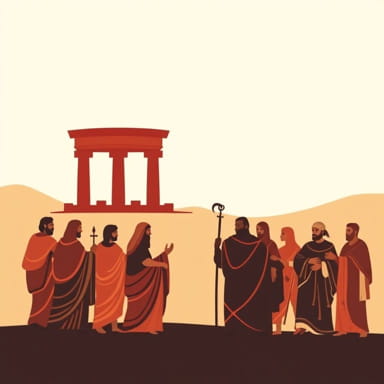
In the heart of Asia Minor, the region of Phrygia once served as a significant stronghold for early Christianity, flourishing with churches, martyrs, and bishops long before the rise of Byzantium or the spread of Islam. From the Roman Empire through centuries of transformation, the Christians of Phrygia endured persecution, witnessed the growth of a Christian state, and eventually faced profound challenges during the Turkish conquest. This topic explores the long and complex history of Phrygian Christianity, tracing its evolution over time and its resilience through political and religious change.
Christian Beginnings in Roman Phrygia
Introduction of Christianity
Christianity likely reached Phrygia in the 1st century AD, carried by apostles and early missionaries. The New Testament mentions Phrygia as one of the regions where people were present during the day of Pentecost, suggesting early contact with the gospel message. By the 2nd and 3rd centuries, Phrygia had developed a structured Christian community, complete with churches and bishops. The region became known for its devout and sometimes radical sects, such as the Montanists, who emerged with prophetic zeal and strict moral codes.
Montanism and Its Impact
Montanism was one of the first major Christian movements to take root in Phrygia. Founded by Montanus in the mid-2nd century, the movement emphasized ecstatic prophecy and the imminent return of Christ. While ultimately labeled heretical by the broader church, Montanism demonstrates the vibrancy and intensity of early Christian life in the region. Montanist women, like Maximilla and Priscilla, also played prominent roles as prophetesses, which was uncommon at the time and reflective of Phrygia’s unique spiritual landscape.
Persecution and Endurance Under Roman Rule
Imperial Persecutions
During the Roman Empire, Christians in Phrygia often faced persecution for refusing to participate in state-sponsored pagan worship. This included martyrdoms, confiscation of property, and imprisonment. The Martyrs of Phrygia became symbols of faith and resistance. Despite these pressures, the faith did not diminish. Rather, persecution often strengthened the sense of community and commitment among believers.
Christian Infrastructure
As persecution waned under emperors like Constantine the Great, who legalized Christianity with the Edict of Milan in 313 AD, Phrygia blossomed into a vibrant Christian territory. Churches were built across cities such as Laodicea, Hierapolis, and Colossae. Bishops participated in early ecumenical councils, contributing to theological debates that would shape the global church. Christian schools, monasteries, and charitable institutions also emerged, reinforcing the region’s importance.
Phrygia in the Byzantine Era
Religious Integration and Expansion
During the Byzantine period, Christianity in Phrygia was fully integrated into the life of the Eastern Roman Empire. Churches became richly decorated with mosaics and frescoes, and bishops were active in politics and ecclesiastical matters. The region continued to thrive spiritually and culturally, acting as a conduit between East and West. Monasticism grew during this era, with monks retreating to caves and mountains to live lives of prayer and isolation.
Icons and Iconoclasm
Phrygia, like much of the Byzantine world, was affected by the iconoclast controversy of the 8th and 9th centuries. This theological dispute over the veneration of religious images led to the destruction of icons and violent divisions among Christians. Monasteries in Phrygia were sometimes attacked, and artworks defaced. Nevertheless, the local population often resisted imperial decrees, preserving their religious traditions in secret or remote locations.
The Seljuk Invasions and the Beginning of Decline
New Political Realities
By the 11th century, the Seljuk Turks began their advance into Anatolia, culminating in the Battle of Manzikert in 1071. This pivotal event marked the decline of Byzantine control and the gradual Islamization of the region. For Phrygian Christians, this shift meant adapting to a new political reality. While some communities fled to safer regions, others stayed and negotiated their place in the changing order.
Churches Under Islamic Rule
Though initially tolerated under Islamic governance, Christian institutions faced new restrictions. Many churches were repurposed as mosques or fell into disrepair. Still, Christians continued to live in villages and towns, preserving their language, traditions, and faith. The transition was not always peaceful, but the Phrygian Christians demonstrated remarkable resilience amid shifting cultural landscapes.
The Final Blow: The Ottoman Conquest
Gradual Disappearance
With the rise of the Ottoman Empire in the 14th and 15th centuries, Phrygia was fully absorbed into a Muslim-majority state. Though the Ottomans allowed Christian minorities to exist under the millet system, they were considered second-class citizens. Over generations, pressures to convert, intermarriage, and economic incentives led to a steady decline in the Christian population.
Legacy and Memory
By the time of the Turkish conquest, much of the original Christian culture of Phrygia had been eroded or absorbed. However, remnants remain in the form of ruins, inscriptions, and legends passed down through oral tradition. Ancient churches, monasteries, and carved crosses can still be found across central Turkey, silent witnesses to a forgotten chapter of religious history.
A Lost Christian Heartland
The Christians of Phrygia played a significant role in the history of early and medieval Christianity. From their brave resistance under Roman persecution to their vibrant communities during the Byzantine period, and finally their slow disappearance under Turkish rule, their story is one of resilience, faith, and cultural richness. Though much of their world has vanished, their legacy endures in historical records, archaeological sites, and the ongoing scholarly interest in this once-thriving Christian heartland.
- Phrygia was an early adopter of Christianity, active from the 1st century AD.
- Movements like Montanism show the theological diversity of the region.
- Despite persecution, Christianity thrived through Roman and Byzantine periods.
- The Turkish conquest brought about the gradual decline of Christian life in Phrygia.
- The legacy of Phrygian Christians remains important to the understanding of ancient Christianity.