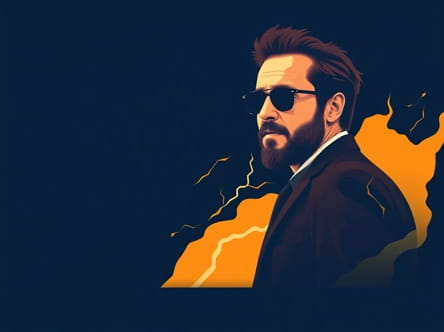
When Tropic Thunder hit theaters in 2008, it sparked both laughter and controversy. One of the most talked-about performances in the film came from Robert Downey Jr., who portrayed the eccentric Australian method actor Kirk Lazarus. Lazarus undergoes a radical transformation to play a Black soldier in the film-within-the-film, igniting a wave of critical discussion about acting, race, satire, and Hollywood culture. Robert Downey Jr.’s role in Tropic Thunder is a complex intersection of comedy, critique, and boundary-pushing art, and it continues to be debated and analyzed years after its release.
Robert Downey Jr. as Kirk Lazarus
The Character Within a Character
Kirk Lazarus is a five-time Academy Award-winning actor known for immersing himself fully into roles, no matter how extreme. In Tropic Thunder, Lazarus is cast as Sergeant Lincoln Osiris, a character who is African American. To commit to the role, Lazarus undergoes a controversial pigmentation procedure to darken his skin, essentially playing a Black character as a white man. This setup is deliberately provocative and meant to parody the absurd lengths method actors go to for authenticity.
Robert Downey Jr. delivers a layered performance. He doesn’t just play Lazarus, but he also performs Lazarus’s version of Osiris. The line between satire and offense is razor-thin, and Downey’s ability to navigate that line became a central point in discussions surrounding the film.
Satire and Social Commentary
A Critique of Hollywood
Tropic Thunder is a satire of the film industry, particularly its obsession with awards, authenticity, and self-importance. Downey’s role is central to this critique. By portraying an actor who goes too far in pursuit of realism, the film mocks the extreme measures some performers take to win critical acclaim. This includes skewering how Hollywood has historically misrepresented race and ethnicity on screen.
The film doesn’t ignore the controversy. Other characters in Tropic Thunder, including Brandon T. Jackson’s Alpa Chino, openly criticize Lazarus’s choice to wear blackface, often to his face. This self-awareness is intentional. The film uses these moments to challenge viewers to think critically about the industry’s past mistakes and the current lines between satire and insensitivity.
Reception and Awards
Critical Acclaim
Despite its controversial elements, Tropic Thunder received mostly positive reviews from critics. Downey’s performance was frequently highlighted as one of the film’s strongest elements. Many praised his commitment to the role and the complexity he brought to a character that could have easily become a caricature.
The performance earned Downey an Academy Award nomination for Best Supporting Actor in 2009. While he didn’t win, the nomination alone demonstrated the industry’s recognition of his skill and the satirical intent behind the performance. It was rare for a comedic role, especially one so controversial, to be acknowledged at the Oscars.
Public Response and Debate
While critics largely embraced the film’s satirical edge, public response was mixed. Some viewers found Downey’s use of blackface offensive, regardless of context. Others argued that the film’s intent to mock Hollywood and not to demean Black people made a difference. The debate brought broader attention to issues of race, representation, and who has the right to tell certain stories.
Downey himself addressed the controversy in interviews, acknowledging the risks involved and expressing that he understood the discomfort some people felt. He maintained that the satire was aimed at the industry and not intended to hurt anyone.
Impact on Robert Downey Jr.’s Career
Post-Tropic Thunder Success
By the time Tropic Thunder was released, Robert Downey Jr. had already revived his career with Iron Man, which debuted earlier that same year. The success of both films cemented his return to Hollywood stardom after years of personal and professional struggles.
The performance in Tropic Thunder demonstrated Downey’s versatility. He proved he could handle action, comedy, drama, and satire with equal skill. The film also showed his willingness to take creative risks, a quality that would continue to define his later roles.
A Risk That Paid Off
While the role could have damaged his career, it instead became one of the highlights. It showed that satire, when done thoughtfully and with context, could still find a place in modern cinema. Downey’s nuanced portrayal and the film’s broader message allowed it to be seen as more than just shock comedy.
The Legacy of the Role
A Discussion That Continues
Over a decade later, discussions about Tropic Thunder and Downey’s role continue. In a more socially conscious media environment, the film has been revisited by both critics and fans. Some argue it wouldn’t be made today, or at least not in the same way. Others point out that it still has value as a piece of meta-commentary on Hollywood’s flaws.
- Race and Representation: The role sparked debates about the ethics of playing different races, even in satire.
- Artistic Boundaries: It raised questions about what is acceptable in performance and where lines should be drawn.
- Hollywood Critique: The film remains a bold critique of industry practices, with Downey’s character at the center.
Downey’s Own Reflection
In later interviews, Downey reflected that the role was a calculated risk and one he would only take if the context allowed for meaningful satire. He expressed that his intention was never to offend, but to expose absurdities in the acting profession and Hollywood itself. His honesty and understanding helped maintain his reputation, even as societal standards evolved.
Cultural Impact
Tropic Thunder, and Downey’s performance specifically, occupies a unique space in pop culture. It’s often cited in discussions of satire and race in film, as well as in broader debates about political correctness and creative freedom. The character of Kirk Lazarus has become a symbol of both comedic genius and controversy.
The film also helped spark larger conversations about representation in Hollywood. While Downey’s portrayal was intentionally absurd and meta, it shined a light on real issues within the industry, including the casting of white actors in non-white roles and the pursuit of awards over authenticity.
Robert Downey Jr.’s role in Tropic Thunder is one of the most memorable and polarizing performances of his career. As Kirk Lazarus, he explored the extremes of method acting, the pitfalls of Hollywood ego, and the challenges of satire in a socially aware age. While the role continues to divide opinion, it undeniably sparked important discussions and showcased Downey’s extraordinary range as an actor.
Whether viewed as brilliant satire or an offensive misstep, the performance remains relevant. It reflects not just on one actor’s choices, but on the broader culture of film, identity, and how we interpret artistic expression. Robert Downey Jr.’s Tropic Thunder legacy is a reminder that sometimes comedy is the sharpest form of critique, even when it makes people uncomfortable.