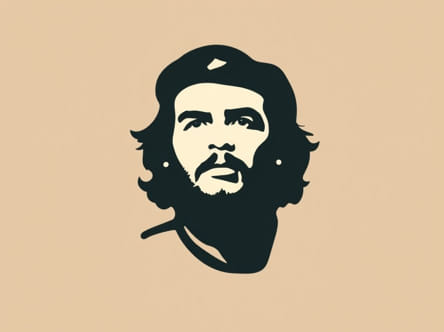
Ernesto Che Guevara was a prominent revolutionary figure whose influence extended far beyond his Latin American roots. Born in Argentina, Che became a symbol of rebellion, social justice, and anti-imperialism throughout the world. His life journey took him from medical student to guerrilla leader, inspiring many to fight against oppression and inequality. Che Guevara’s legacy is complex, celebrated by some as a heroic revolutionary and criticized by others for his militant methods. Understanding who he was involves exploring his early life, revolutionary activities, and lasting impact on global politics and culture.
Early Life and Education
Ernesto Guevara was born on June 14, 1928, in Rosario, Argentina. Raised in a middle-class family, he was known as Che due to his frequent use of the Argentine interjection che, which means hey or friend. From a young age, Che was intellectually curious and passionate about social justice. He pursued medical studies at the University of Buenos Aires, where he developed a deep concern for the poor and marginalized populations he encountered during his travels across Latin America.
The Motorcycle Journey
One of the defining moments in Che’s early life was a motorcycle trip he undertook with his friend Alberto Granado in 1952. Traveling through remote regions of South America, Che witnessed firsthand the poverty, exploitation, and social injustice experienced by indigenous and working-class people. This journey profoundly shaped his worldview and commitment to revolutionary change.
Becoming a Revolutionary
Che Guevara’s political awakening grew stronger as he became involved in leftist movements opposing authoritarian regimes and foreign domination in Latin America. His meeting with Fidel Castro in Mexico in 1955 marked a turning point. Che joined Castro’s revolutionary movement aimed at overthrowing the U.S.-backed dictator Fulgencio Batista in Cuba.
The Cuban Revolution
Che played a key role in the Cuban Revolution from 1956 to 1959. As a commander in the rebel army, he led guerrilla forces in critical battles, demonstrating strategic brilliance and unshakable determination. After the successful overthrow of Batista, Che held several important positions in the new Cuban government, including overseeing land reforms and promoting literacy programs. His commitment to Marxist ideals shaped Cuba’s transformation into a socialist state.
International Influence and Later Years
Che Guevara’s revolutionary zeal extended beyond Cuba. He believed that the fight against imperialism and capitalism should be global. In the 1960s, he sought to inspire and support revolutionary movements in other countries, including the Congo and Bolivia. His efforts in Bolivia ultimately led to his capture and execution in 1967 by Bolivian forces assisted by the CIA.
Death and Legacy
Che’s death at the age of 39 did not end his influence. He became an enduring symbol of resistance and revolution worldwide. His iconic image, often portrayed in the famous Alberto Korda photograph, has become a global emblem of rebellion and social change. Che Guevara remains a controversial figure, admired by many for his dedication to justice and criticized by others for his endorsement of armed struggle and authoritarian methods.
- Born in Rosario, Argentina, in 1928.
- Studied medicine but was deeply influenced by social injustices.
- Traveled extensively across Latin America, witnessing poverty.
- Joined Fidel Castro’s movement and played a major role in the Cuban Revolution.
- Held government positions in post-revolutionary Cuba.
- Attempted to support revolutions in Congo and Bolivia.
- Captured and executed in Bolivia in 1967.
- Symbol of rebellion and leftist movements worldwide.
Ernesto Che Guevara’s life was marked by his unwavering commitment to fighting oppression and seeking social justice. From his beginnings in Argentina to his pivotal role in the Cuban Revolution and his international revolutionary efforts, Che’s legacy continues to inspire debates about revolution, ideology, and human rights. Whether viewed as a heroic freedom fighter or a controversial militant, Che Guevara remains one of the most influential figures of the 20th century.