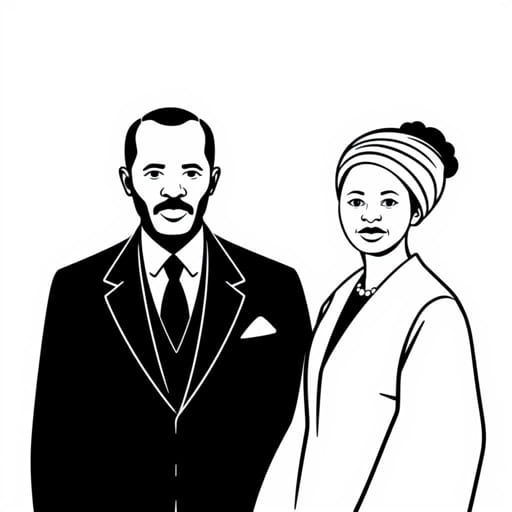
In the story of Harriet Tubman’s courageous life, one name often overlooked is that of her second husband, Nelson Davis. While Tubman’s bravery and heroism as a conductor on the Underground Railroad are well known, her personal life especially her marriage to Davis adds a deeper, more human dimension to her remarkable journey. Exploring the life of Nelson Davis not only highlights the man who stood beside one of America’s greatest freedom fighters but also enriches our understanding of Harriet Tubman’s post-Civil War years and the quiet strength found within their partnership.
Who Was Nelson Davis?
Nelson Davis was a Black American soldier who served in the Union Army during the Civil War. Born around 1833 in North Carolina, Davis joined the 8th United States Colored Infantry Regiment and served honorably in the war that ultimately led to the abolition of slavery. His military background and commitment to justice likely played a role in his connection with Harriet Tubman, whose own life work was driven by the struggle for freedom and equality.
Service in the Civil War
Davis enlisted under the name ‘Nelson Charles’ in 1863. Like many Black soldiers, he faced discrimination and harsh conditions but remained loyal to the cause. He was stationed in Virginia and took part in several engagements that contributed to the Union’s victory. His service would later qualify him for a military pension, which became a point of legal contention after his marriage to Tubman.
Meeting Harriet Tubman
After the Civil War, Nelson Davis moved to Auburn, New York. It was there that he met Harriet Tubman, who had also settled in Auburn after her years of service as a Union spy, scout, and nurse. Tubman was already a well-known figure in the community and had acquired land through donations. Despite their age difference Tubman was approximately 20 years older the two found companionship and mutual respect.
Building a Life Together
Nelson Davis and Harriet Tubman were married in 1869 in a small ceremony at the Central Presbyterian Church in Auburn. The union was seen as a supportive and affectionate partnership, even though Tubman had experienced deep loss in her earlier years, including the end of her first marriage to John Tubman. Davis became a stepfather to Tubman’s adopted daughter, Gertie, and helped manage the household alongside his wife.
The Importance of Their Marriage
The marriage between Harriet Tubman and Nelson Davis was significant not only on a personal level but also symbolically. It demonstrated a quieter, domestic side of Tubman’s life, contrasting the public image of her as a fearless freedom fighter. For Tubman, who had spent most of her adult life defying slavery and injustice, the partnership offered a measure of peace and stability.
Support and Companionship
Though Davis was not as famous as Tubman, he supported her efforts and shared in the responsibilities of their home. He was known for his gentle demeanor and hardworking nature. Tubman, who suffered from chronic health issues related to a head injury sustained in her youth, likely benefited greatly from his presence and care in her later years.
Struggles in Later Life
Like many African American couples of their time, Nelson Davis and Harriet Tubman faced financial and bureaucratic challenges. Davis had applied for a veteran’s pension, but it was modest and often delayed. After his death in 1888, Tubman faced additional legal obstacles in obtaining the pension benefits due to inconsistencies in military records and the government’s slow response to Black veterans’ claims.
Pension Petition and Advocacy
Tubman spent years petitioning the U.S. government for a widow’s pension based on Davis’s service. Though she eventually received $8 per month, her request for additional compensation for her own work during the war as a nurse and spy was denied. The difficulty Tubman faced in this process underscores the systemic neglect many Black veterans and their families endured.
Nelson Davis’s Legacy
Though he lived a quieter life than his wife, Nelson Davis deserves recognition for the role he played in Harriet Tubman’s personal life and in the broader narrative of African American history. His legacy is preserved not only through his marriage to Tubman but also through his service in the Union Army and his contribution to their shared home in Auburn.
A Life of Service
Davis’s military service was part of a larger movement of Black men who fought for the Union and the promise of freedom. His quiet dignity and support for Tubman reflect the strength and resilience of many lesser-known figures who helped shape history in the shadows of more prominent names.
Burial and Remembrance
Nelson Davis is buried alongside Harriet Tubman in Fort Hill Cemetery in Auburn, New York. Their joint burial site symbolizes their lifelong bond and the love and respect they shared. Today, visitors to the cemetery pay tribute to not only Tubman’s legacy but also to the man who stood beside her during her later years.
Understanding Their Partnership
Exploring the life of Nelson Davis adds depth to the historical image of Harriet Tubman. He was not merely a background figure, but a meaningful partner in her life. Their story reminds us that behind every celebrated individual, there may be others whose support and sacrifices are equally valuable, even if history does not spotlight them as brightly.
Key Takeaways
- Nelson Davis was a Civil War veteran who served in the Union Army’s 8th United States Colored Infantry.
- He married Harriet Tubman in 1869 and became an important figure in her personal life.
- Davis supported Tubman during her later years, helping to manage their household and family life.
- His legacy is tied to both his military service and his partnership with one of America’s most iconic figures.
While Harriet Tubman’s name is rightly etched into the annals of American history, Nelson Davis’s story adds a crucial layer to our understanding of her life and the relationships that shaped her. Their marriage illustrates a powerful example of mutual respect and enduring companionship during a time of great social change. Recognizing Nelson Davis not only honors a man of quiet valor but also reminds us of the personal lives behind the legends of history.