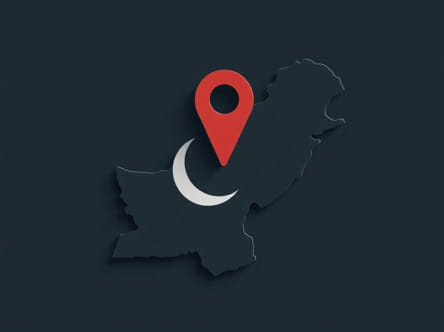
Pakistan, located in South Asia, is a country known for its diverse geography and unique strategic location. It shares borders with India to the east, Afghanistan and Iran to the west, and China to the north. To the south lies the Arabian Sea, giving the country a valuable coastline. Pakistan’s landscape includes towering mountains, vast deserts, fertile plains, and a complex river system, all of which influence the nation’s climate, economy, and way of life. Understanding the location and geophysical features of Pakistan is essential to appreciating its cultural diversity, agricultural strength, and geopolitical significance.
Geographical Location of Pakistan
Coordinates and Boundaries
Pakistan lies between latitudes 23° and 37° North and longitudes 60° and 77° East. This geographical positioning places the country at the crossroads of Central Asia, South Asia, and the Middle East. It serves as a bridge connecting the Arabian Sea with the mountainous interior of Asia, making it a region of high strategic importance.
The country’s borders extend over approximately 7,000 kilometers. Pakistan shares a 2,912-kilometer boundary with India, 2,430 kilometers with Afghanistan, 909 kilometers with Iran, and 523 kilometers with China. The 1,046-kilometer-long southern boundary is formed by the Arabian Sea coastline.
Provinces and Territories
Pakistan consists of four provinces Punjab, Sindh, Khyber Pakhtunkhwa, and Balochistan and two autonomous territories Azad Jammu and Kashmir and Gilgit-Baltistan. Each region has distinct geographical and cultural characteristics, influenced by local terrain and climate.
Major Geophysical Features of Pakistan
Mountain Ranges
One of Pakistan’s most prominent geophysical features is its mountain systems. The northern and northwestern regions are home to some of the highest mountain ranges in the world
- HimalayasThe eastern part of northern Pakistan is dominated by the western Himalayas, where many high peaks rise above 7,000 meters.
- KarakoramThis range includes the second-highest peak in the world, K2 (8,611 meters), located in Gilgit-Baltistan.
- HindukushStretching into Khyber Pakhtunkhwa and parts of Afghanistan, the Hindukush Mountains add to the rugged terrain of the northwest.
These mountains influence weather patterns, serve as sources for rivers, and contain glaciers that feed the Indus River system.
River Systems
The Indus River is the most significant waterway in Pakistan, flowing from Tibet through the length of the country into the Arabian Sea. It is joined by major tributaries such as the Jhelum, Chenab, Ravi, Beas, and Sutlej, collectively forming the Indus River System. These rivers provide irrigation, drinking water, and hydroelectric power, making them vital for Pakistan’s agriculture and industry.
Canals stemming from these rivers form one of the largest irrigation systems in the world, particularly benefiting the provinces of Punjab and Sindh.
Plains and Plateaus
Pakistan’s central and eastern regions consist largely of flat, fertile plains. The Indus Plain stretches from the Himalayas in the north to the Arabian Sea in the south. This area is densely populated and agriculturally rich, producing wheat, cotton, sugarcane, and rice.
The Pothohar Plateau in northern Punjab and parts of Khyber Pakhtunkhwa is a region of eroded land and rolling hills, rich in archaeological history and natural resources. The Balochistan Plateau, located in the southwest, is a vast arid region marked by rocky terrain, mineral wealth, and sparse vegetation.
Deserts
Pakistan is home to several desert regions, each with distinct characteristics
- Thar DesertLocated in southeastern Pakistan, primarily in Sindh, this desert is known for its dry climate and sand dunes.
- Cholistan DesertA part of the larger Thar Desert, this region lies in southern Punjab and is known for its camel caravans and desert festivals.
- Kharan DesertSituated in western Balochistan, this desert is less explored and characterized by rocky outcrops and high winds.
Coastal Areas
The coastline of Pakistan stretches along the Arabian Sea for over 1,000 kilometers. It includes ports such as Karachi and Gwadar, which play a crucial role in trade and shipping. Coastal plains are found in the provinces of Sindh and Balochistan, offering opportunities for fishing, tourism, and maritime development.
Seismic Activity and Tectonic Setting
Tectonic Plates
Pakistan lies at the intersection of the Indian and Eurasian tectonic plates, making it a region of significant seismic activity. The continuous collision of these plates is responsible for the uplift of the Himalayan, Karakoram, and Hindukush mountain ranges.
This tectonic activity also makes Pakistan prone to earthquakes, particularly in the northern and western regions. Major cities like Islamabad, Quetta, and Muzaffarabad have experienced devastating earthquakes in the past, leading to greater emphasis on seismic monitoring and disaster management.
Climate and Environmental Variation
Climatic Zones
Due to its varied topography, Pakistan experiences a range of climatic conditions, including
- Tropical and SubtropicalFound in the southern and central plains with hot summers and mild winters.
- Arid and Semi-AridDominates Balochistan and desert regions, where rainfall is scarce.
- TemperateFound in elevated areas like northern Khyber Pakhtunkhwa and Gilgit-Baltistan, with snowy winters and cool summers.
- AlpineFound in the highest mountain areas, characterized by glaciers and year-round snow.
The monsoon season occurs from July to September, bringing rainfall to parts of the country. However, uneven distribution and changing climate patterns have made floods and droughts more frequent.
Natural Resources
Pakistan’s geophysical features support a variety of natural resources. These include
- Minerals Salt, coal, gypsum, limestone, copper, and gold.
- Forests Found in the northern hills and parts of Azad Kashmir.
- Energy Hydroelectric power from rivers and potential for solar and wind energy, particularly in southern regions.
The exploitation and conservation of these resources are critical for sustainable development and energy security.
The location and geophysical features of Pakistan shape its identity as a nation. From the towering peaks of the Karakoram to the vast fields of the Indus Plain, the country offers a dramatic variety of landscapes and natural formations. These features influence Pakistan’s agriculture, economy, culture, and geopolitics. Understanding the geographical diversity and tectonic structure of Pakistan helps explain its opportunities and challenges in areas such as infrastructure, climate resilience, and natural resource management. As a country situated at the intersection of multiple regions and ecosystems, Pakistan’s physical geography continues to play a central role in its development and global relevance.