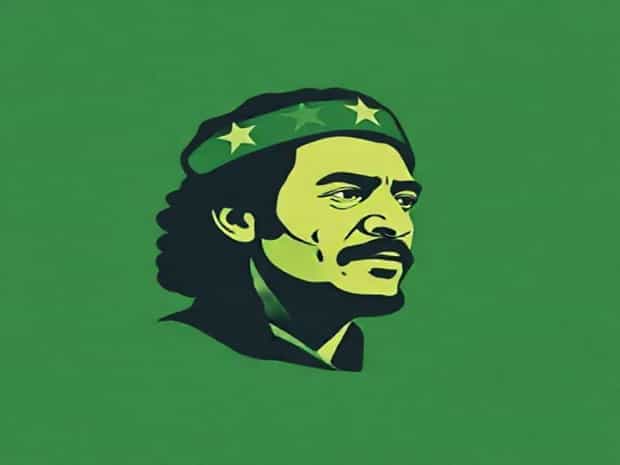
TheLibro Verde, or Green Book, authored by Muammar al-Gaddafi, remains one of the most controversial and widely discussed political texts of the 20th century. Published in 1975, the book sought to present Gaddafi’s vision for governance, society, and economics, reflecting his unique ideology known as the Third International Theory. Unlike traditional political treatises, theLibro Verdecombined elements of social philosophy, anti-colonial sentiment, and revolutionary principles to propose an alternative model to both capitalism and communism. Its influence extended beyond Libya, impacting political movements and discussions about governance in the Arab world and other regions seeking alternatives to Western or Soviet-style models.
Structure and Core Themes of the Green Book
TheLibro Verdeis divided into three main parts, each addressing key aspects of Gaddafi’s political philosophy. These parts cover the concepts of democracy, economic organization, and societal structure, providing a blueprint for what Gaddafi considered a just and equitable system. The book emphasizes direct popular governance, social equity, and the elimination of traditional party politics, reflecting Gaddafi’s belief that conventional systems of government were inherently corrupt and oppressive.
Part One Political Principles
The first section of the Green Book focuses on political governance. Gaddafi criticizes representative democracy and political parties, arguing that they create elitism and distance citizens from actual decision-making. Instead, he proposes a system of direct democracy through popular committees and congresses, where citizens actively participate in legislation and administration. This model was intended to empower ordinary people, reduce corruption, and ensure that political authority derived directly from the population rather than a ruling elite.
- Rejection of conventional parliamentary democracy
- Promotion of direct citizen participation through committees
- Emphasis on self-governance and grassroots political involvement
Part Two Economic Theories
The second part of the Green Book addresses economic organization. Gaddafi critiques both capitalism and state-controlled socialism, arguing that they concentrate power and wealth in the hands of a few. Instead, he advocates for a system where workers directly control the means of production, eliminating the distinction between employer and employee. Land and enterprises are intended to be managed collectively or individually by workers, promoting self-sufficiency, social equity, and economic independence. This section reflects Gaddafi’s goal of creating a uniquely Libyan economic model that rejected foreign influence and promoted national sovereignty.
- Worker control of production and elimination of wage exploitation
- Decentralized economic management to prevent concentration of wealth
- Focus on self-sufficiency and national economic independence
Part Three Social and Cultural Philosophy
The third section explores societal organization, education, and culture. Gaddafi emphasizes the importance of family, community, and social cohesion, arguing that a well-structured society must balance individual freedom with collective responsibility. He discusses issues such as women’s participation in society, education reform, and the role of traditional customs in shaping social norms. The Green Book presents an ideal of a society where citizens are both socially responsible and actively engaged in maintaining cultural and moral standards, reflecting Gaddafi’s vision of a holistic approach to governance and civic life.
- Integration of family and community values into governance
- Promotion of education that fosters civic responsibility and self-reliance
- Encouragement of cultural preservation alongside social development
Impact and Implementation in Libya
After publishing the Green Book, Gaddafi sought to implement its principles in Libya, transforming the country’s political, economic, and social structures. The Libyan Jamahiriya, or state of the masses, was established to operationalize the book’s ideas, with governance conducted through local popular committees and general congresses. While the model promised empowerment of ordinary citizens and equitable wealth distribution, in practice it often centralized power in Gaddafi’s hands, leading to criticism and accusations of authoritarianism. Despite these contradictions, the Green Book influenced Libya’s legal framework, educational programs, and political culture for decades.
Challenges and Criticism
Critics of the Green Book argue that its utopian vision was difficult to implement and sometimes resulted in inefficiency and political repression. The emphasis on popular committees and direct democracy occasionally created bureaucratic complexity, while political dissent was suppressed under the guise of maintaining social unity. Economically, while worker control was theoretically promoted, central planning and state oversight often limited true autonomy. Nonetheless, supporters argue that the Green Book offered a novel alternative to conventional political and economic systems, inspiring debate and experimentation in governance.
- Complexity and inefficiency in practical governance
- Suppression of dissent despite advocacy for direct democracy
- Mixed outcomes in implementing worker-controlled economic structures
Global Influence and Legacy
Beyond Libya, the Green Book attracted attention from political thinkers, activists, and movements seeking alternatives to Western or Soviet models of governance. In some Arab and African countries, revolutionary groups cited Gaddafi’s ideas as inspiration for political and economic reform. While the book’s practical implementation was limited, its theoretical contributions sparked debate about direct democracy, economic self-sufficiency, and social responsibility. The Green Book remains a reference point in discussions about anti-imperialist ideology, state sovereignty, and the pursuit of socially just governance systems.
Influence on Political Thought
The Green Book’s emphasis on grassroots governance and worker control has influenced political discourse in several regions. Its rejection of traditional party politics challenges conventional notions of democratic representation, provoking debate about alternative forms of civic engagement. Scholars and political analysts continue to study the Green Book to understand Gaddafi’s ideological vision and its impact on political movements, revolutionary theory, and governance experiments worldwide.
- Reference for alternative political and economic models
- Impact on revolutionary movements in Africa and the Arab world
- Continued academic interest in Gaddafi’s ideology and its implications
TheLibro Verdeby Muammar al-Gaddafi represents a unique attempt to reimagine political, economic, and social systems in the modern world. Through its three-part structure, the book presents a vision of direct democracy, worker-controlled economies, and socially responsible communities, challenging conventional models of governance and development. While its implementation in Libya faced challenges and criticisms, the Green Book remains a significant ideological work, influencing political thought and inspiring debate about alternative approaches to power, society, and governance. Understanding the Green Book provides valuable insight into Gaddafi’s vision, the history of Libyan governance, and the broader quest for innovative political and economic systems.