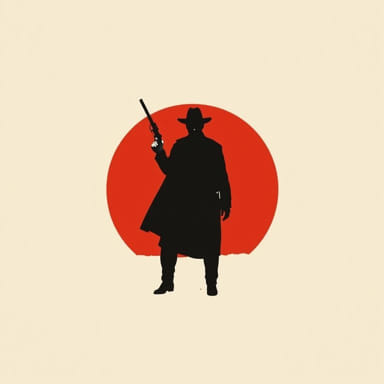
A Fistful of Dollars,” directed by Sergio Leone in 1964, is widely regarded as one of the seminal films that shaped the Spaghetti Western genre. While it is primarily an Italian production, its connections to Japanese cinema, particularly the works of Akira Kurosawa, have been widely discussed and analyzed. The film is often considered an unofficial adaptation of Kurosawa’s 1961 samurai classic “Yojimbo,” which follows a lone samurai who manipulates two rival gangs to free a town from corruption. Leone’s transposition of this narrative to the American West demonstrates a fascinating cross-cultural exchange, illustrating how Kurosawa’s cinematic storytelling influenced Western filmmaking and contributed to the evolution of the genre.
Kurosawa’s Influence on Western Cinema
Akira Kurosawa, the legendary Japanese director, revolutionized cinema with his innovative techniques, complex characters, and dynamic storytelling. His films, particularly “Yojimbo,” showcased the skillful blending of moral ambiguity, cinematic tension, and stylistic action sequences. Leone’s “A Fistful of Dollars” draws directly from Kurosawa’s narrative framework, reinterpreting the wandering samurai as a gunslinger known as the Man with No Name, portrayed by Clint Eastwood. This adaptation exemplifies how Kurosawa’s thematic and visual elements such as the lone hero, duality of factions, and dramatic close-ups were translated into a Western context, creating a film that felt both familiar and revolutionary.
Plot Parallels Between Yojimbo and Fistful of Dollars
The narrative similarities between “Yojimbo” and “A Fistful of Dollars” are striking. In both films, the protagonist arrives in a town dominated by two rival factions, each vying for control. The hero skillfully manipulates the factions against one another, exposing their weaknesses and ultimately restoring a degree of balance to the community. Leone’s adaptation transplants these events from a Japanese town to a dusty Mexican border town, while replacing samurai duels with gunfights. This transposition highlights the universality of Kurosawa’s themes power struggles, corruption, and the moral complexities of a lone hero navigating a violent environment.
Stylistic Influences
Leone not only borrowed narrative elements from Kurosawa but also adapted his stylistic techniques. Kurosawa’s meticulous framing, use of wide shots to capture landscapes, and intense close-ups to heighten tension found a new expression in the Spaghetti Western. Leone embraced these methods, using long, panoramic shots to emphasize isolation in the desert landscape and extreme close-ups to create suspense during standoffs. Additionally, the rhythmic editing and pacing of action sequences in “A Fistful of Dollars” echo Kurosawa’s dynamic approach, blending visual storytelling with tension-building techniques that enhance both drama and excitement.
Character Archetypes
Kurosawa’s characters, particularly the antihero in “Yojimbo,” directly inspired Leone’s Man with No Name. Both characters are laconic, highly skilled, and morally ambiguous, operating according to their own code rather than societal rules. The dual-gang dynamic in Leone’s film mirrors the dual factions in Kurosawa’s work, with the protagonist strategically exploiting their rivalry to achieve his objectives. These archetypes underscore the enduring appeal of the lone, resourceful hero who navigates a morally complex world, bridging the thematic gap between samurai cinema and Westerns.
Cultural Adaptation and Interpretation
While “A Fistful of Dollars” clearly draws from Kurosawa’s “Yojimbo,” Leone infused the film with European sensibilities and the gritty realism of the Spaghetti Western. He intensified the violence, emphasized antihero traits, and incorporated a dry, ironic sense of humor absent in Kurosawa’s more restrained approach. This cultural adaptation demonstrates the flexibility of Kurosawa’s narrative, showing how storytelling transcends geographic and cultural boundaries while retaining core thematic elements. The fusion of Japanese storytelling with Western motifs created a unique cinematic hybrid that influenced countless filmmakers and helped popularize the Spaghetti Western internationally.
Controversy and Recognition
The similarities between “Yojimbo” and “A Fistful of Dollars” led to legal disputes and controversy over intellectual property. Kurosawa and his production company initially sued Leone for plagiarism, resulting in an out-of-court settlement. Despite the controversy, many film historians acknowledge that Leone’s work pays homage to Kurosawa, demonstrating admiration and influence rather than mere imitation. The legal and artistic discussions surrounding these films highlight the complexities of cross-cultural adaptations and the lasting impact of Kurosawa’s storytelling on global cinema.
Impact on Filmmaking
The relationship between Kurosawa’s “Yojimbo” and Leone’s “A Fistful of Dollars” illustrates how cinematic techniques, character archetypes, and narrative structures can traverse cultures and inspire new artistic directions. Leone’s adaptation helped establish the Spaghetti Western as a distinctive genre characterized by moral ambiguity, stark landscapes, and antiheroes, elements that were initially refined in Kurosawa’s samurai films. This cross-pollination of ideas has influenced generations of filmmakers, demonstrating the power of global cinematic dialogue.
Legacy of Fistful of Dollars
- Introduced Clint Eastwood’s iconic Man with No Name to international audiences.
- Popularized the Spaghetti Western genre, influencing subsequent films like “For a Few Dollars More” and “The Good, the Bad and the Ugly.”
- Highlighted Kurosawa’s influence on Western cinema, bridging Japanese and European storytelling traditions.
- Showcased the adaptability of narrative structures across cultures, emphasizing universal themes of justice, morality, and cunning heroes.
“A Fistful of Dollars” serves as a testament to the profound influence of Akira Kurosawa on international cinema. By adapting the narrative and stylistic elements of “Yojimbo,” Sergio Leone created a film that honored its source material while establishing its own identity within the Western genre. The film demonstrates the universality of compelling storytelling, the enduring appeal of morally complex heroes, and the innovative potential of cross-cultural cinematic exchanges. Through this adaptation, both Kurosawa and Leone have left an indelible mark on the history of film, showcasing how creativity transcends boundaries and inspires new generations of filmmakers and audiences worldwide.