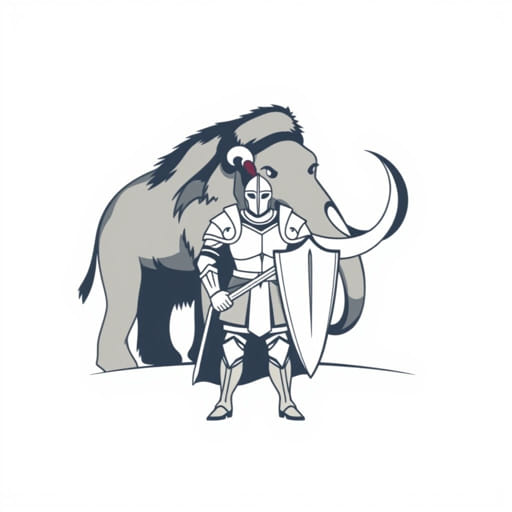
The legend of the Knight and the Mammoth is one of those stories that has captured imaginations for generations, though it’s rooted more in myth than reality. Many people believe medieval knights may have fought woolly mammoths during the Middle Ages, picturing epic clashes between armored warriors and colossal prehistoric beasts. However, this tale stems from misunderstandings about timelines, archaeology, and folklore blending. Separating facts from fiction reveals something far richer: how cultures imagine encounters with ancient giants, and what that says about the way humans connect to our prehistoric past.
Origins of the Misconception
Confusing Time Periods
Woolly mammoths roamed parts of Eurasia and North America until approximately 4,000 years ago, with most populations extinct well before the Medieval era. In contrast, mounted European knights didn’t emerge until around the 8th century CE millennia after the mammoth’s extinction. This huge temporal gap has often been overlooked in popular retellings and speculative fiction.
Mistranslation of Artifacts
Medieval artworks occasionally depict large, elephant-like creatures in bestiaries and tapestries. These images, combined with cryptic descriptions in old texts, have led some to misinterpret them as mammoths. In reality, they likely represent mythic beasts elephants heard of from Crusader tales, or allegorical creatures shared through trade routes.
Archaeological Evidence vs. Fiction
Fossil Discoveries
Archaeological digs across northern Europe and Siberia have uncovered numerous mammoth fossils, often found in permafrost or ancient peat bogs. In some cases, mammoth bones were reused by prehistoric humans for tools or shelters. But there is no evidence of medieval remains armor or weapons mixed with fossilized mammoth remains. No archaeological site supports the legend that knights ever battled these animals.
Absence of Medieval Mammoth Hunting Tools
If knights or medieval hunters had encountered mammoths, we would expect to find spears, lances, or armor fragments associated with mammoth bones. Nothing like that has surfaced. Instead, historical evidence suggests mammoths had disappeared from human range long before swords and lances became common European weapons.
Why the Myth Persists
A Fascination with Giants
Humans are drawn to stories of heroes battling giant creatures. Myths across cultures from dragons in Europe to giants in Norse sagas reflect this fascination. Pairing knights with mammoths fits naturally into that pattern, satisfying our love for epic battles and larger-than-life images.
Romanticizing History
Storytellers often weave together timelines to dramatize human achievement. The image of a valiant knight facing a mammoth resonates emotionally even if it’s historically inaccurate. It evokes courage, adventure, and the clash between civilization and the untamed wild.
Debunking the Myth
Key Timeline Facts
- Mammoths became extinct around 4,000 BCE in most regions.
- Knights in European-style armor appeared around 700800 CE.
- Over one thousand years separate these two kinds of beings.
Scientific Evidence
Paleontologists and archaeologists have dated both mammoth remains and medieval artifacts extensively. Radiocarbon dating consistently places mammoths outside the medieval period. No credible scientific publication supports any overlap between living mammoths and medieval societies.
The Real Connections
Prehistoric hunters and mammoths
Humans did coexist with mammoths, but much earlier. Paleolithic hunters used stone-tipped spears, traps, and communal hunting techniques to bring down mammoths. These stories come from archaeological sites in Siberia, Europe, and North America not from medieval analogues.
Medieval beast symbolism
Medieval bestiaries included exotic animals like elephants, often based on traveler reports or earlier traditions. These texts and illustrations served symbolic or moral purposes, not historical records. Over time, they became conflated with stories of giant beasts active in more recent eras.
Cultural Value of the Myth
Imagination and storytelling
The enduring image of knights battling prehistoric giants shows the power of cultural imagination. It blends different eras to produce dramatic scenes that resonate emotionally even if they conflict with facts. Stories like this highlight how legend and history intertwine in human memory.
Education through myth
While the knight-mammoth narrative is not historically accurate, it can spark interest in real history and science. It encourages readers to ask questions: When did these creatures actually live? How do we know? These myths, when explored, can lead to deeper understanding.
Bringing History and Myth Together
Creative reinterpretations
Modern media books, games, films sometimes reimagine this myth knowingly. Fantasy novels may depict parallel worlds where knights and mammoths coexist. Presented as fiction, these stories can be entertaining while retaining a sense of wonder.
Fact-based storytelling
Documentaries and museum exhibits often contrast medieval armor with Ice Age fossils to show the real temporal differences. Some interactive museum displays juxtapose mammoth skeletons with knight armor to illustrate how myths emerge when people fail to distinguish epochs.
The idea of a knight fighting a mammoth belongs to legend, not history. It arose from misunderstood fossils, mythic imagery, and a human love for dramatic storytelling. By clarifying the real timelines mammoths gone thousands of years before medieval knights appeared we preserve both historical accuracy and our appreciation for imaginative narratives. This myth remains a testament to how humans shape history into stories that resonate emotionally. Learning the facts doesn’t diminish the wonder; it enhances our understanding of how myth and memory contribute to culture.