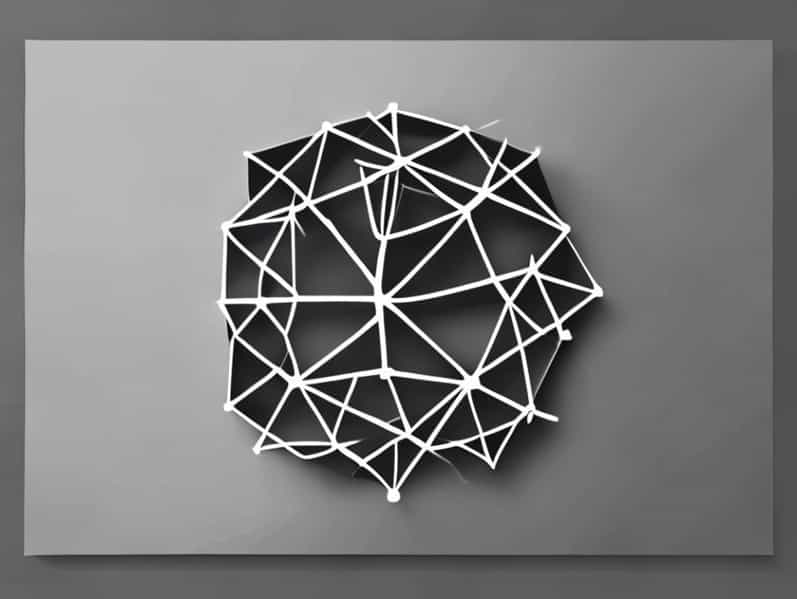
Kirigami, traditionally known as the Japanese art of cutting paper to create intricate designs, has evolved into a fascinating metaphor and methodology in the field of network theory and engineering. Referred to as the verifiable art of network cutting, kirigami emphasizes precision, verification, and creativity in breaking down complex systems into manageable, verifiable components. This approach has found applications in computer science, telecommunications, and cybersecurity, where the ability to isolate, analyze, and optimize networks is crucial. Understanding kirigami in this context involves exploring its origins, principles, and practical applications, highlighting how a centuries-old artistic concept has influenced modern technological practices.
The Origins of Kirigami
Kirigami originates from traditional Japanese culture, where it was developed as an extension of origami. While origami involves folding paper to create shapes without cutting, kirigami introduces precise cuts, allowing for more complex and detailed designs. Artists use the technique to create patterns, pop-up structures, and delicate paper art. The principles of kirigami-precision, planning, and creativity-translate well into network analysis, where meticulous planning and controlled modifications are essential. Just as an artist cuts paper to achieve a desired shape, engineers and researchers apply cuts to networks to better understand and verify their structure.
Kirigami as a Metaphor for Network Analysis
In network science, kirigami serves as a metaphor for segmenting and analyzing networks. Networks, whether they are computer networks, social networks, or biological systems, often involve complex interactions and dependencies. By cutting a network in a controlled and verifiable manner, analysts can isolate specific pathways, identify vulnerabilities, and optimize performance. This approach allows for systematic study without compromising the integrity of the overall system. The art of kirigami, therefore, becomes a framework for thinking about networks each cut is intentional, verified, and designed to reveal structural insights.
Principles of Verifiable Network Cutting
The concept of verifiable network cutting is rooted in a few key principles. First, every modification or cut must be precise and deliberate, mirroring the careful cuts made in traditional kirigami art. Second, each change must be verifiable, meaning that the impact of the cut on the network can be measured, analyzed, and confirmed. Third, the approach emphasizes minimal disruption, ensuring that the integrity of the network is maintained while allowing for insight and optimization. These principles are essential in applications like cybersecurity, where errors can compromise safety, and in computer networks, where efficiency and reliability are paramount.
Techniques in Network Kirigami
Network kirigami employs several techniques to cut and analyze networks. One approach involves isolating nodes or edges to study their influence on overall network behavior. Another method focuses on partitioning networks into sub-networks or clusters, allowing analysts to identify bottlenecks, redundancy, or vulnerabilities. These cuts are performed systematically, with verification steps at each stage to ensure that the modifications provide accurate insights. Advanced algorithms and software tools are often used to assist in this process, providing a digital equivalent of the careful craftsmanship found in traditional paper kirigami.
Applications in Modern Technology
The verifiable art of network cutting has practical applications across multiple technological domains. In computer networks, kirigami-inspired techniques help optimize routing, detect anomalies, and enhance resilience. Cybersecurity professionals use network cuts to isolate threats, analyze attack patterns, and strengthen defenses. In social network analysis, kirigami methods help identify influential nodes, study information flow, and understand community structures. Even in biological and neural networks, controlled cutting techniques assist in mapping connections and understanding complex interactions. These applications demonstrate the versatility and relevance of kirigami in modern technology.
Kirigami in Cybersecurity
Cybersecurity is one area where the principles of kirigami are particularly valuable. Networks face constant threats from malware, intrusions, and data breaches. By applying verifiable network cutting, security analysts can isolate affected segments, track the spread of malicious activity, and implement safeguards without disrupting the entire system. This method enables rapid response and detailed analysis, minimizing damage and enhancing network resilience. In this context, kirigami is not just an artistic metaphor-it becomes a strategic approach to managing complex and dynamic systems.
Optimization in Communication Networks
Communication networks, including the internet and telecommunications systems, benefit from kirigami-inspired techniques as well. Engineers can partition networks to test performance, identify latency issues, and optimize bandwidth usage. Controlled cuts allow for simulation of failures and stress testing, ensuring that networks remain robust under varying conditions. These methods improve reliability, efficiency, and service quality, illustrating how the deliberate, verifiable approach of kirigami can translate directly into technological benefits.
Future Perspectives and Innovation
The intersection of kirigami and network science continues to inspire innovation. Researchers are exploring ways to automate verifiable network cutting using artificial intelligence and machine learning, allowing for real-time analysis and adaptive optimization. The principles of minimal disruption, precision, and verification guide the development of new tools that can manage increasingly complex networks. Beyond technology, the concept also encourages interdisciplinary thinking, connecting art, mathematics, and engineering to solve modern challenges in creative ways.
Interdisciplinary Implications
Kirigami demonstrates how concepts from traditional art can influence modern scientific and engineering practices. By translating the careful, deliberate cuts of paper art into network analysis, researchers have found new ways to approach complexity. This interdisciplinary perspective fosters innovation, encouraging professionals to think beyond conventional methods. It also illustrates the broader value of creative thinking in problem-solving, showing that inspiration can come from unexpected sources, including centuries-old artistic traditions.
Kirigami, when applied as the verifiable art of network cutting, represents a fusion of precision, creativity, and analytical rigor. Its principles-careful planning, controlled modification, and verification-make it a powerful approach for understanding and optimizing complex networks. From cybersecurity and communication systems to social and biological networks, kirigami-inspired techniques offer practical solutions to modern challenges. Beyond technology, the concept highlights the value of interdisciplinary thinking, demonstrating that lessons from traditional art can guide innovation in unexpected ways. The verifiable art of network cutting, rooted in kirigami, continues to shape how we approach complexity, balance risk, and achieve clarity in the intricate web of interconnected systems.