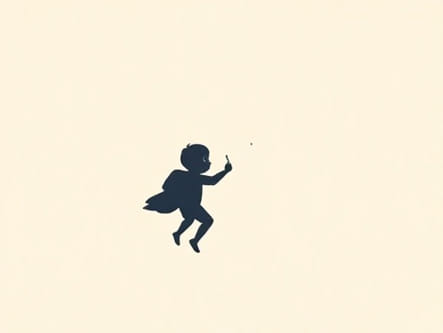
In a quiet village nestled between mountains and meadows, the legend of Kire the Kid Who Flew has been passed down for generations. This whimsical tale has inspired readers and listeners alike with its themes of courage, imagination, and defiance of limitations. At its heart, the story captures the longing many feel to break free from the boundaries of the ordinary and soar toward the unknown. Kire, with his wide eyes and relentless spirit, is not just a character he is a symbol of every child’s dream of flying, and every adult’s wish to reclaim that youthful ambition.
The Origins of Kire’s Tale
The story of Kire the Kid Who Flew originates from folklore, but its enduring popularity has turned it into something greater than a bedtime story. Kire is depicted as a curious and imaginative child who dares to believe that he can achieve the impossible. His village, skeptical and set in its ways, considers flying a foolish notion. Yet, Kire persists, convinced that humans are meant to soar.
A Boy with a Vision
Kire’s defining characteristic is his unwavering belief in dreams. While other children play games and follow the paths set by their parents, Kire spends his days studying birds, constructing wings, and observing the wind. His workshop is a modest barn filled with feathers, fabric, and blueprints drawn in crayon. He speaks often of the day he will fly, not as a hope but as a certainty.
The Symbolism of Flight
Flight in the story serves as a powerful metaphor. For Kire, flying is not just about the physical act it represents freedom, ambition, and the courage to challenge limits. The villagers, bound by routine and practicality, view Kire as a dreamer lost in fantasy. But Kire’s vision is rooted in something deeper the idea that life must be more than repetition and fear.
- FreedomKire dreams of escaping the restrictions of gravity, just as he wishes to escape societal expectations.
- InnovationHis attempts to fly symbolize the human drive to invent and push boundaries.
- BeliefKire’s commitment illustrates the power of belief in realizing one’s dreams, even when others doubt.
The Village’s Resistance
As with many tales of innovation, Kire faces strong resistance. Elders in the village warn him of danger. His friends, though amused, eventually distance themselves. His parents, torn between love and fear, beg him to abandon his experiments. The village stands as a representation of the world’s tendency to reject that which it does not understand.
Persistence in the Face of Doubt
Despite the ridicule, Kire never wavers. He adjusts his designs, listens to the wind, and studies bird migration. Every failure is met with renewed effort. The narrative emphasizes a critical lesson true pioneers are often misunderstood, yet they press on, fueled by an inner compass no one else can read.
The Moment of Flight
The climax of Kire’s story is the breathtaking moment when he climbs to the highest hill at dawn, wearing a new pair of wings crafted from wood and canvas. With the wind strong at his back and the sky blushing pink with morning light, he leaps. For a heartbeat, there is silence then, miraculously, lift. Kire flies.
The villagers, having gathered to witness what they believed would be a failure, are stunned into awe. Children cheer, adults weep, and even the harshest critics cannot deny what they’ve seen. Kire’s flight becomes a turning point not only for him, but for the entire village.
The Aftermath of Flight
After Kire’s success, the village begins to change. Children are encouraged to dream. Adults become more open to ideas that once seemed foolish. Kire himself becomes a mentor, guiding others in their flights both literal and metaphorical. His story spreads beyond the village, carried by travelers and storytellers, inspiring others to seek their own skies.
The Enduring Legacy of Kire
What makes Kire the Kid Who Flew a beloved and lasting tale is its universal appeal. Everyone, at some point, has faced doubt, limitation, or fear. Kire’s journey reminds us that belief, hard work, and imagination can overcome even the strongest gravity. The character of Kire lives on not just in books, but in the hearts of those who dare to dream.
Why the Story Still Resonates
- RelatabilityKire’s struggle mirrors the real-life experiences of innovators, artists, and dreamers.
- HopeThe story offers hope that persistence pays off.
- InspirationKire’s journey continues to inspire children and adults to embrace their imagination.
Adapting Kire’s Story
In recent years, the story of Kire the Kid Who Flew has been adapted into stage plays, illustrated books, and classroom lessons. Educators use it to teach creativity and resilience, while artists interpret his tale through visual and musical forms. These modern adaptations allow Kire’s spirit to touch new generations in fresh ways.
A Story for All Ages
Though simple in its plot, Kire’s narrative holds layers of meaning. For young readers, it’s an adventure about a boy who flies. For adults, it’s a reminder of the daring it takes to break free from expectations. The best stories often do this speak differently to each reader, depending on where they are in life.
Kire the Kid Who Flew is more than just a character in a children’s tale. He embodies the courage to imagine, the strength to persist, and the reward of faith in oneself. His story challenges us to ask What dreams have we given up on, and what might happen if we gave them wings? Whether you’re a child looking at the sky or an adult remembering your first big idea, Kire’s journey calls out to the dreamer in us all. And maybe, just maybe, it’s time to climb your own hill and fly.