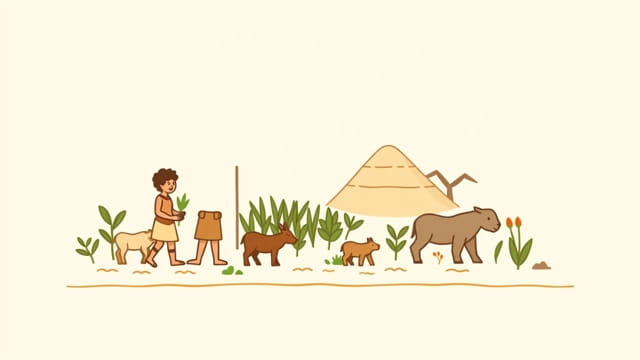
In the imaginative world of educational cartoons, historical events are brought to life with humor and clarity. One such creative approach is the Join the Neolithic Revolution cartoon, which explores a major turning point in human history through accessible storytelling. This form of visual learning helps students understand how the Neolithic Revolution fundamentally changed the lives of early humans, leading them from nomadic hunting and gathering to settled farming and village life. The cartoon format makes the complex topic engaging and relatable, offering both entertainment and education to a wide audience.
Understanding the Neolithic Revolution
Definition and Historical Context
The Neolithic Revolution, also known as the Agricultural Revolution, refers to the shift from a nomadic lifestyle of hunting and gathering to settled farming communities. This transformation began around 10,000 BCE in parts of the Middle East, particularly the Fertile Crescent, and spread gradually to other parts of the world.
With the domestication of plants and animals, humans were no longer entirely dependent on the unpredictable hunt. Farming allowed for food surplus, population growth, and the development of permanent settlements. These changes laid the foundation for modern civilization, including writing, trade, governance, and technology.
The Role of Educational Cartoons
Making History Fun and Accessible
Cartoons that depict the Neolithic Revolution often present a humorous contrast between Paleolithic and Neolithic lifestyles. By showcasing exaggerated characters such as a confused hunter being introduced to a farmer’s grain field cartoons help learners visualize the dramatic changes that occurred during this era.
- They illustrate the struggle between old habits and new ways of living.
- Cartoons use exaggeration and humor to highlight important details.
- They simplify complex topics, making them easier to understand.
Common Themes in the ‘Join the Neolithic Revolution’ Cartoon
In most versions of this cartoon, the central theme revolves around a promotional or persuasive message, often parodying modern-day advertising. Characters may be shown enthusiastically promoting farming as a ‘new and improved’ lifestyle. Others might humorously resist change, clinging to spears and animal skins, unsure about giving up their nomadic freedom.
These satirical portrayals help students grasp the pros and cons of the revolution. While farming brought stability, it also introduced new challenges such as crop failure, disease, and social inequality.
Key Concepts Illustrated
Transition from Nomadic to Settled Life
One of the most significant aspects of the Neolithic Revolution is the end of the hunter-gatherer lifestyle. The cartoon often emphasizes how early humans began to stay in one place, constructing homes and forming the earliest villages.
- Illustrates the difference between temporary shelters and permanent dwellings.
- Shows the benefits of staying in one place such as consistent food supply.
- Highlights the challenges of settling like defending land and managing resources.
Domestication of Plants and Animals
Through simple animations or drawings, the cartoon often shows how humans began to cultivate crops like wheat and barley and domesticate animals like goats and sheep. Characters may show surprise at how much easier it is to milk a goat than to chase wild deer for meat.
Surplus and Specialization
The idea of food surplus is crucial in understanding the shift toward civilization. When not everyone needed to farm, people could take on specialized roles such as toolmaking, weaving, or trading. Cartoons sometimes depict a humorous village scene with various characters like a farmer, potter, blacksmith, and storyteller all benefiting from agricultural surplus.
Educational Value of Cartoon Interpretation
Promoting Critical Thinking
Using humor and satire, the cartoon encourages students to think critically about historical change. Why would someone resist farming? What were the risks of relying on a few staple crops? What new forms of social organization emerged? These questions can lead to meaningful classroom discussion or essay writing.
Visual Memory and Retention
Images help students retain information. When a learner remembers the image of a grumpy hunter grumbling about ‘boring farming,’ they also remember the tension between old and new lifestyles. Cartoons make abstract ideas concrete and memorable.
Comparing the Paleolithic and Neolithic Eras
Cartoon Contrast Examples
- Food Source: A hunter struggling to catch a deer vs. a farmer harvesting crops with ease.
- Shelter: A tent being blown away by the wind vs. a sturdy clay-brick home.
- Mobility: A character tired from wandering vs. a villager enjoying leisure time.
These illustrations make it easier to grasp the idea that the Neolithic period brought major improvements, even though it came with its own set of difficulties.
Criticisms and Challenges
Simplification of Complex History
While cartoons are excellent tools for introductory learning, they sometimes oversimplify historical complexity. The real Neolithic transition took centuries and varied by region. Not every group adopted farming at the same time, and some remained nomadic for generations. Educators should supplement cartoons with factual content to provide a balanced understanding.
Stereotyping Early Humans
Sometimes cartoons portray early humans as unintelligent or primitive, which can reinforce misconceptions. In reality, both Paleolithic and Neolithic societies had sophisticated knowledge of nature, tools, and community life. It’s important to recognize their achievements with nuance.
Why Join the Neolithic Revolution?
The ‘Join the Neolithic Revolution’ cartoon offers a playful yet informative window into one of the most important transitions in human history. By blending humor, historical facts, and visual storytelling, it captures the essence of how agriculture changed the world forever. From nomadic wandering to organized farming communities, from survival to surplus, the Neolithic Revolution paved the way for the rise of civilization. Though designed for entertainment, the cartoon succeeds in sparking curiosity and encouraging deeper exploration into our shared human past.
Ultimately, educational cartoons serve as a bridge between the ancient world and the modern learner. They remind us that even the most serious historical events can be explored with creativity, curiosity, and a touch of humor making history not just something to study, but something to experience.