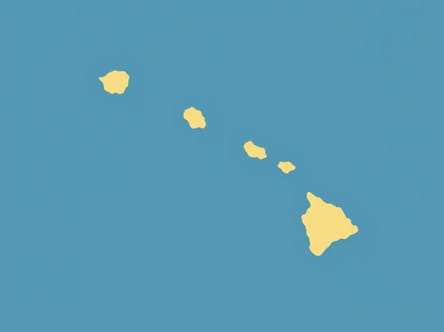
The annexation of Hawaii by the United States was not simply a strategic geopolitical move; it was also the result of political maneuvering and ambition. Central to this controversial event was John L. Stevens, the U.S. Minister to the Kingdom of Hawaii. His actions, including the landing of U.S. Marines and his recognition of a provisional government, played a direct and significant role in the overthrow of Queen Liliʻuokalani. The events surrounding John Stevens and the annexation of Hawaii reveal the complexities of American expansionism and its impact on indigenous sovereignty.
Background of Hawaii in the 19th Century
The Hawaiian Monarchy and Political Structure
Throughout the 19th century, the Kingdom of Hawaii was an independent nation with a constitutional monarchy. Under the leadership of monarchs such as Kamehameha I and later Queen Liliʻuokalani, Hawaii developed its own laws, government institutions, and diplomatic relations. The islands were home to a thriving indigenous culture as well as a growing population of foreign settlers, primarily American businessmen involved in the sugar trade.
Economic and Strategic Interests
By the late 1800s, Hawaii had become strategically important to the United States as a naval station and economic hub. American planters and business interests had a major stake in the islands’ economy, particularly in sugar production, which was heavily dependent on trade relations with the U.S. These economic interests played a major role in influencing American policy in the region.
John L. Stevens: U.S. Minister to Hawaii
Appointment and Position
John Leavitt Stevens was appointed U.S. Minister to the Kingdom of Hawaii in 1889. He was a strong supporter of American expansion and a believer in the cultural superiority of Western civilization. Stevens viewed Hawaii as a natural addition to the United States and saw the monarchy as an obstacle to American interests in the Pacific.
Pro-American Bias
During his tenure, Stevens openly supported American and European business elites living in Hawaii. His sympathies lay with the group known as the ‘Committee of Safety,’ composed of mostly white businessmen and lawyers who sought to overthrow the monarchy and annex Hawaii to the U.S. His diplomatic actions would soon reflect these sympathies in a controversial way.
The Overthrow of Queen Liliʻuokalani
Push for a New Constitution
Queen Liliʻuokalani came to the throne in 1891 and quickly sought to restore native power and strengthen the monarchy. She proposed a new constitution to replace the ‘Bayonet Constitution’ of 1887, which had significantly reduced the power of the Hawaiian monarchy and granted voting rights to wealthy non-Hawaiians. Her move threatened the power of foreign elites and alarmed pro-annexation forces.
Stevens and the Committee of Safety
On January 17, 1893, the Committee of Safety acted to depose the queen. John Stevens, without authorization from the U.S. government, ordered U.S. Marines from the USS Boston to land in Honolulu. These troops, although claiming neutrality, positioned themselves to support the revolutionaries and intimidate royal forces. The queen, unwilling to risk bloodshed, yielded under protest and surrendered power to the United States, trusting the American government to rectify the injustice.
The Provisional Government and U.S. Reaction
Formation of a New Regime
Following the queen’s overthrow, the Committee of Safety established a Provisional Government, led by Sanford B. Dole. John Stevens promptly recognized the new regime as the official government of Hawaii. This recognition was essential in legitimizing the overthrow in the eyes of many Americans, though it was far from universally accepted.
President Cleveland’s Opposition
When Grover Cleveland became president shortly afterward, he launched an investigation into the events in Hawaii. The Blount Report, named after Commissioner James Blount, concluded that the overthrow had been illegal and that Stevens had abused his diplomatic powers. Cleveland called for the queen to be restored, but the Provisional Government refused to comply, and no U.S. military intervention was ordered to reverse the coup.
Path to Annexation
Annexation Delayed
Despite Cleveland’s opposition, the annexation effort remained alive. The Provisional Government declared Hawaii a republic in 1894, with Sanford Dole as president. The annexation process stalled under Cleveland, but things changed with the election of President William McKinley in 1896, who was more sympathetic to imperial expansion.
Annexation Achieved
In 1898, during the Spanish-American War, the strategic value of Hawaii increased dramatically. Congress passed the Newlands Resolution, and on July 7, 1898, Hawaii was officially annexed by the United States. The islands would become a U.S. territory in 1900 and later the 50th state in 1959.
Legacy of John L. Stevens
Controversial Role
John Stevens’s role in the annexation of Hawaii remains one of the most controversial actions by a U.S. diplomat. His decision to involve American military forces in the overthrow of a sovereign government is widely viewed as an abuse of power. Though he claimed to be protecting American lives and property, his true intent aligned with expansionist ideology.
Impact on Hawaiian Sovereignty
The overthrow and subsequent annexation marked the end of Hawaiian self-rule. Native Hawaiians lost their kingdom, and for decades, they were governed without the right to determine their own future. Many Hawaiians continue to mourn the loss of their sovereignty and advocate for recognition, justice, and even independence.
Lessons and Historical Reflection
- Diplomatic Overreach: Stevens’s actions illustrate the dangers of diplomatic overreach and the misuse of military power in foreign lands.
- Imperial Ambitions: The annexation of Hawaii reflects a period of aggressive American imperialism, where strategic and economic interests often overrode justice and legality.
- Native Resistance: Despite the overthrow, Hawaiian resistance and pride have remained strong. Movements advocating for Hawaiian rights and sovereignty continue to this day.
A Turning Point in U.S. Expansion
The annexation of Hawaii, with John Stevens at its center, stands as a pivotal moment in American history. It represents both the ambitions and ethical challenges of the United States as it expanded its reach beyond the mainland. Stevens’s actions, though condemned by some even in his own time, were part of a broader pattern of intervention and empire-building. For Hawaiians, the event marked the loss of a nation, the start of a long period of struggle for cultural preservation, and the enduring hope for justice and recognition. Understanding this history is crucial not only for appreciating the complexities of American foreign policy but also for honoring the resilience of the Hawaiian people.