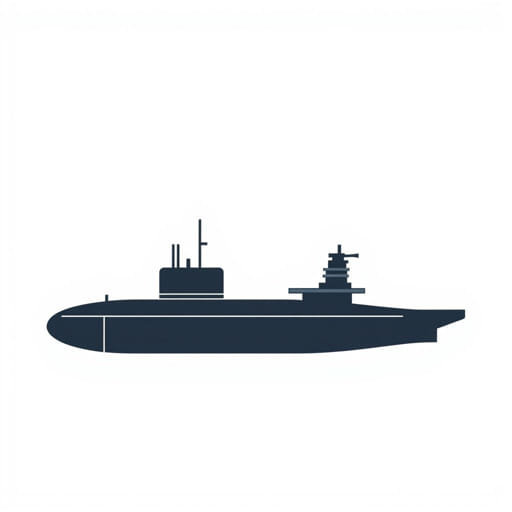
During World War II, the Imperial Japanese Navy developed some of the most unique and ambitious naval innovations in history. Among these was the Japanese submarine aircraft carrier a hybrid vessel capable of traveling underwater while also launching airplanes. This concept was designed to extend the reach of Japanese military power and to surprise enemy targets in ways conventional warships could not. The idea blended stealth with airpower, offering a glimpse into Japan’s advanced wartime engineering and its pursuit of asymmetric naval strategies in the face of growing Allied dominance.
The Vision Behind the Submarine Aircraft Carrier
Concept and Strategic Purpose
The development of the Japanese submarine aircraft carrier stemmed from a desire to strike distant targets unexpectedly, particularly the continental United States and the Panama Canal. Japan’s naval planners believed that conventional aircraft carriers were vulnerable to detection and attack, while submarines could operate covertly. By combining the two platforms, Japan hoped to launch surprise reconnaissance missions or limited air strikes against strategic assets without exposing surface fleets.
Influence of Surprise Warfare
The success of Japan’s surprise attack on Pearl Harbor in 1941 reinforced their belief in unconventional military tactics. Submarine-launched aircraft could be used in similar fashion to catch the enemy off guard, create confusion, and demonstrate Japan’s technological capabilities. This bold strategy resulted in the creation of the I-400 class submarines, the largest and most advanced of their kind at the time.
The I-400 Class: Engineering Marvels
Size and Construction
The I-400 class submarines, also known as ‘Sen-Toku’ class, were the largest submarines built during World War II, measuring over 400 feet in length. They displaced more than 6,000 tons submerged and could travel around the globe without refueling thanks to their massive fuel capacity. These submarines were truly global-range vessels intended for far-reaching missions.
Aircraft Hangar and Launch System
Each I-400 class submarine featured a watertight cylindrical hangar that could store up to three floatplane bombers. These planes, the Aichi M6A1 Seiran (‘Mountain Haze’), were specifically designed to be disassembled and reassembled quickly. Once on the surface, the aircraft would be moved onto a compressed-air catapult and launched from the deck.
The hangar included a crane for retrieving the aircraft after water landings, although in combat scenarios, pilots were often expected to ditch their planes or land near a rendezvous point. The entire launch and assembly process could be completed in as little as 30 minutes.
The Seiran Aircraft: Aerial Arm of the Submarine
Design and Capabilities
The Aichi M6A1 Seiran was a floatplane bomber designed to be stored in tight spaces and assembled quickly. It had folding wings, detachable floats, and was capable of carrying a bomb payload suitable for attacking strategic targets. Despite being a seaplane, the Seiran had a relatively high speed and range, making it a suitable choice for surprise missions launched far from home waters.
Mission Intentions
The most ambitious planned mission for the I-400 and its Seiran aircraft involved a surprise bombing of the Panama Canal. Japanese naval command hoped to cripple the canal’s locks and delay U.S. naval operations in the Pacific. While this plan was never carried out, it exemplified the kind of high-stakes impact Japan hoped to achieve with its submarine aircraft carriers.
Operational Use and Limitations
Challenges in Deployment
Although technologically advanced, the I-400 submarines faced practical and strategic limitations. As the war progressed, Japan’s industrial and logistical resources were severely strained. The time required to prepare the aircraft for launch and the risk of detection during surfacing made actual operations risky. Furthermore, by the time the I-400 class was ready for deployment, Japan was already losing ground in the Pacific theater.
Final Missions and Surrender
The I-400 and I-401 were operational by mid-1945, but their missions were canceled due to Japan’s deteriorating military position. Their last assignment involved a planned attack on U.S. forces at Ulithi Atoll, but the mission was aborted after Japan’s surrender in August 1945. The submarines were ordered to surrender to U.S. forces and were eventually scuttled by the U.S. Navy to prevent the technology from falling into Soviet hands.
Technological Legacy and Historical Impact
Innovation and Influence
The concept of a submarine aircraft carrier was ahead of its time and demonstrated Japan’s commitment to innovation under duress. Though the I-400 class did not alter the outcome of the war, it influenced future designs and inspired naval architects with the idea of combining stealth and air power.
Some Cold War-era submarines, particularly those used by the Soviet Union, experimented with cruise missile and drone deployment concepts reminiscent of the Japanese strategy. Today, the idea of underwater platforms launching aerial or missile systems remains relevant in modern military thinking.
Rediscovery and Preservation
In recent decades, several I-400 class submarines were located by underwater exploration teams. These discoveries have renewed interest in their design and historical significance. Museums and naval historians continue to study these vessels to better understand Japan’s wartime innovation and the broader evolution of submarine warfare.
A Bold Vision in Naval Warfare
The Japanese submarine aircraft carrier represents one of the most imaginative military technologies developed during World War II. Blending the stealth of submarines with the reach of aircraft, the I-400 class submarines were built for missions that could have changed the course of the war had they been executed. While ultimately underutilized and constrained by the realities of war, these submarines remain a testament to Japan’s ingenuity and its quest for technological advantage. Their legacy continues to be studied as an example of how creativity and desperation can shape the design of wartime machines.