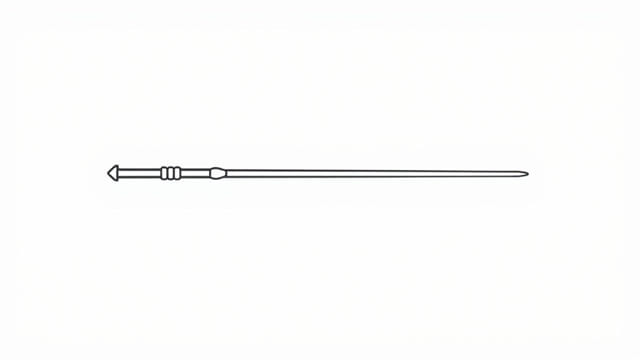
Throughout history, the quarterstaff has been recognized as a practical and versatile weapon. It was widely used in England and other parts of Europe during the Middle Ages and Renaissance. Despite its simplicity a long wooden pole, typically made of hardwood like ash or oak it served not just as a walking stick or tool but also as a formidable weapon in combat. This raises an important question: is a quarterstaff a two-handed weapon? The answer is rooted in both historical martial practices and the design of the staff itself.
Understanding the Quarterstaff
The quarterstaff is usually a straight wooden shaft, ranging from 6 to 9 feet in length, with a diameter of around 1.25 to 1.5 inches. Sometimes, metal caps or ferrules were added to reinforce the ends. It was a weapon commonly used by commoners and even by soldiers for training, due to its affordability and effectiveness.
Length and Grip
The typical length of a quarterstaff made it ideal for long-reach engagements. Because of its considerable size, it was not easily handled with one hand. Practitioners held the staff with both hands, often placing one hand about a third of the way from one end and the other hand about a third from the opposite end. This grip allowed for powerful swinging, jabbing, blocking, and parrying techniques.
- Most staves were longer than the user’s height.
- Used in both thrusting and sweeping motions.
- Enabled wide coverage and strong defense.
This handling confirms that the quarterstaff is a two-handed weapon in both form and function.
Historical Evidence of Two-Handed Use
Historical combat manuals and fencing texts from the 16th and 17th centuries often detail the two-handed use of the quarterstaff. English martial arts masters, such as George Silver, emphasized the advantages of the staff over swords due to its reach and the power generated from a two-handed grip.
Training and Duels
Quarterstaves were commonly used for training in place of swords, as they posed less risk of lethal injury. The two-handed grip was essential to maintain control and precision during sparring. In public contests and duels, combatants would demonstrate mastery of two-handed movements, performing techniques that required coordination and strength from both arms.
Combat Mechanics
In real combat scenarios, the quarterstaff allowed users to strike from a distance and counter with swift defensive movements. Two-handed handling enhanced control and balance, enabling quick transitions between offensive and defensive stances.
Techniques Requiring Two Hands
- Thrusts and Jabs: Require strong forward control and stability.
- Spinning Strikes: Utilize rotational momentum best managed with two hands.
- Blocks and Parries: Effective only with balanced pressure from both arms.
- Pushes and Disarms: Often need the strength of both hands working in unison.
Trying to wield a quarterstaff with one hand would severely limit these techniques and reduce its effectiveness in combat, especially against armed opponents.
Quarterstaff in Martial Arts
Various modern martial arts and historical reenactment groups continue to practice with the quarterstaff, often treating it as a two-handed weapon. It is common in systems like Historical European Martial Arts (HEMA), where students train in historically accurate movements and techniques.
Comparison with Other Two-Handed Weapons
- Bo Staff (Japanese): Like the quarterstaff, the bo is wielded with two hands and has similar techniques.
- Polearms: Many weapons with long shafts like spears and halberds are also used with two hands for control and power.
- Zweihander (German greatsword): Another example of a weapon requiring two hands due to size and weight.
In all these systems, two-handed grip is essential for maximum efficiency and effectiveness, reinforcing the idea that the quarterstaff belongs in the same category.
Role in Fiction and Gaming
In modern fantasy literature, role-playing games, and video games, the quarterstaff is typically classified as a two-handed weapon. Characters such as wizards, monks, and martial artists are often portrayed using the quarterstaff with both hands. Game mechanics also reflect this, usually requiring both hands to equip or use the weapon effectively.
Examples from Popular Media
- Dungeons & Dragons: The quarterstaff is listed as a versatile weapon, meaning it can be used with one hand, but deals more damage when used with two.
- Fantasy Films: Characters like Gandalf in ‘The Lord of the Rings’ wield staffs that resemble quarterstaves and often use both hands.
- Video Games: In RPGs, the quarterstaff often has animations involving wide swings and double-handed thrusts.
Even in fiction, the staff’s physical traits make it naturally suited for two-handed use.
Versatility of the Quarterstaff
Despite being classified as a two-handed weapon, the quarterstaff is versatile enough to allow for some one-handed movements in non-combat situations. For example, a traveler might carry it in one hand while walking. But in combat, the necessity of a two-handed grip becomes evident.
Advantages of Two-Handed Use
- Better reach and control
- Greater striking force
- Increased defensive capabilities
- More efficient energy transfer
These advantages make the quarterstaff a reliable choice for self-defense and battlefield tactics when wielded properly with two hands.
The quarterstaff is unequivocally a two-handed weapon when used in combat. Its length, weight distribution, and fighting techniques all point to the need for a two-handed grip to maximize effectiveness and control. While it may be carried or moved with one hand casually, its true power and potential are revealed only when used with both hands. Historically, culturally, and practically, the quarterstaff stands among the most respected two-handed weapons, known for its reach, simplicity, and capability in skilled hands.