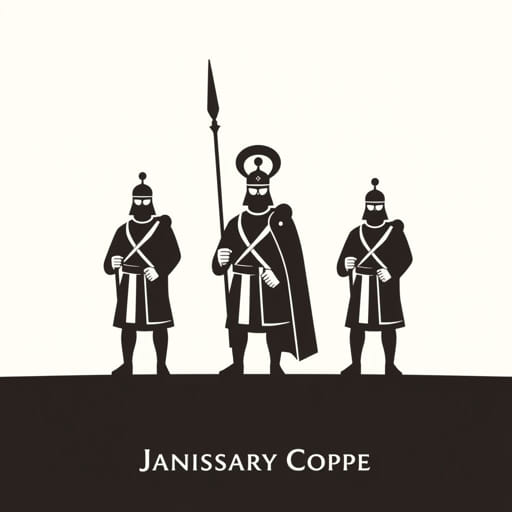
The Janissary Corps was one of the most distinctive and powerful military institutions in the history of the Ottoman Empire. Established in the late 14th century, this elite infantry unit served as the backbone of the Ottoman army for several centuries. Known for their discipline, loyalty, and military skill, the Janissaries were not only soldiers but also influential political actors within the empire. Their unique recruitment system, organization, and role in Ottoman society make the Janissary Corps a fascinating subject that highlights the complexity of Ottoman military and social structures.
Origins and Formation of the Janissary Corps
The Janissary Corps was founded during the reign of Sultan Murad I in the late 1300s. The creation of this elite military force was part of the Ottoman strategy to build a professional army that could sustain the empire’s rapid expansion in the Balkans and beyond. Unlike traditional feudal levies, the Janissaries were full-time soldiers who were trained, paid, and maintained by the state.
The Devshirme System
A unique feature of the Janissary Corps was its method of recruitment through the devshirme system. This system involved the periodic collection of young Christian boys, mostly from Balkan territories under Ottoman rule. These boys were taken from their families, converted to Islam, and trained as soldiers or administrators. The devshirme ensured that the Janissaries were loyal directly to the Sultan, bypassing local nobility.
- Recruitment of boys aged 8 to 18 from Christian families
- Conversion to Islam and rigorous military and religious training
- Lifelong service to the Sultan and the Ottoman state
Role and Organization within the Ottoman Military
The Janissaries were primarily an infantry force, known for their discipline and innovative use of firearms. They were among the first standing armies in Europe to make extensive use of muskets and cannons, giving the Ottomans a technological advantage in many battles. The Janissary Corps played a crucial role in key Ottoman military campaigns, including the conquest of Constantinople in 1453.
Structure and Ranks
The Janissary Corps had a well-defined hierarchy, which ensured order and efficiency. The corps was led by the Agha of the Janissaries, who reported directly to the Sultan. Below the Agha were officers and various units organized by specialization and size.
- Agha: Commander of the Janissaries, responsible for overall leadership.
- Bölük: Companies of soldiers, each led by a Bölükbaşı.
- Specialists: Musicians, engineers, and artillerymen who supported the corps.
Political Influence and Social Status
Beyond their military role, the Janissaries became a powerful political force within the Ottoman Empire. Their close ties to the Sultan and their elite status allowed them to influence state affairs. Over time, the Janissaries gained privileges and wealth, which sometimes led them to oppose sultans or interfere in politics, including deposing or enthroning rulers.
Privileges and Social Life
Janissaries were exempt from many taxes and enjoyed significant social privileges. They lived in their own quarters within Istanbul and other major cities, forming a distinct community. The corps had its own schools, mosques, and social institutions.
- Right to marry and own property, though originally restricted
- Formation of powerful Janissary guilds and unions
- Involvement in commerce and urban life beyond military duties
Decline and Dissolution of the Janissary Corps
By the 17th and 18th centuries, the Janissary Corps began to lose its military effectiveness. Their recruitment methods changed, and many new members were no longer trained rigorously. The corps became involved in corrupt practices, and their political power often destabilized the empire.
Resistance to Reform
Efforts by Ottoman rulers to modernize the army faced fierce opposition from the Janissaries. They resisted changes that threatened their privileges or questioned their traditional status. This resistance contributed to military defeats and internal crises during the empire’s gradual decline.
The Auspicious Incident
The final end of the Janissary Corps came in 1826 under Sultan Mahmud II. Determined to reform the military, Mahmud II orchestrated the ‘Auspicious Incident,’ a violent confrontation that led to the massacre and disbandment of the Janissaries. This event marked the end of the centuries-old institution and paved the way for the modernization of the Ottoman army.
Legacy of the Janissary Corps
The Janissary Corps remains one of the most studied military institutions in world history due to its unique recruitment, organization, and influence. The corps symbolized the Ottoman Empire’s strength and adaptability during its height but also exemplified the challenges of maintaining elite forces over centuries.
Impact on Military History
The Janissaries were pioneers in integrating gunpowder weapons into infantry tactics, influencing military developments in both Europe and the Middle East. Their standing army model inspired other states to professionalize their forces.
Cultural Influence
Janissaries left a lasting cultural imprint, appearing in art, music, and literature. Their distinctive uniforms, music bands (mehter), and rituals became iconic symbols of Ottoman power and tradition.
The Janissary Corps was more than just a military unit; it was a powerful social and political institution that shaped the Ottoman Empire for centuries. Founded through the devshirme system, the Janissaries were fiercely loyal to the Sultan and played a critical role in the empire’s expansion and governance. Over time, however, their influence became a double-edged sword, contributing to both the empire’s strength and its challenges. The dissolution of the Janissaries in the 19th century marked a turning point in Ottoman history, highlighting the complexities of tradition, reform, and modernization. Today, the Janissary Corps remains a fascinating example of how military power and social dynamics can intertwine to impact the course of an empire.